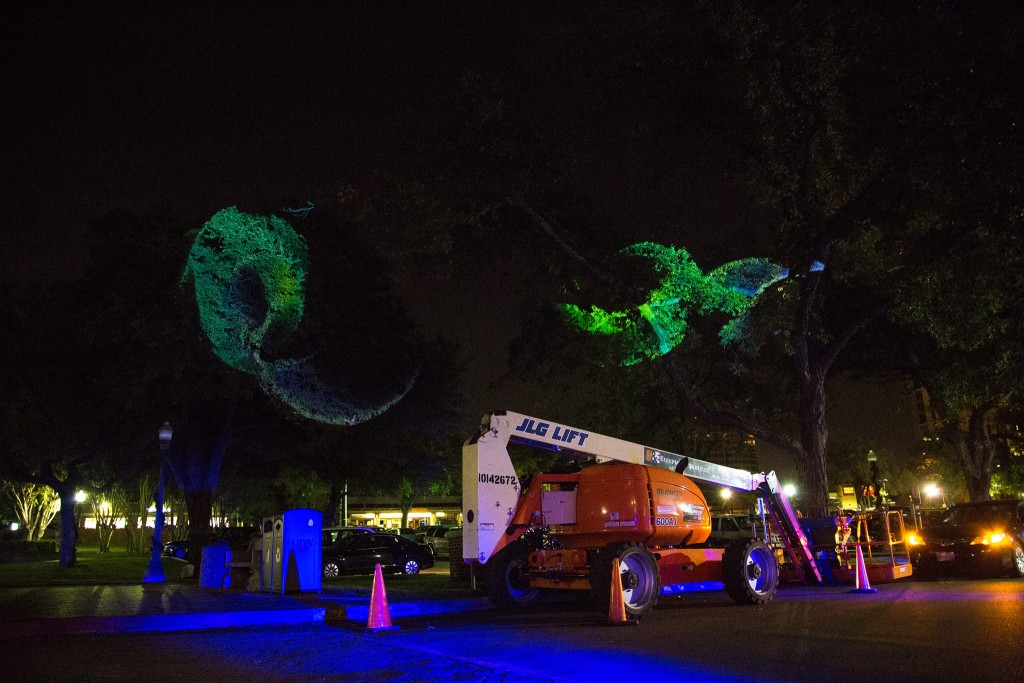
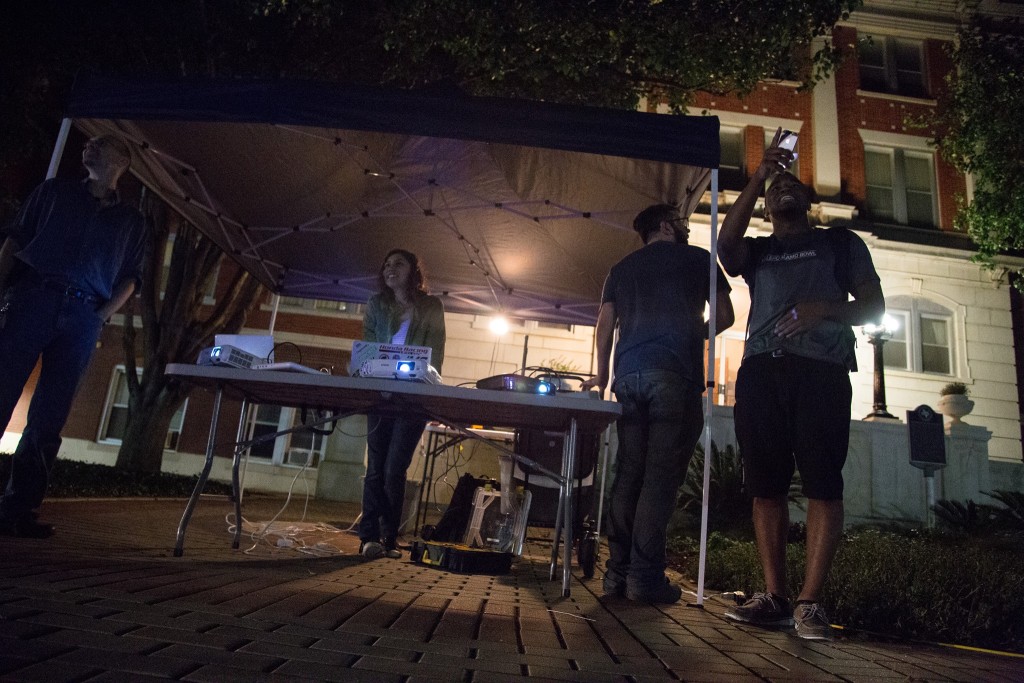
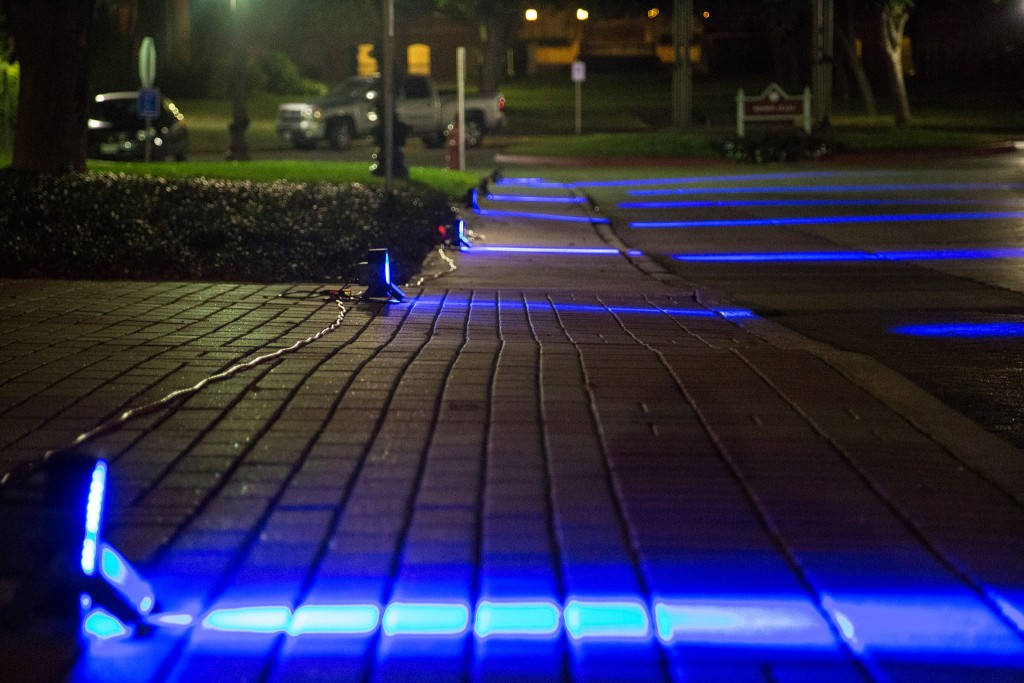
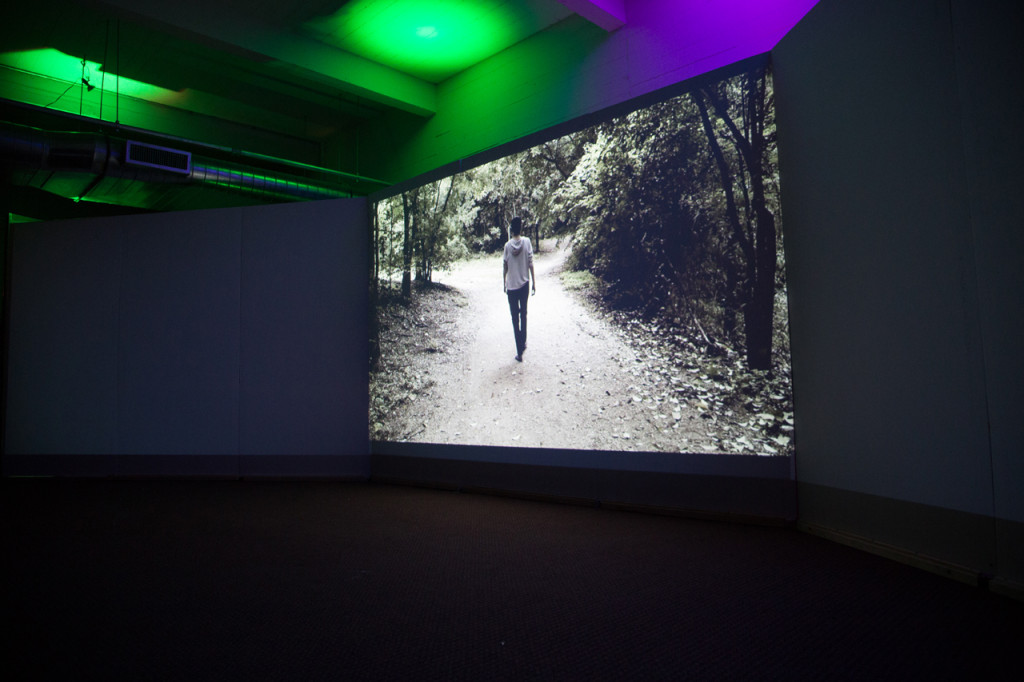
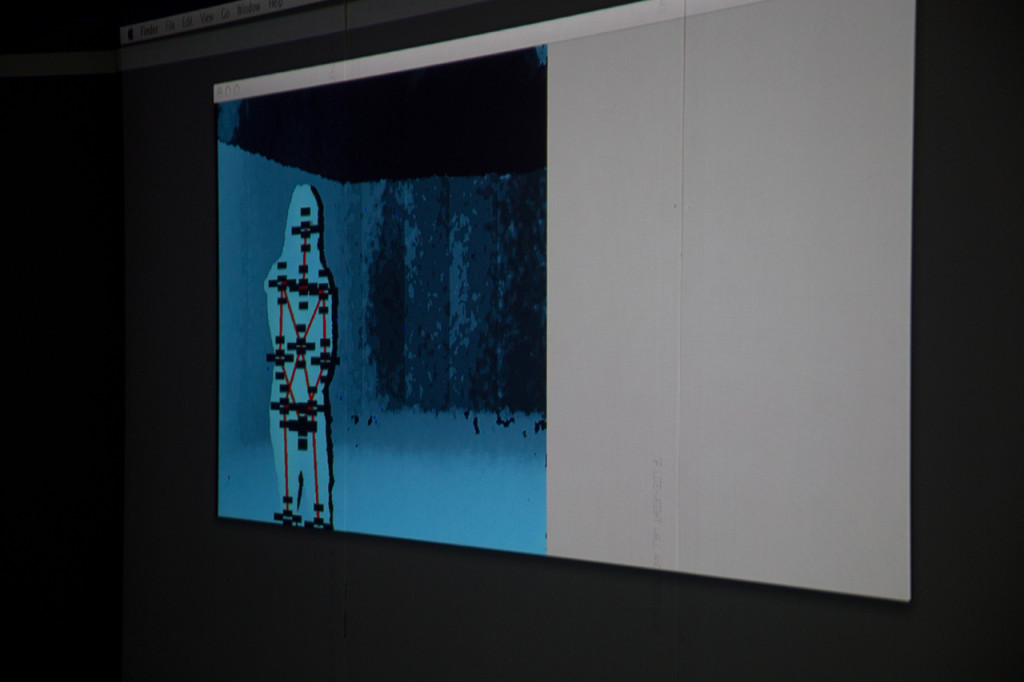
The Convergent Media Collective is excited to say we were able to help augment the Where the Rivers Meet performance at the University of the Incarnate word through the creation of a processional path using LED lighting and Projections. Our collaboration with the creators of Where the Rivers Meet began when associate professor Kevin Salfen approached founding CMC member and associate professor as well, joey, to see if the collective would be interested in working on some lighting solutions to a part of performance where there is a procession between the art building and the chapel at the University of the Incarnate Word. joey’s solution to the collaboration was to create an LED lit path, along with some visuals projected into the trees that would add an ambience. joey ordered a set of 10 additional par cans and was able to work with the meteorology department ‘s Dr. Gerald Mulvey to obtain additional Apple MacBook’s to help with the projections.
Though there was a chance of rain, the other evening was an overall success with Where the River Meet’s attendees getting to take in the ambiance of the space created, some even stopping to take photos and videos of the space.
It’s great to work with Universities that collaborate between not only departments, but have international scopes when creating new works, such as Where the River Meets production accomplished.
The Convergent Media Showcase is relatively young. There had only been one before it. That was last year.
However, the tradition of the Convergent Media Showcase goes back much further. It all began at the University of Texas at Austin’s ACTLab. The ACTLab, one of the founding programs of the new media/convergent media fields, held end of semester showcases for every class. They were unique from other end of semester critiques or art shows in that the students not only showed their projects, but presented their documentation as well. The audience was also invited to ask questions and prompt a full discussion after every presentation.
The ACTLab presentation days were known for lasting up to 6 hours. Sandy Stone, the founder of the ACTLab, provided food, students would bring snacks, and everyone in the class were required to attend all the presentations. The public was invited and could come and go as they pleased.
I utilized the model that her, myself, Brandon Wiley, Dustin Younse and a slew of other ACTLabbers developed over the years and modified it.
In addition to having worked in academia, many ACTLabbers, including myself, have worked in the “startup world” (think The Social Network or Silicon Valley). So I took the medium of ACTLab presentations and applied a time limit for pitches. The presentations needed to contain both the students’ projects and documentation. They were also required to present them in a compelling manner, so as to keep the audience’s attention.
I also made it clear that if a student’s work was not up to par, they would not present. That part of their project, was, in fact, the presentation itself.
The first Convergent Media Showcase took place at the Institute of Texan Cultures. We had over 10 presenters, and over 100 attendees. It was well received and the students’ review of the experience was spot on, as well as the attendees and the Institute’s.
So, for this year, we started the semester with a bar we could work from. From the very beginning the students knew they would be presenting their projects in front of a large audience and would also be in charge of hosting the event along with the Convergent Media Collective.
What progressed from this is documented below and is truly transformative.
Operation Big Screen:
Operation Big Screen was imagined by the students and myself after having a series of “Maker Days” (aka days where I invite the students to come to campus and I teach them how to do anything they want to learn). We did a series of “Maker Days,” where I taught them projection mapping, and how to prototype projection arrays.
We then had Joao Data come and give a talk about doing large scale projections. After his visually driven presentation, the CMC were sold!
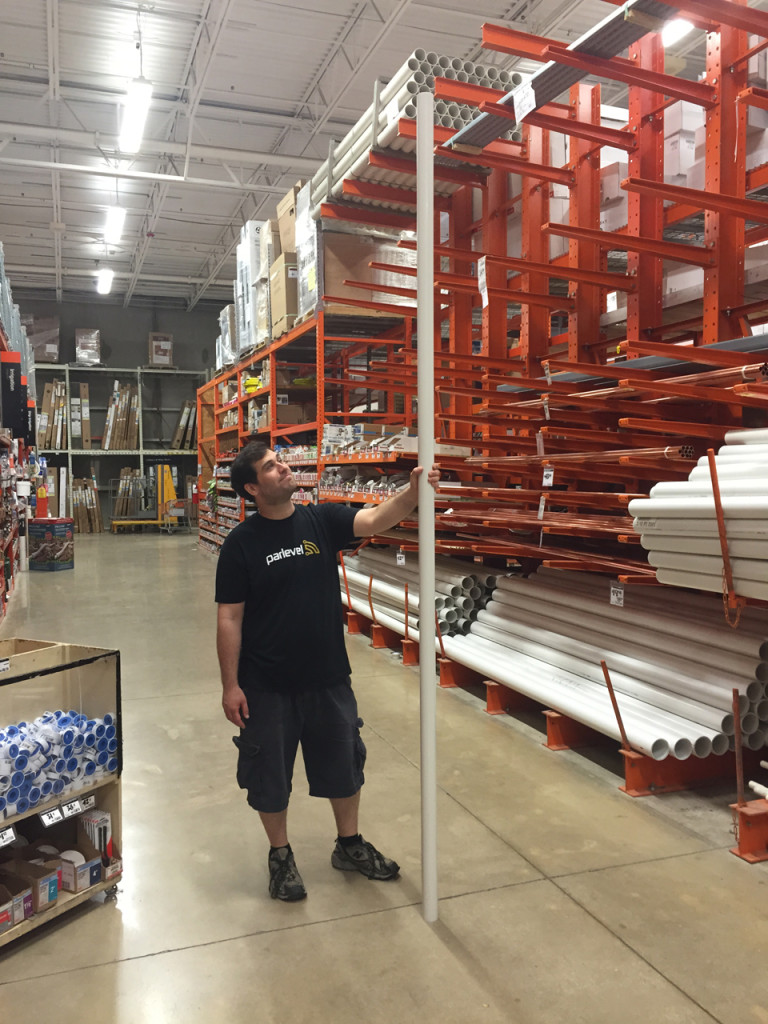
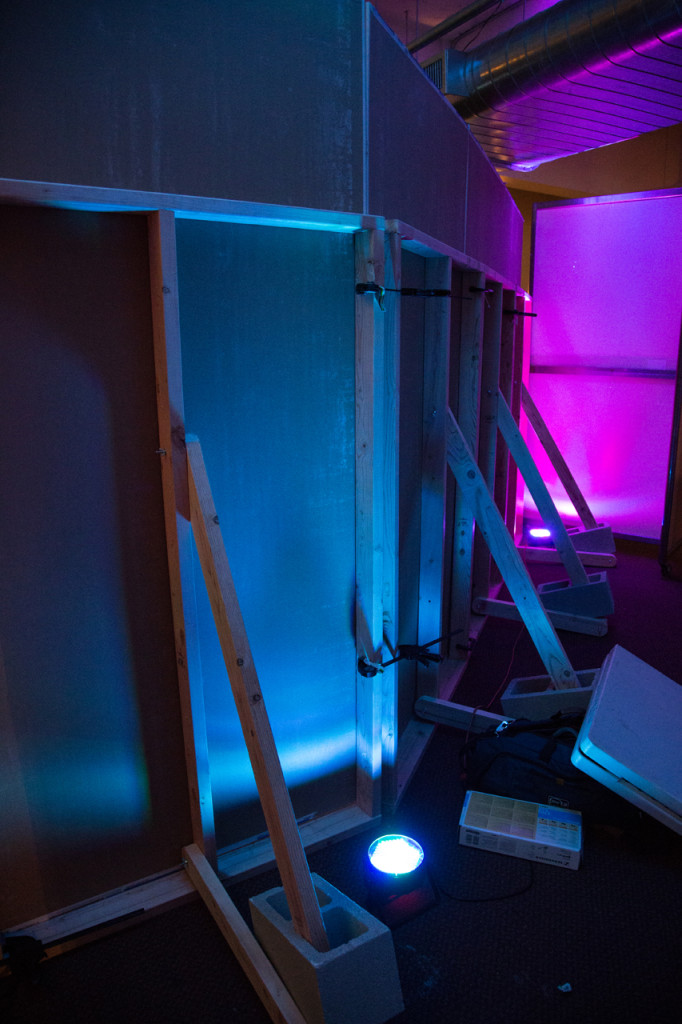
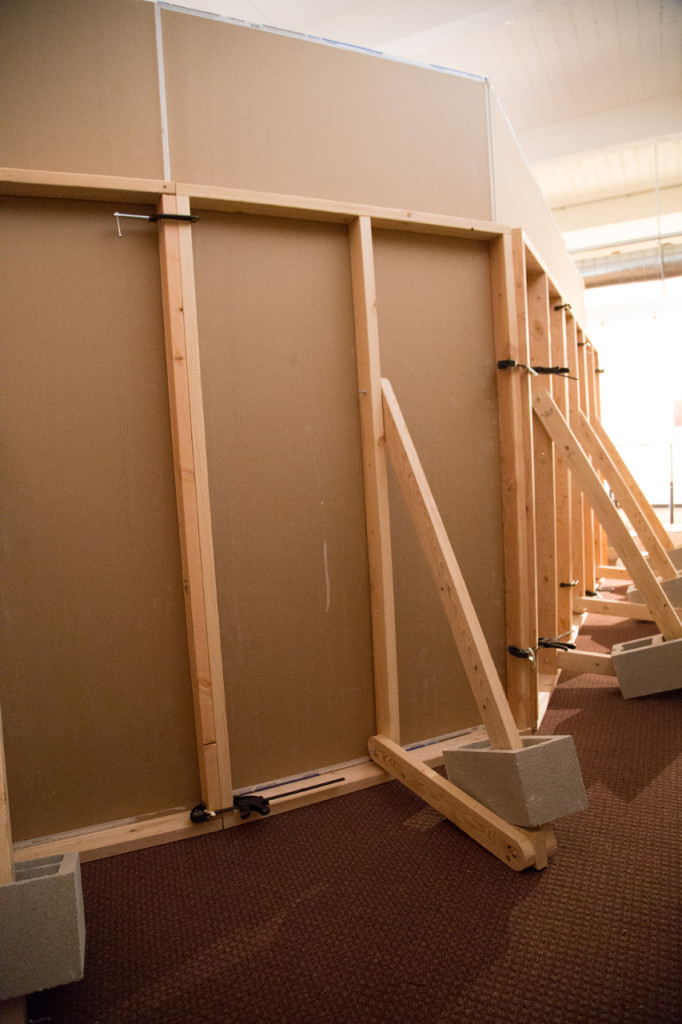
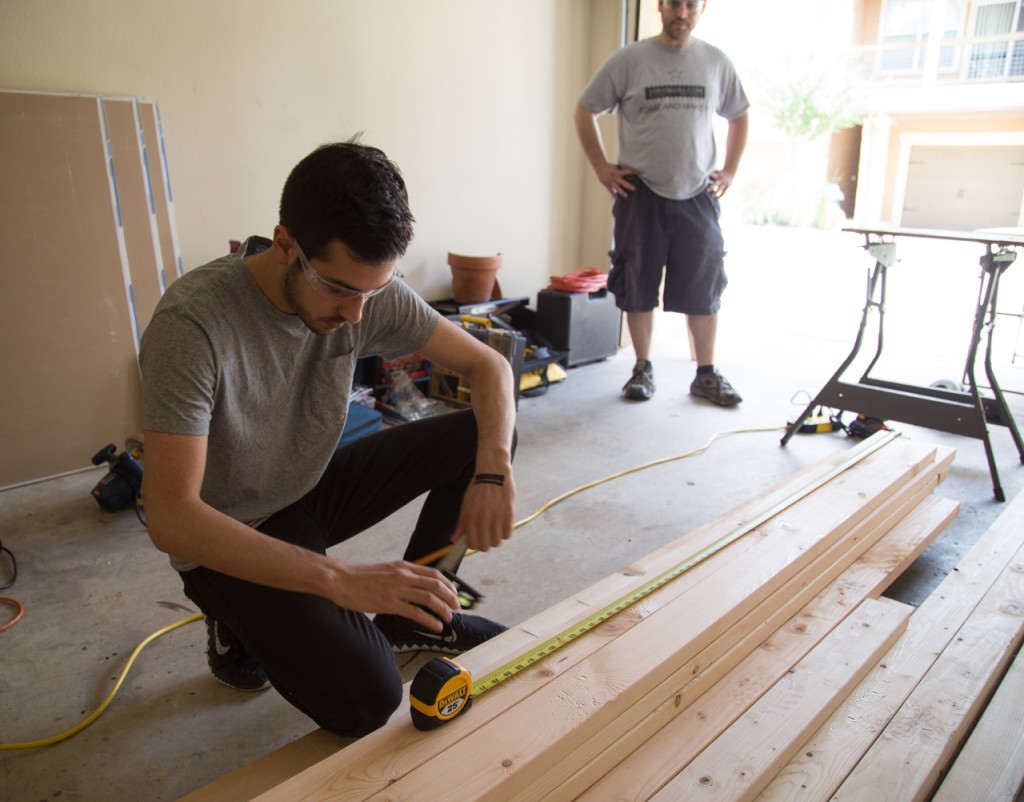
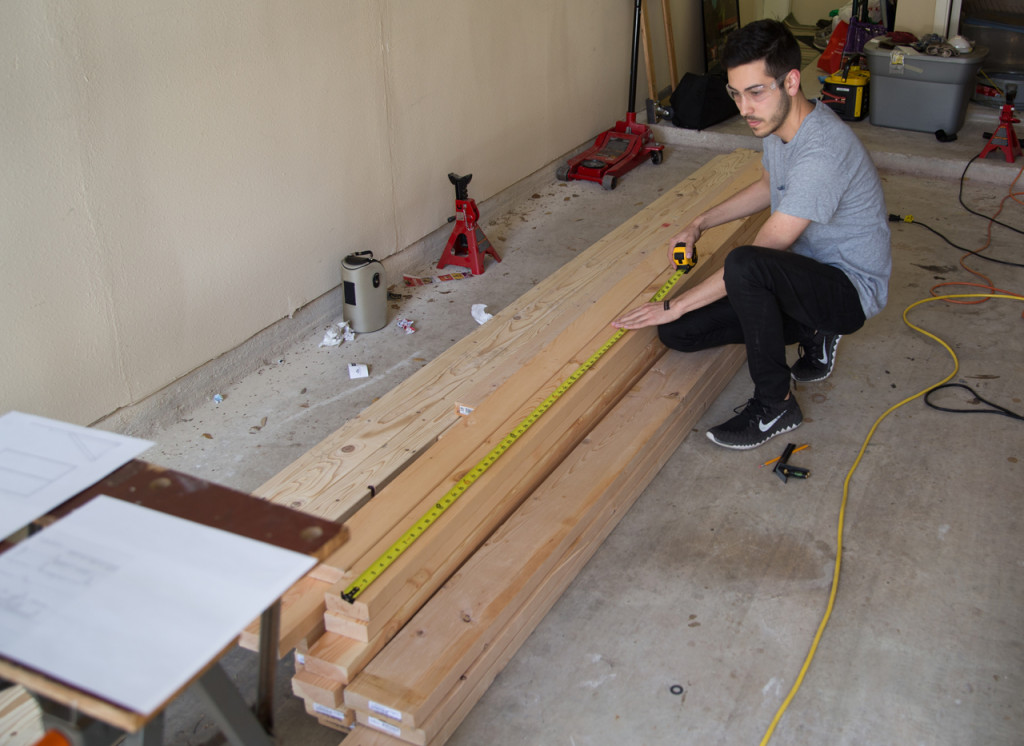
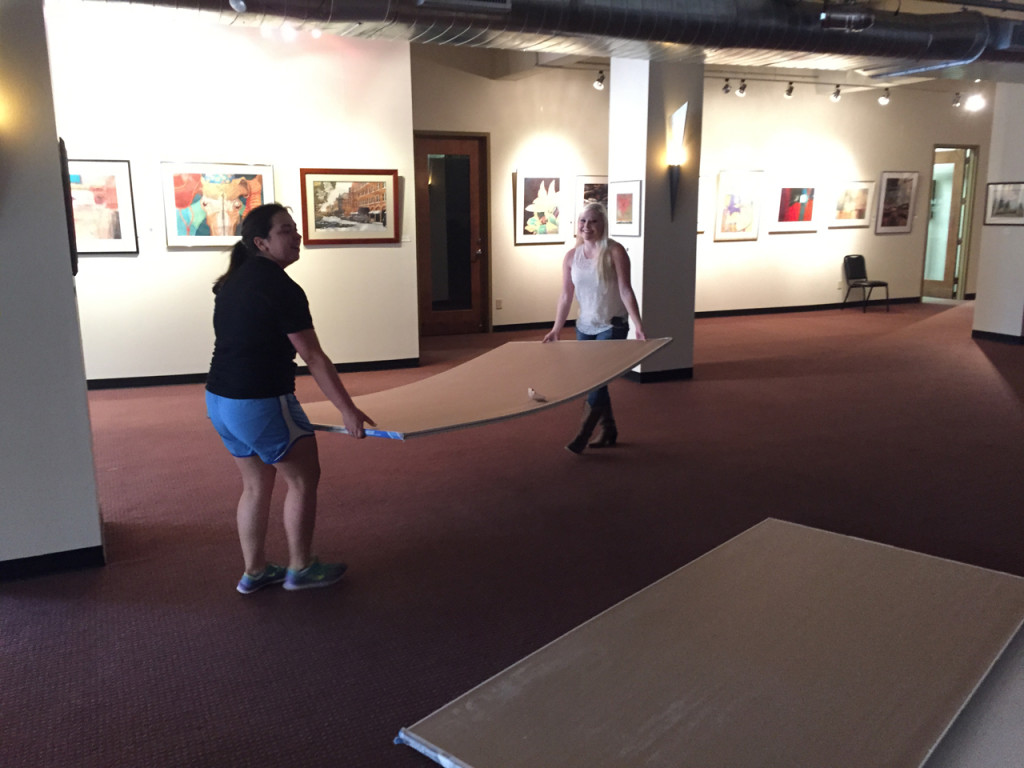
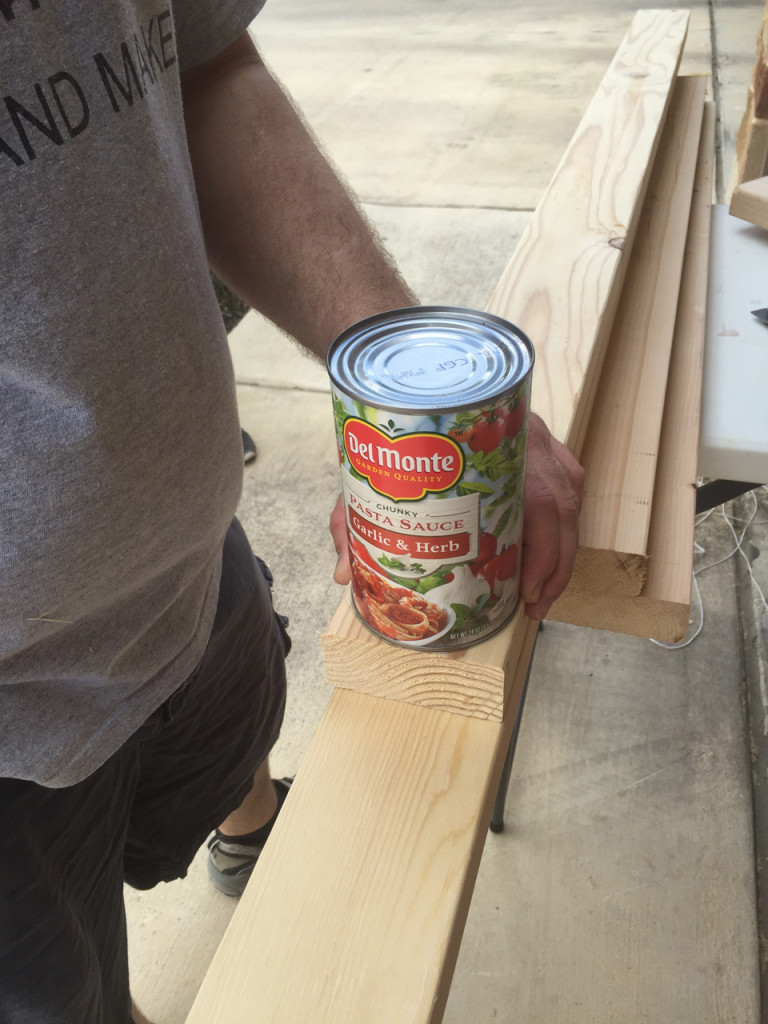
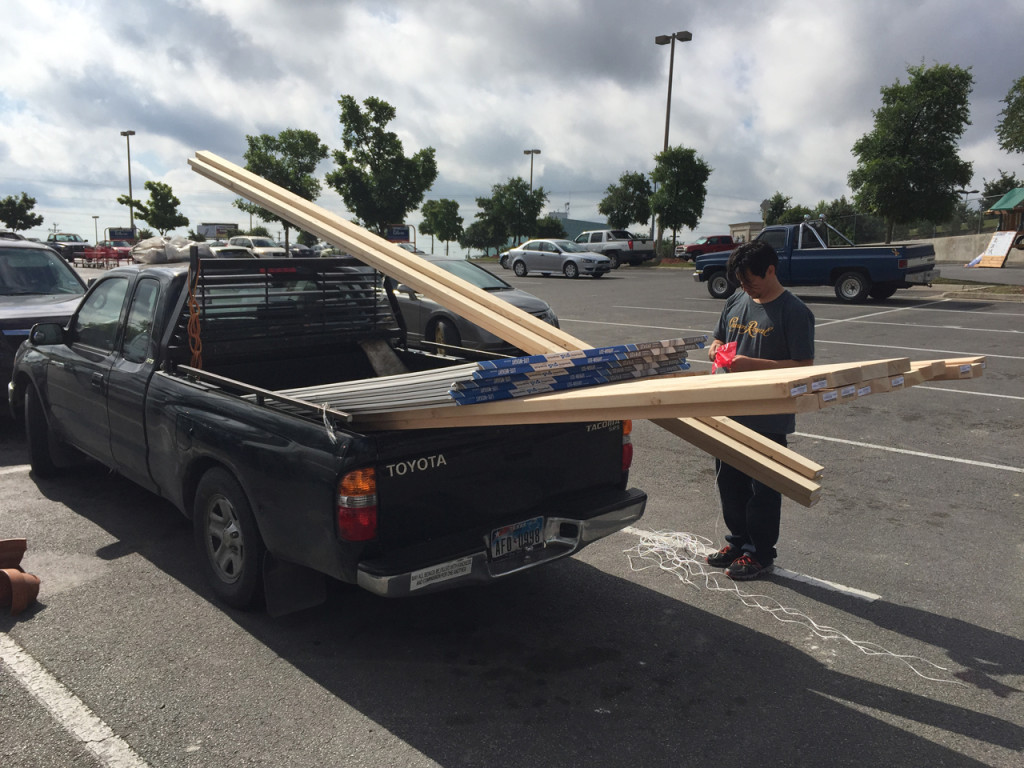
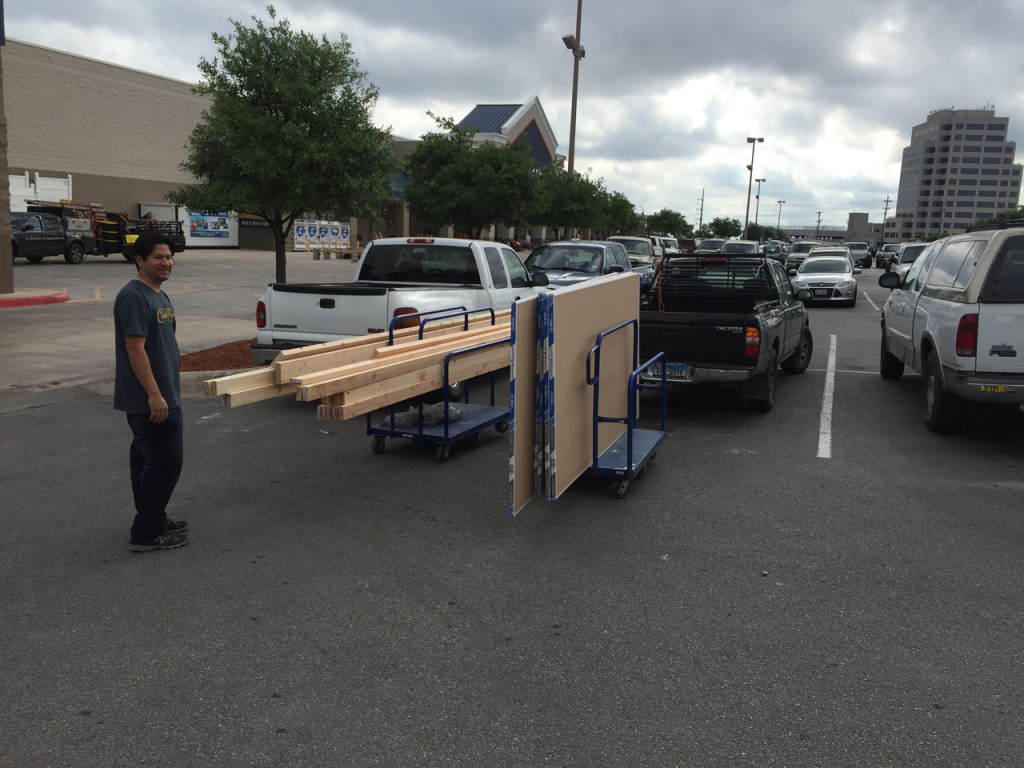
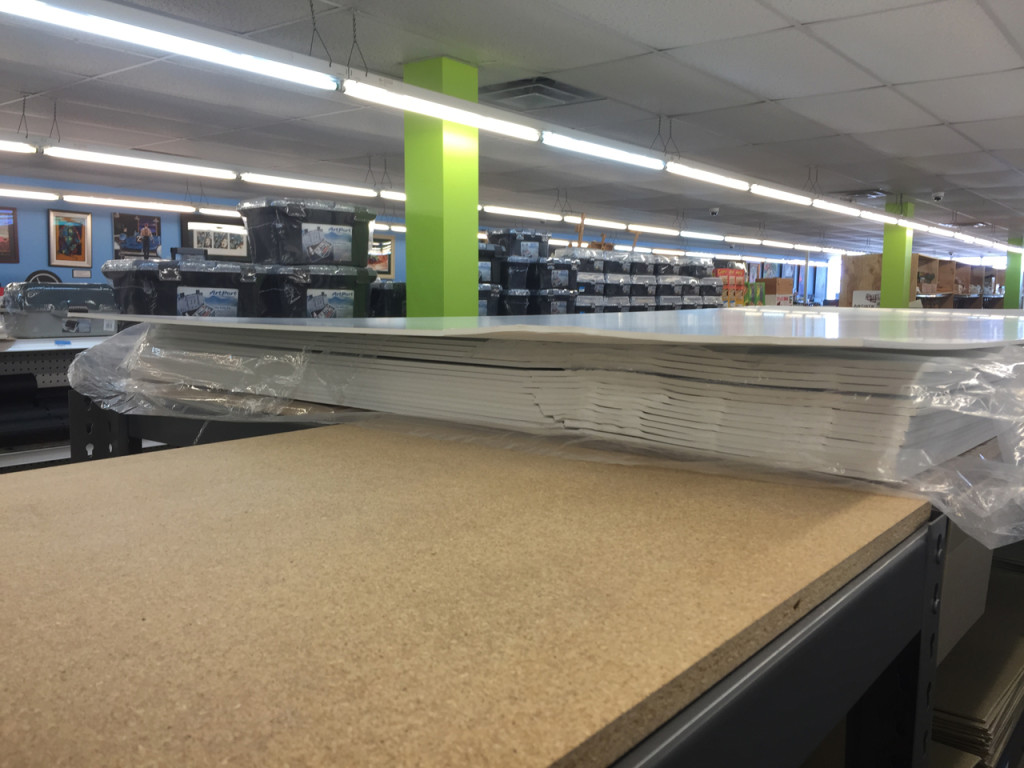
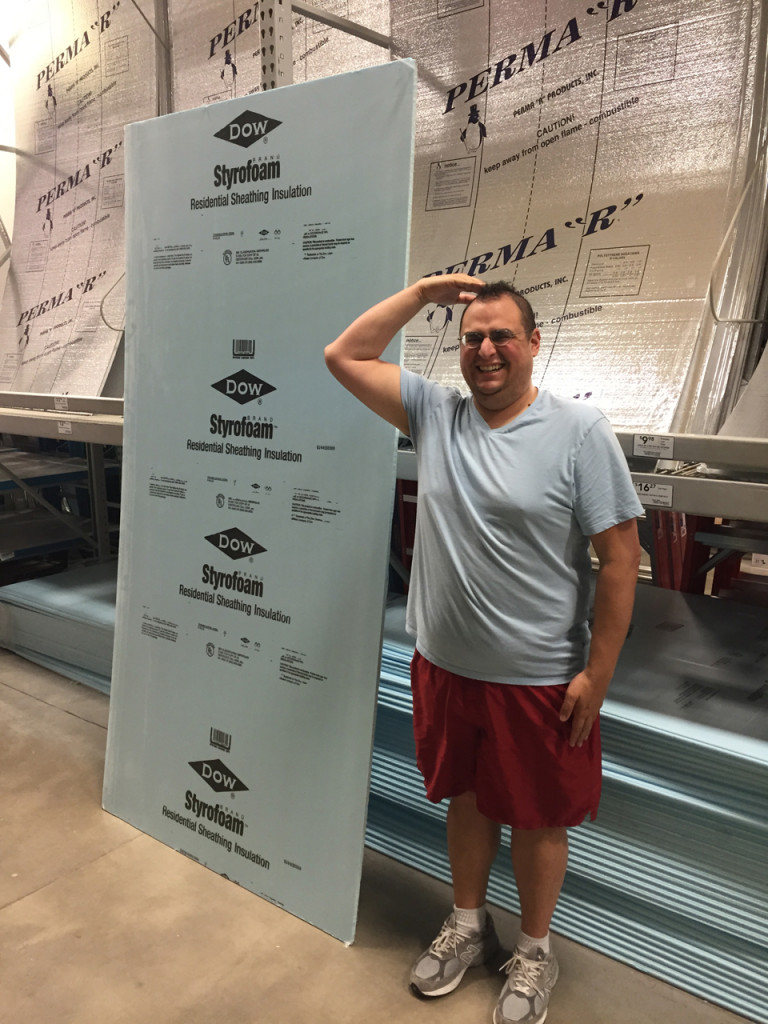
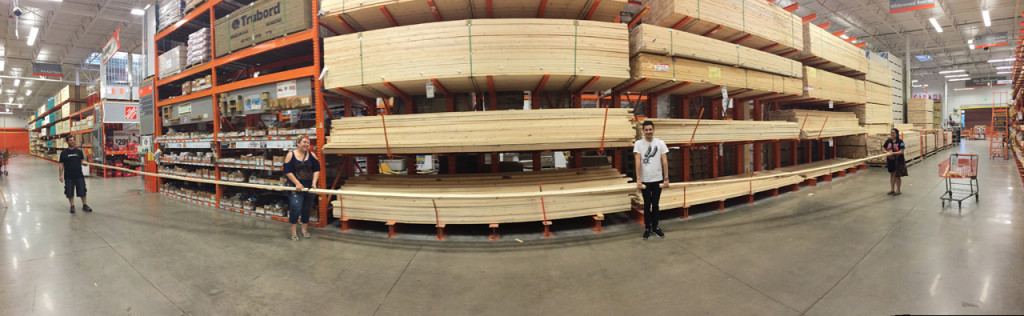
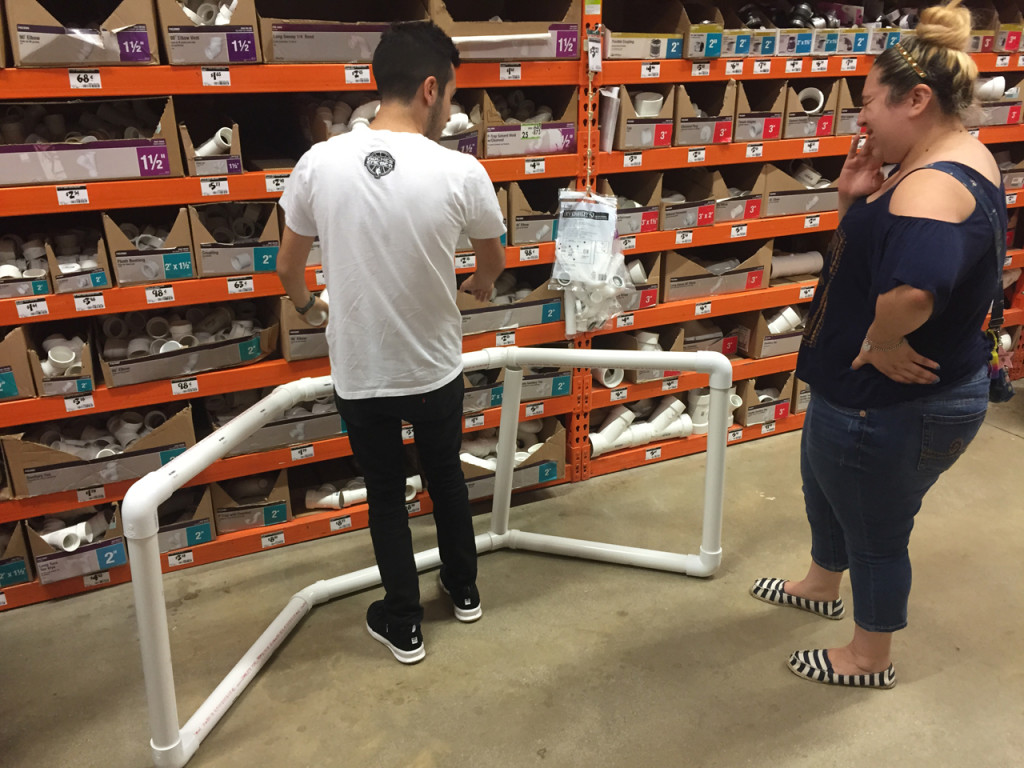
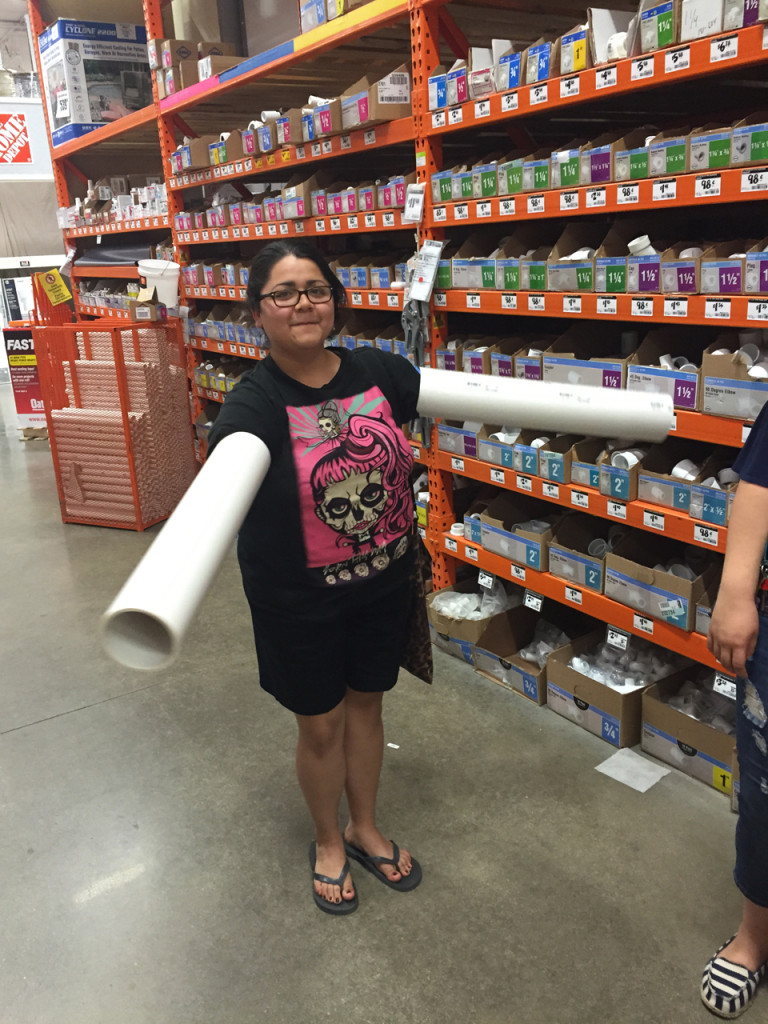
After an array of prototypes, we finally settled on a design. This design was influenced by the physical space we decided to use. CM student Robert had learned about the Radius Center, a community space that supports the arts, and insisted we should go check it out. As the time to have the large projection screen built came, we went to the space and took measurements. We then met up and talked about specifics of the prototypes and arrived at Home Depot to get a more hands-on experience and explore various materials needed for the showcase.
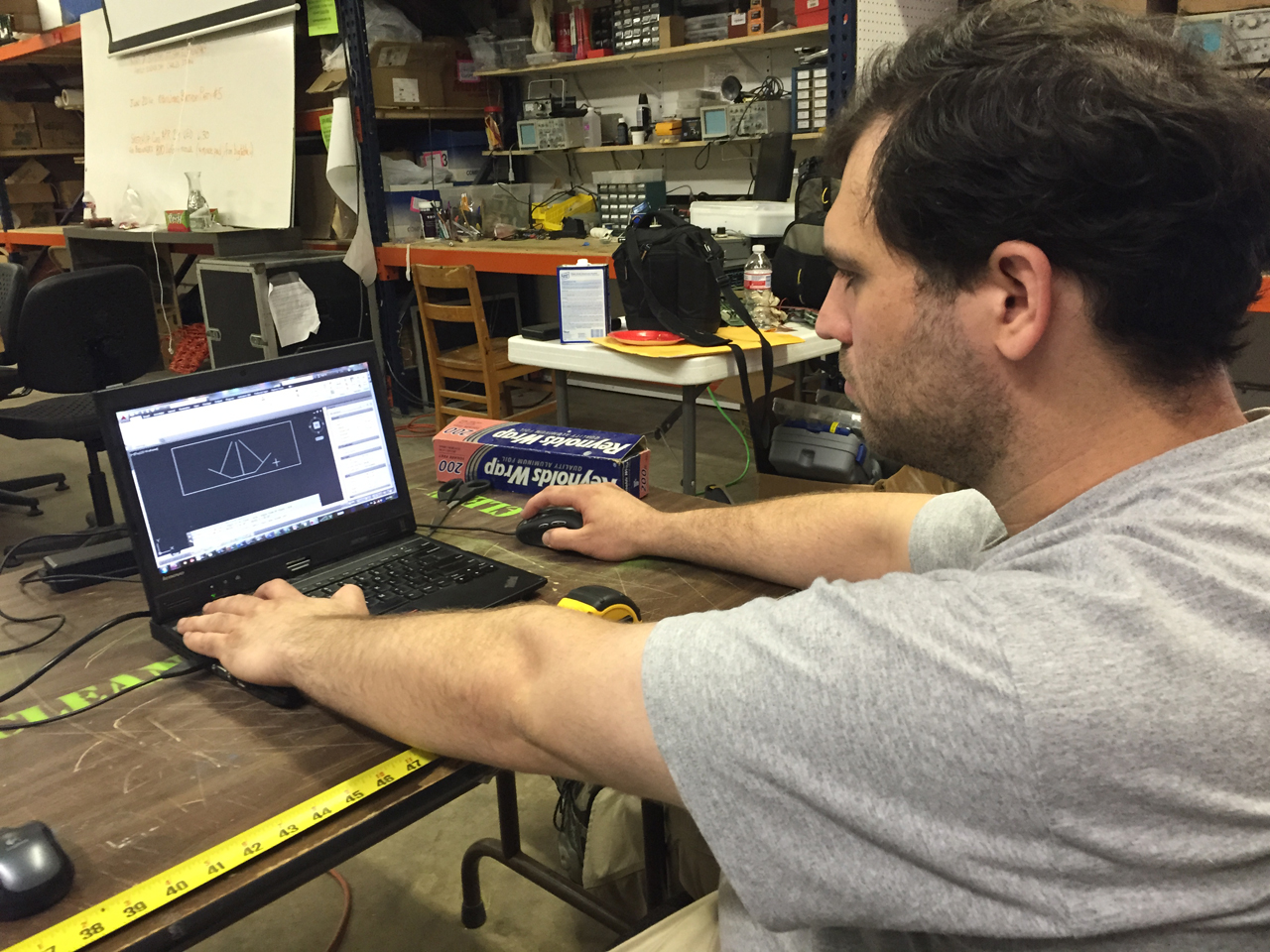
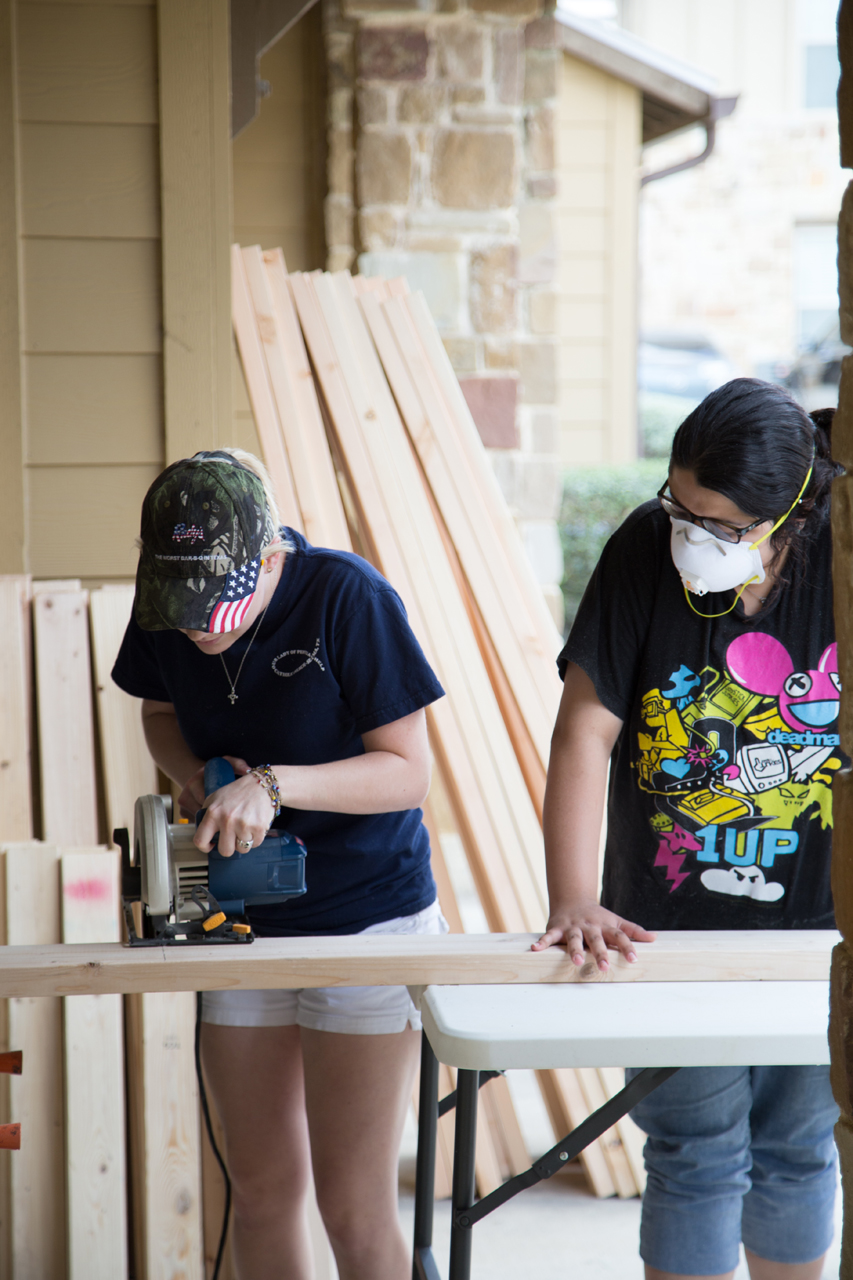
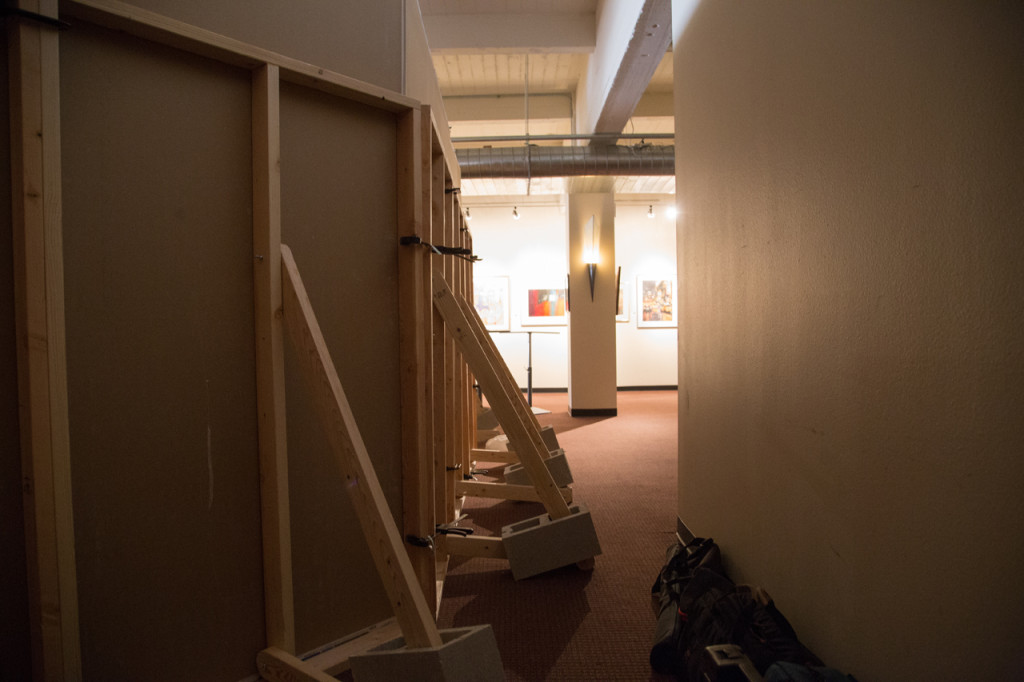
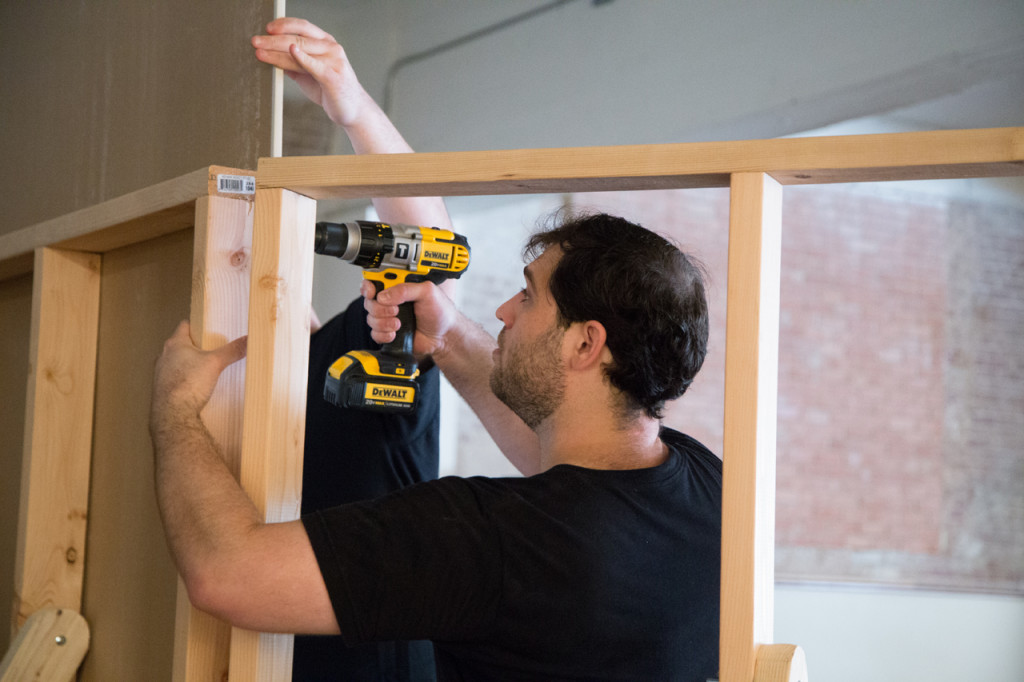
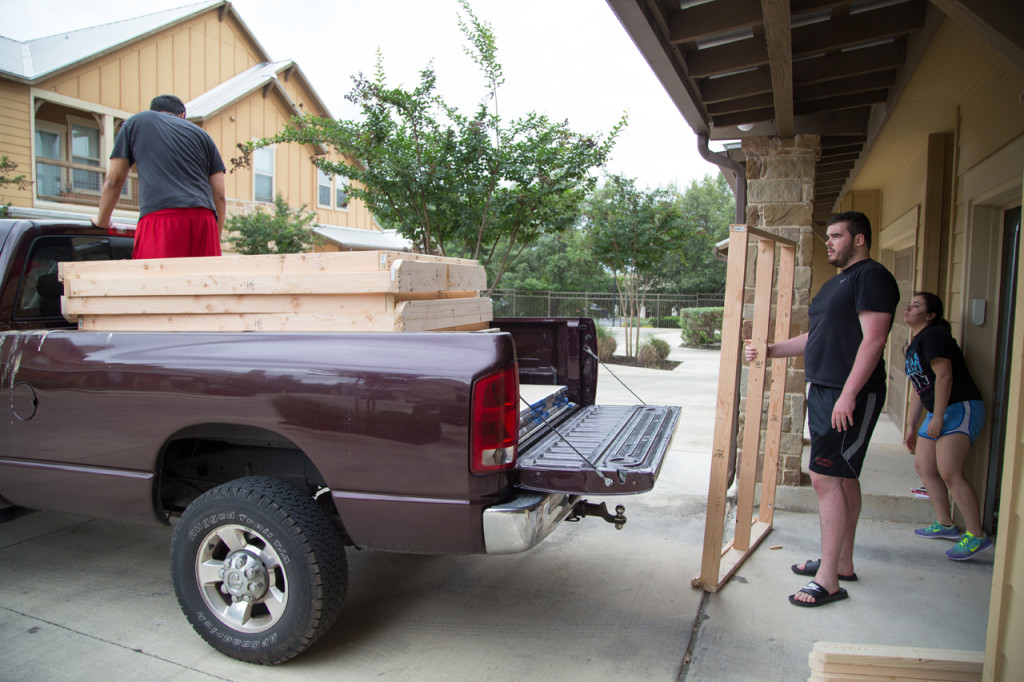
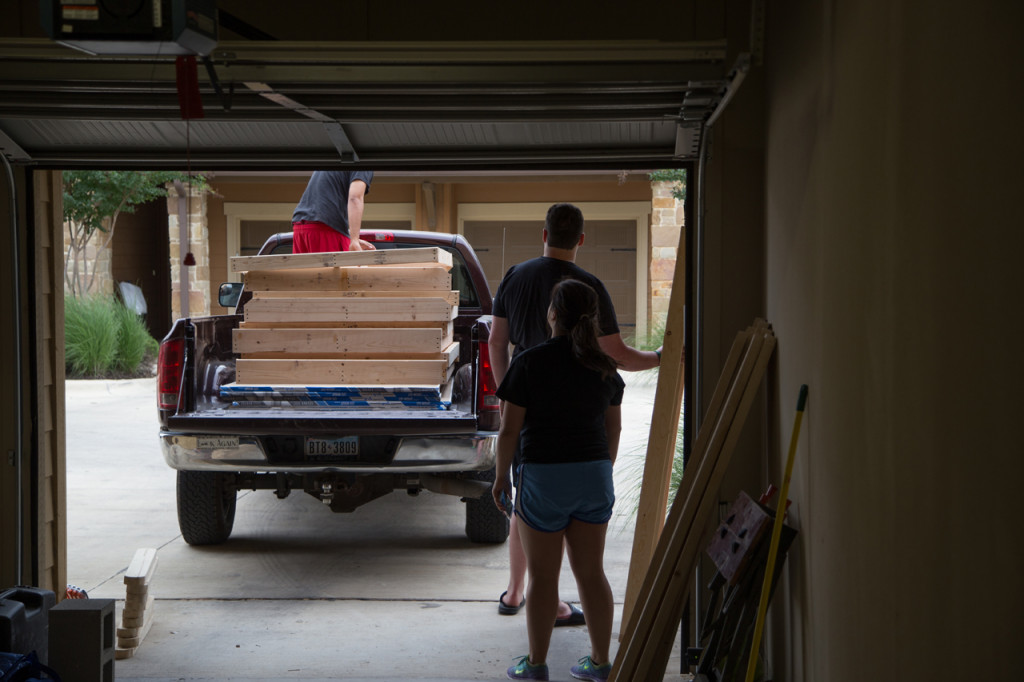
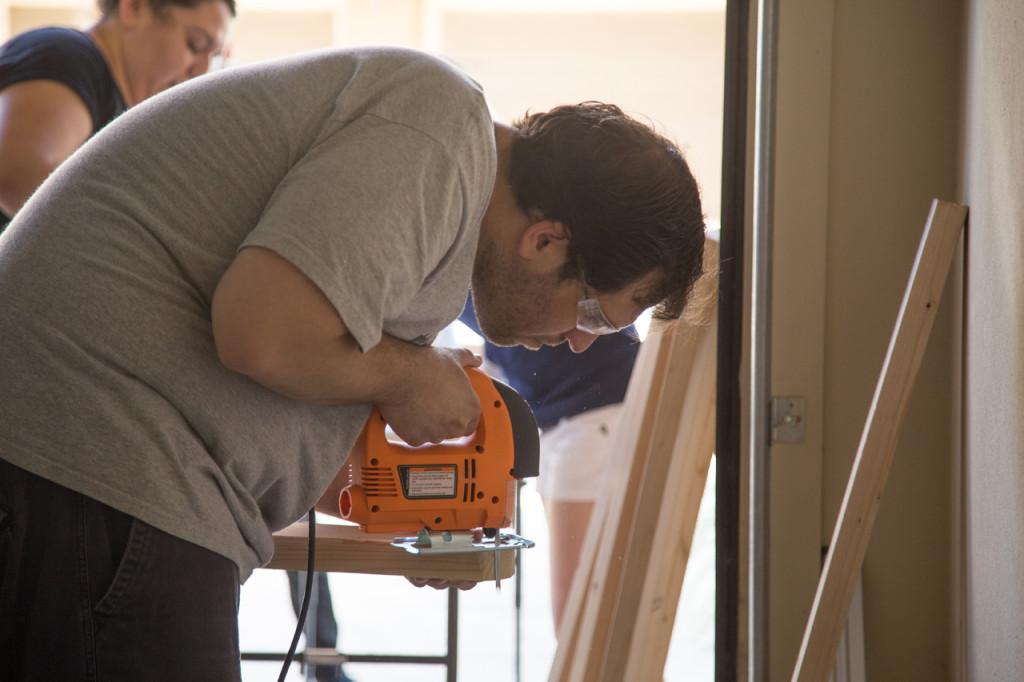
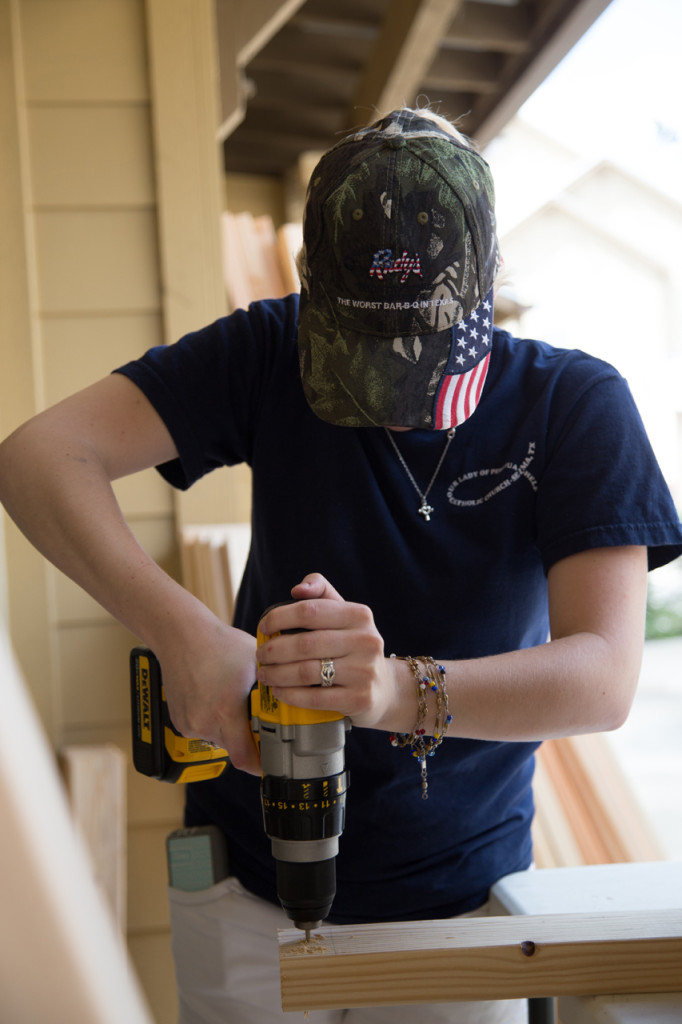
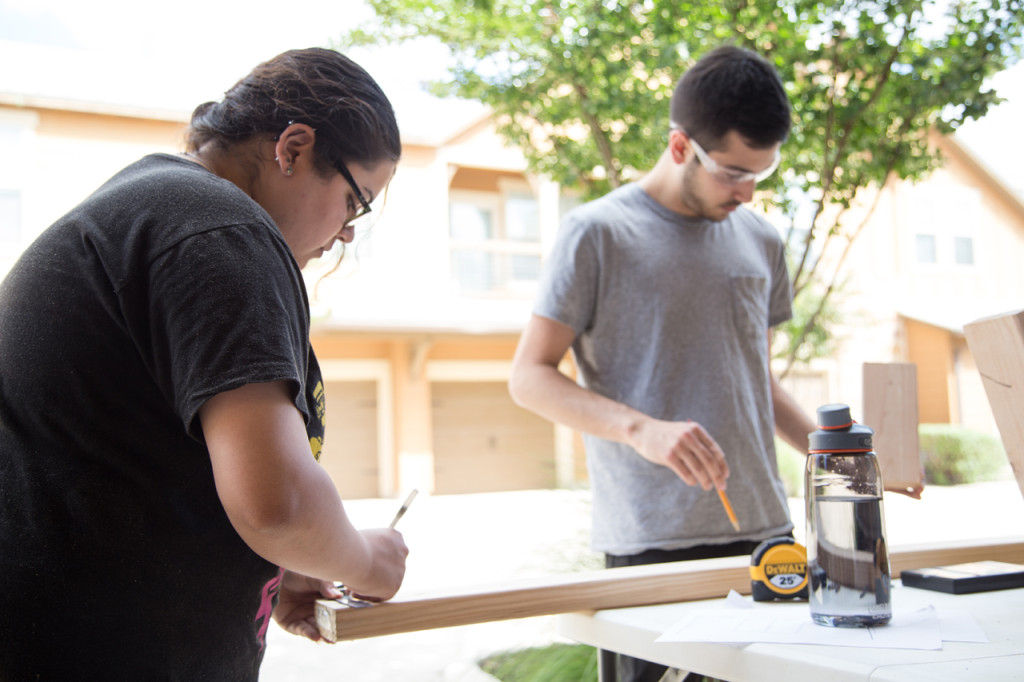
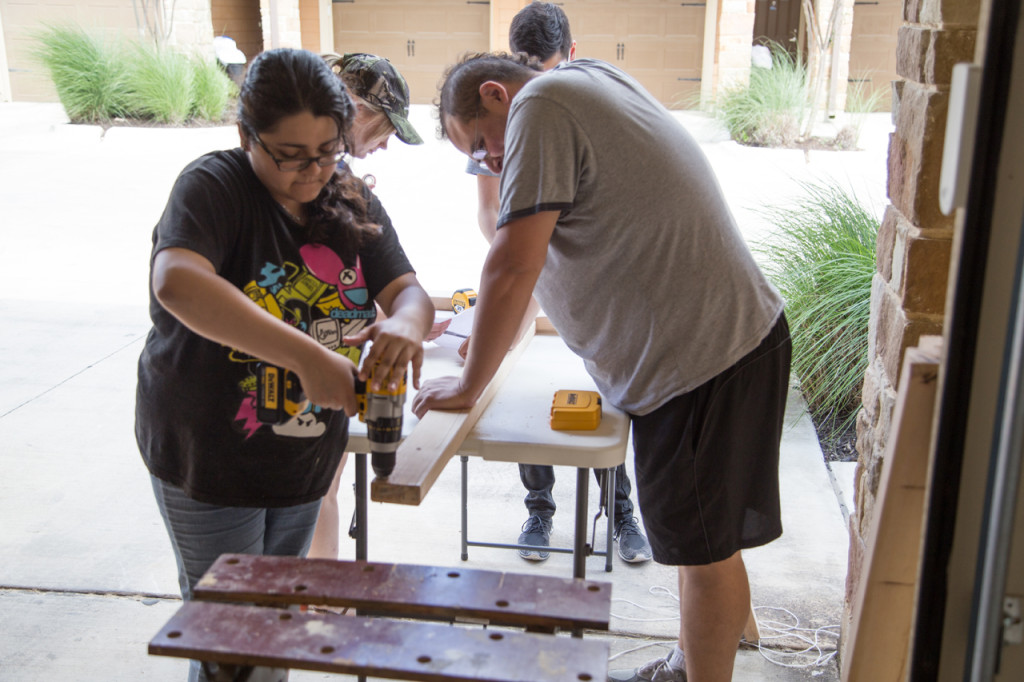
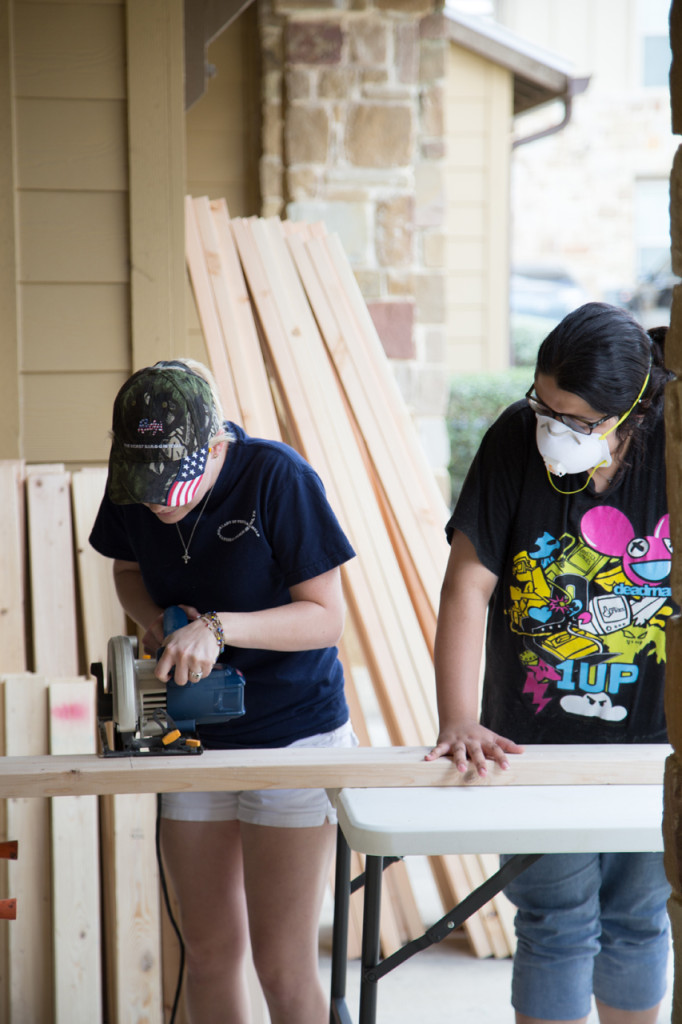
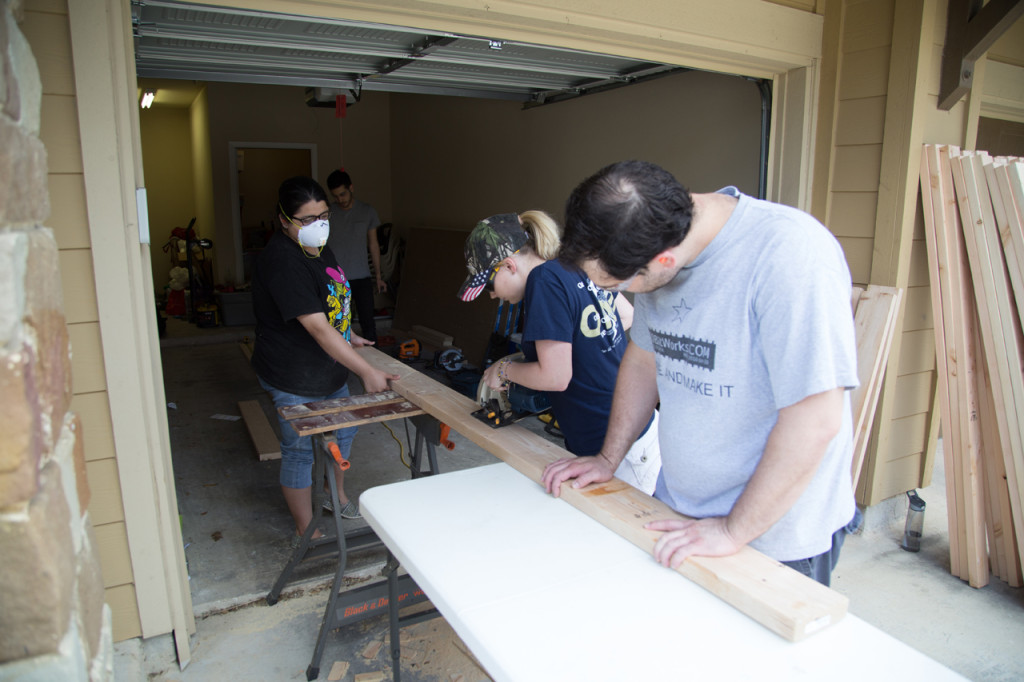
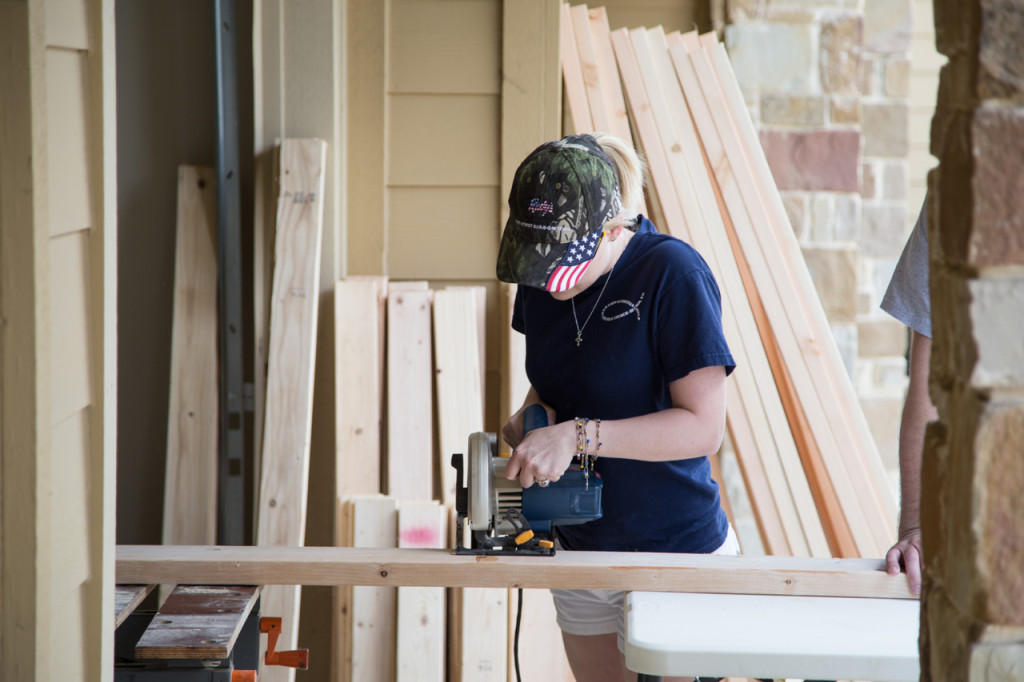
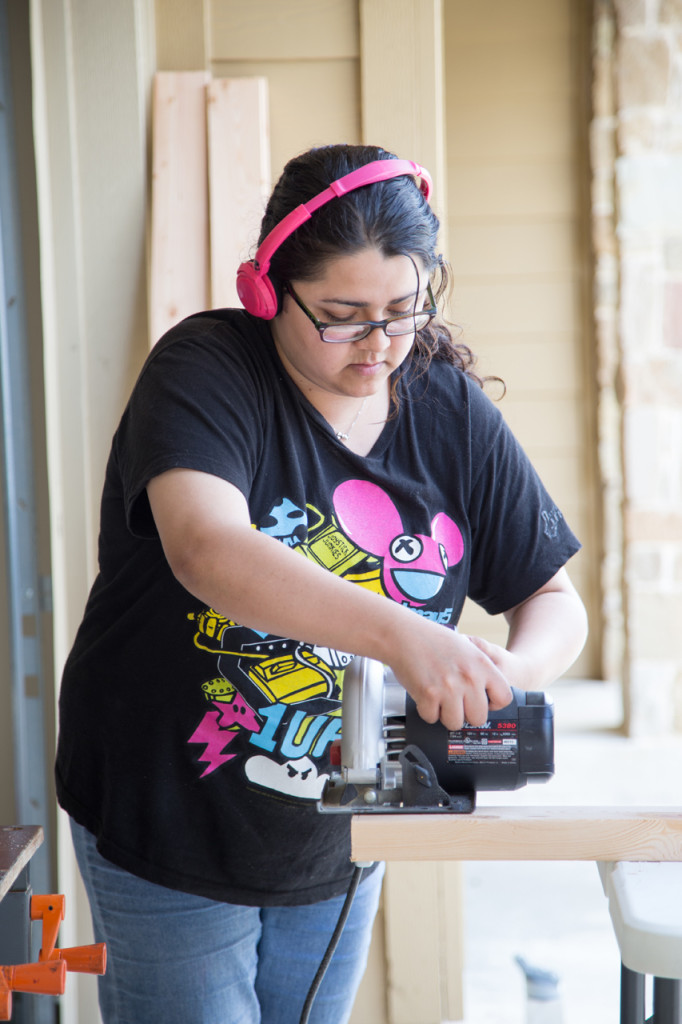
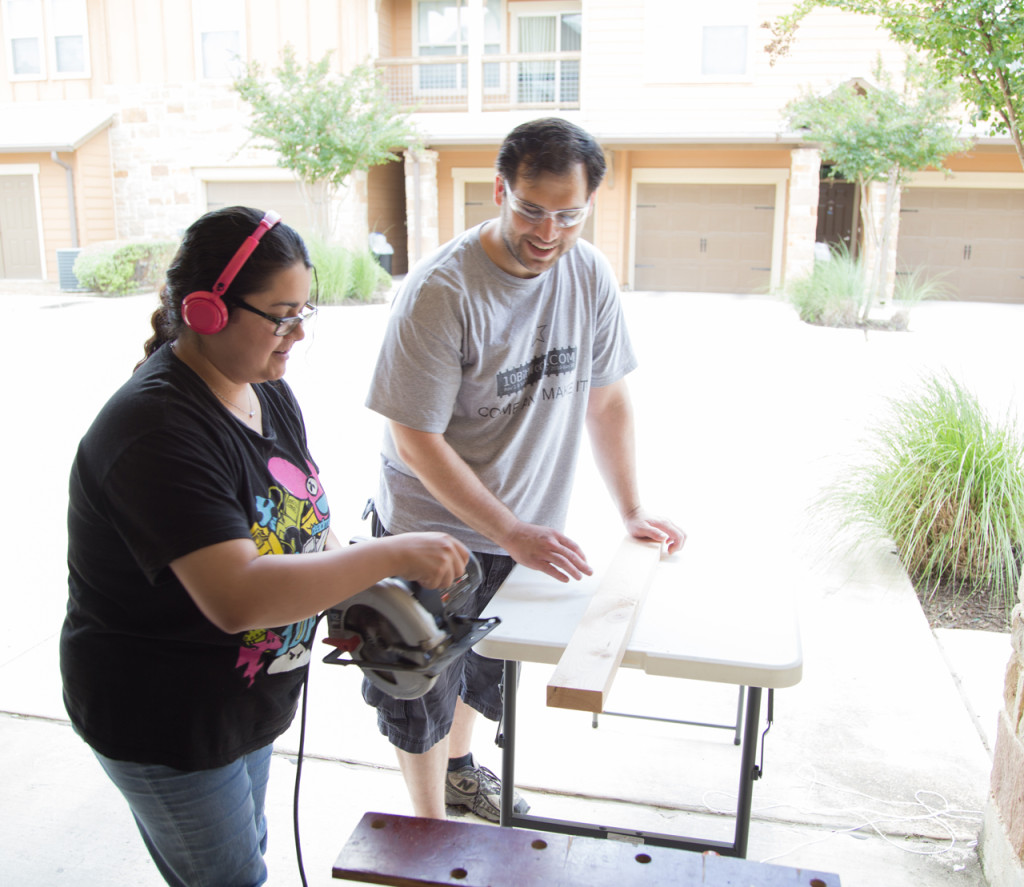
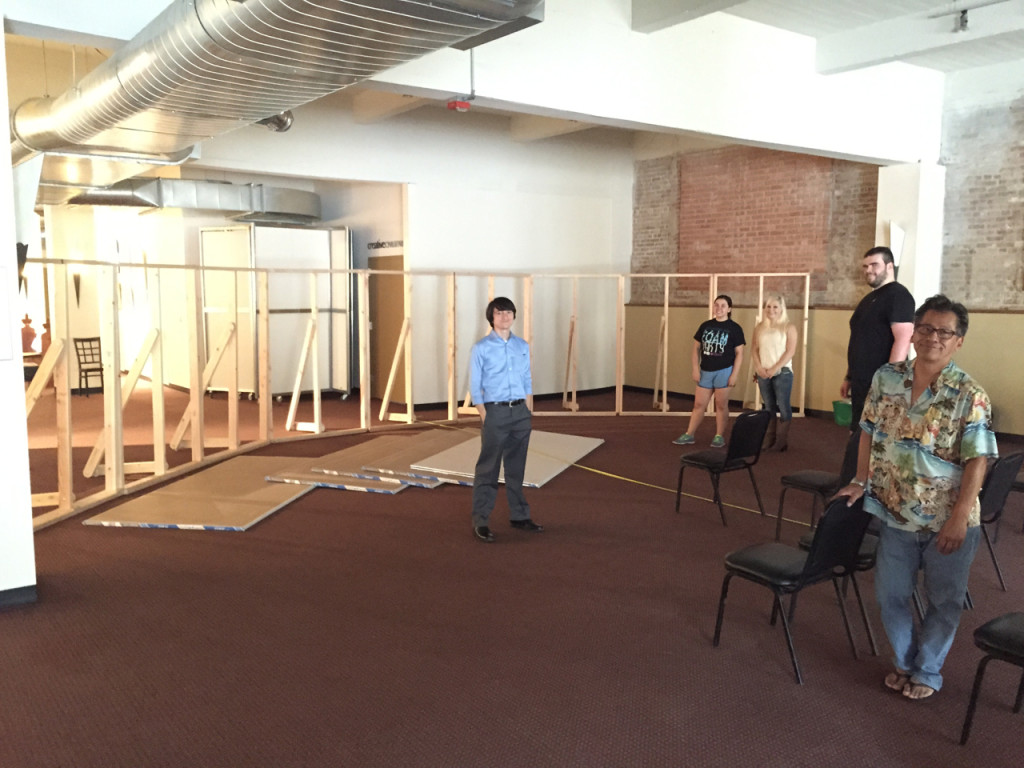
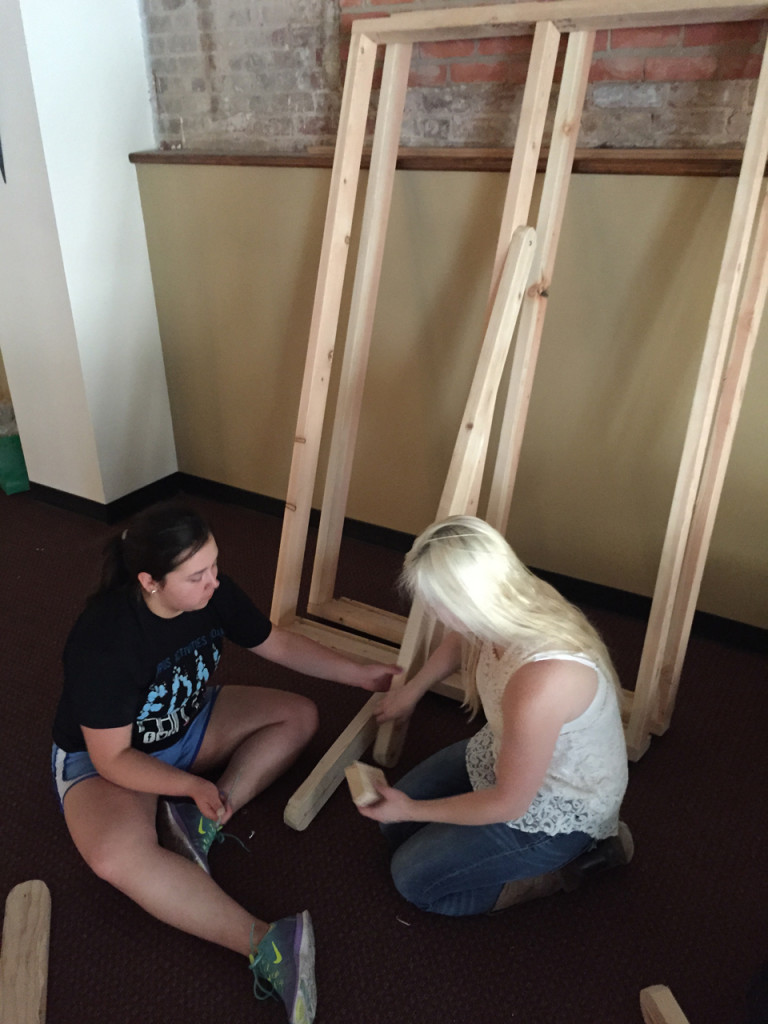
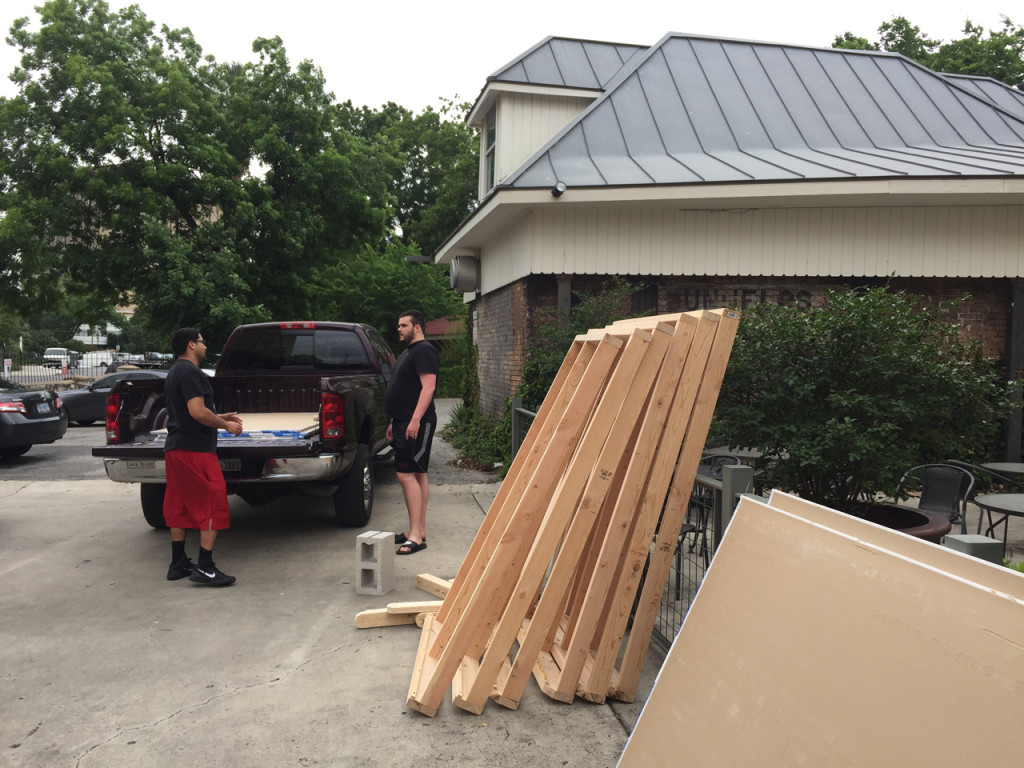
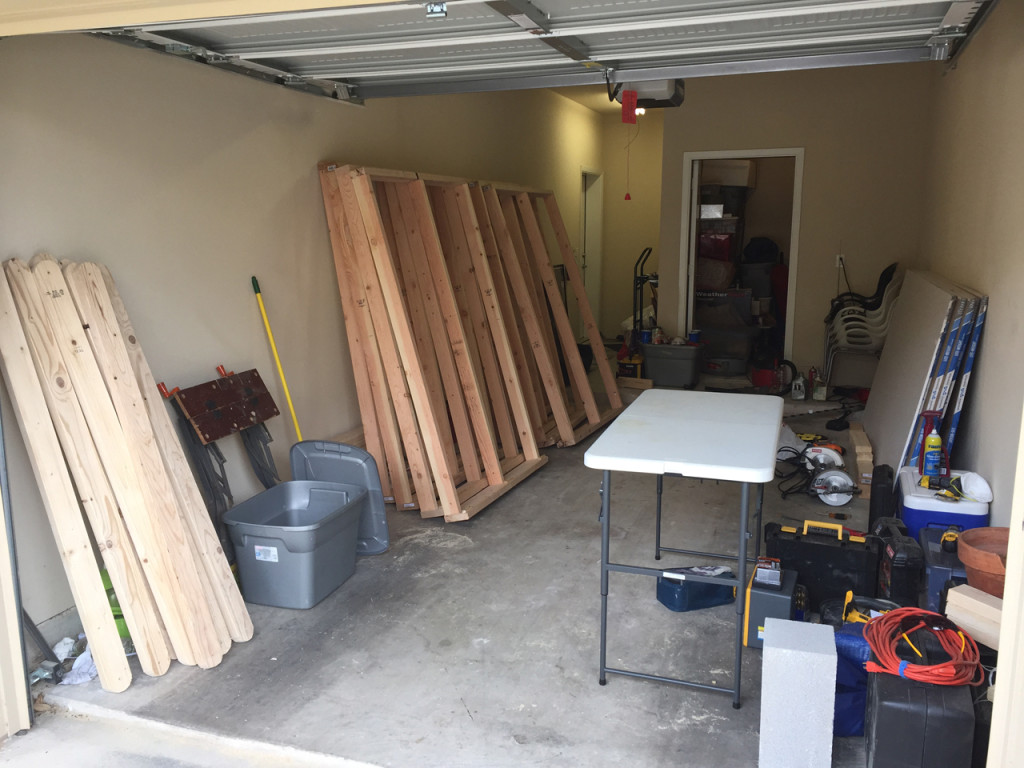
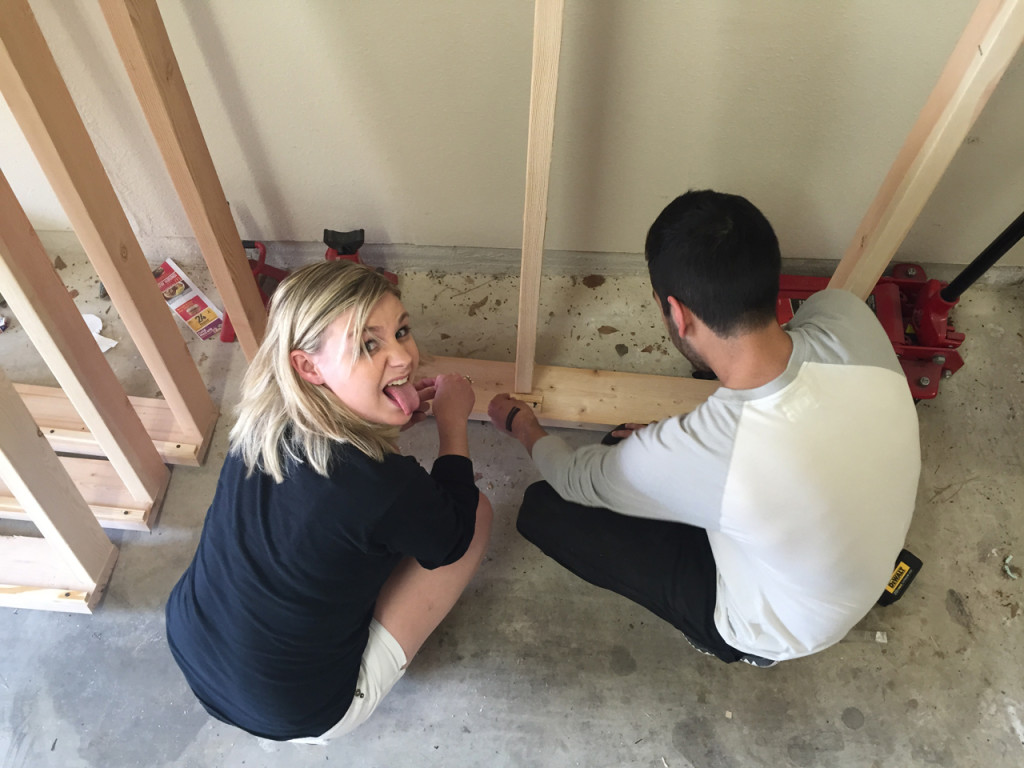
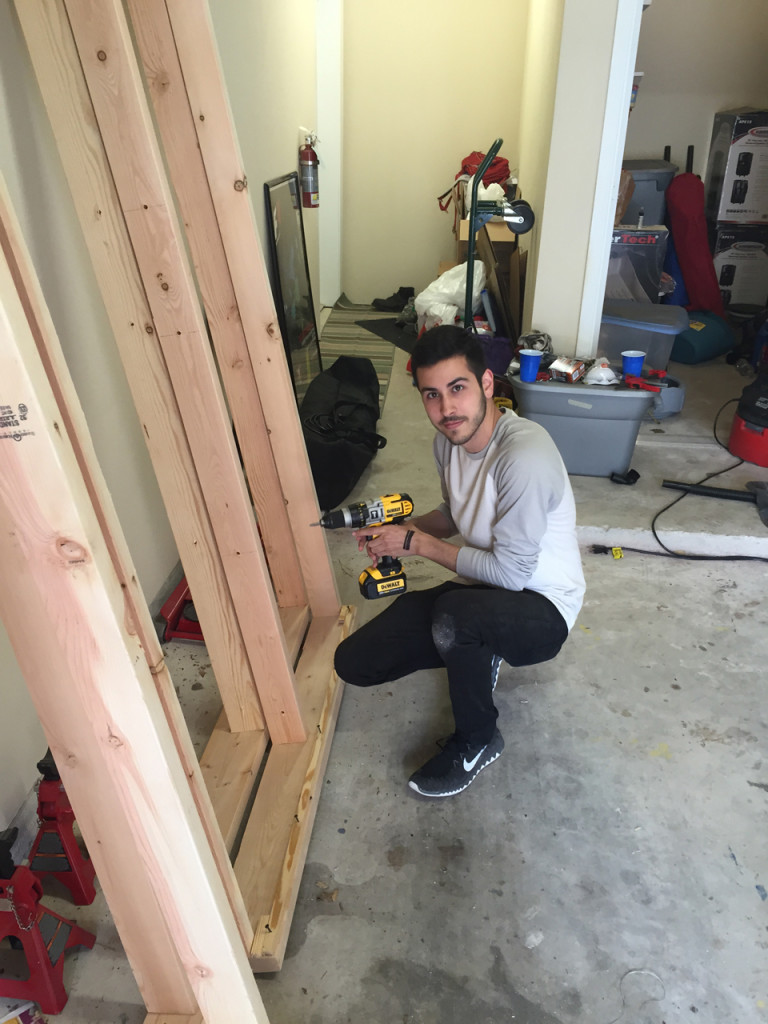
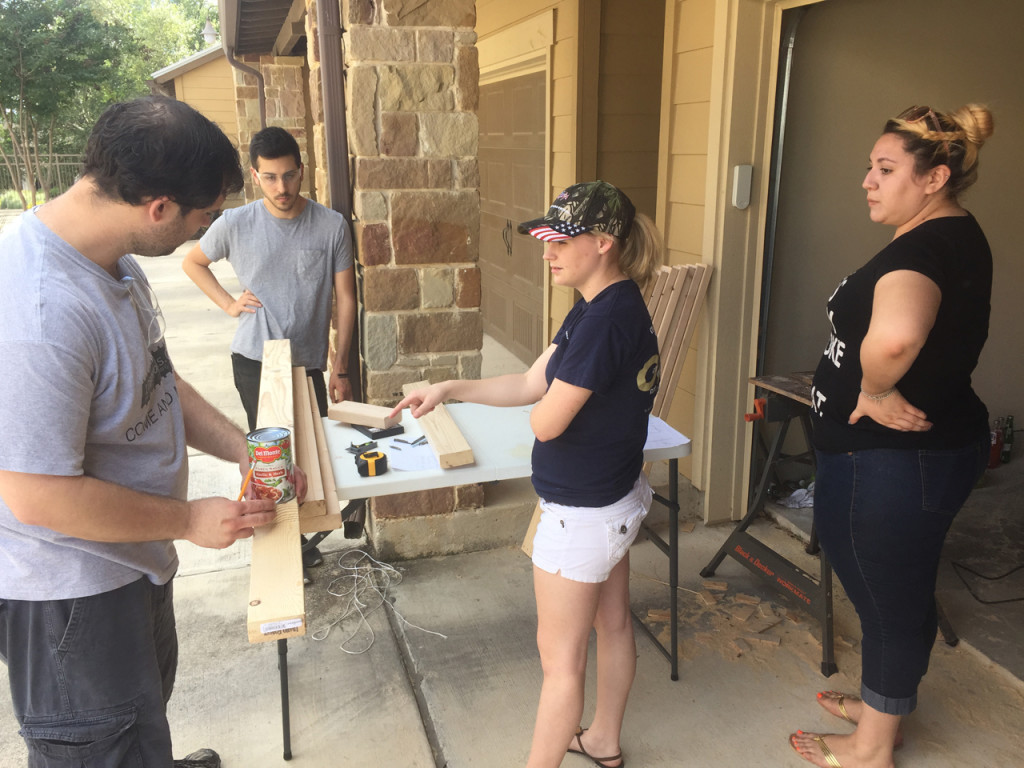
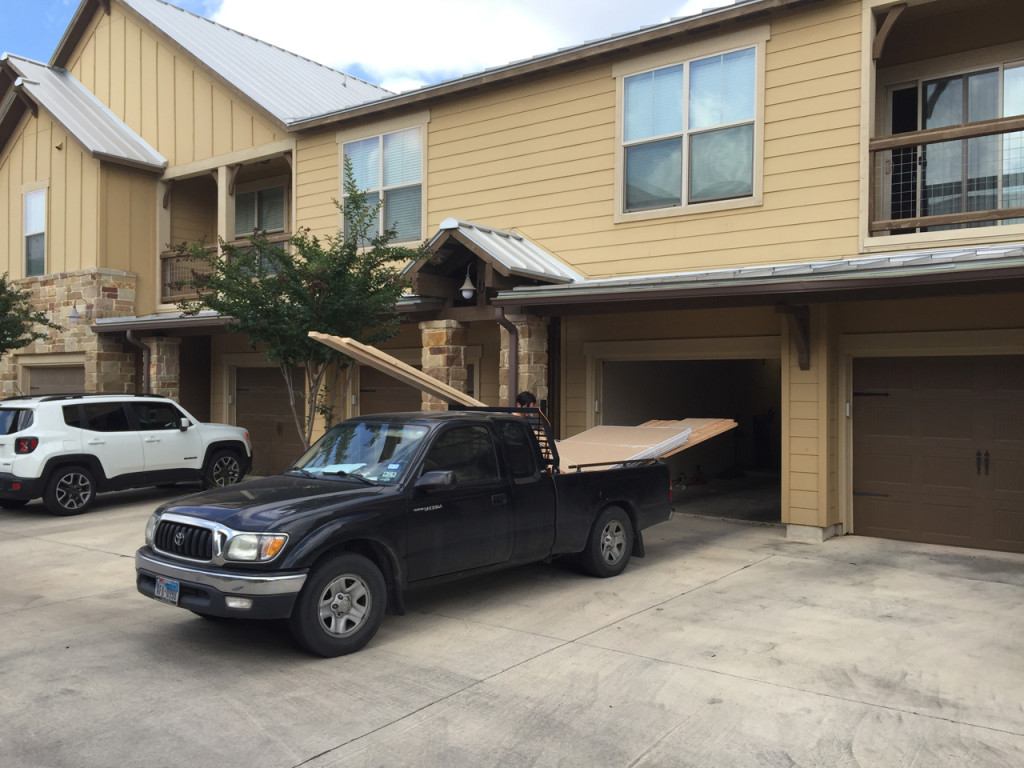
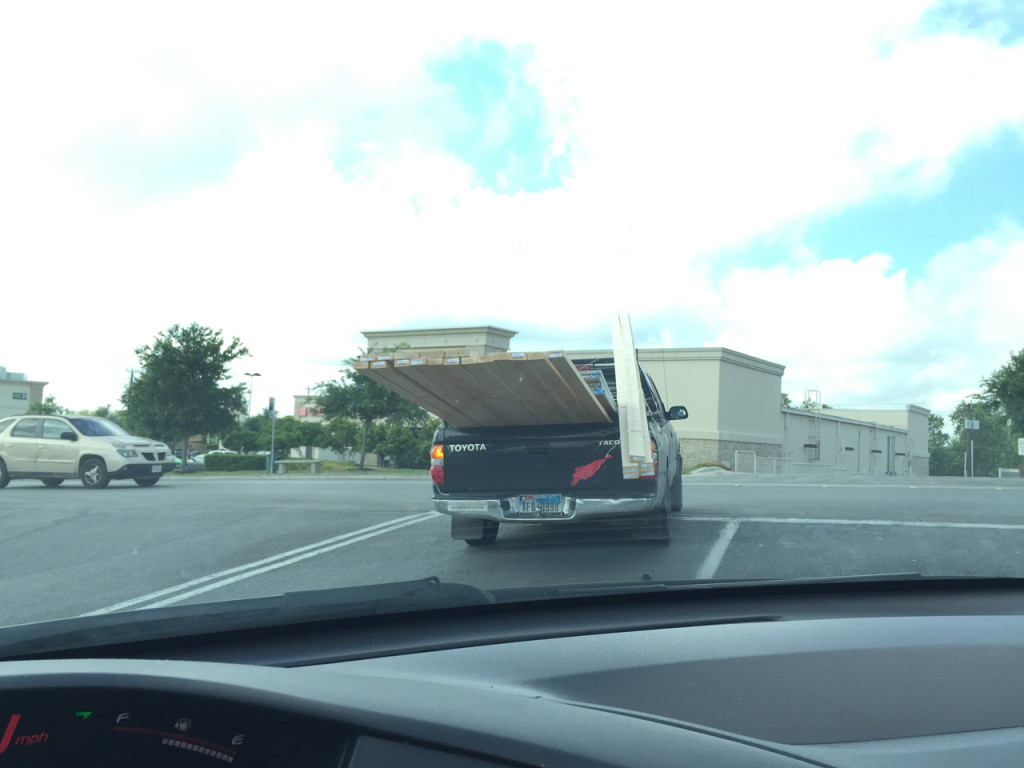
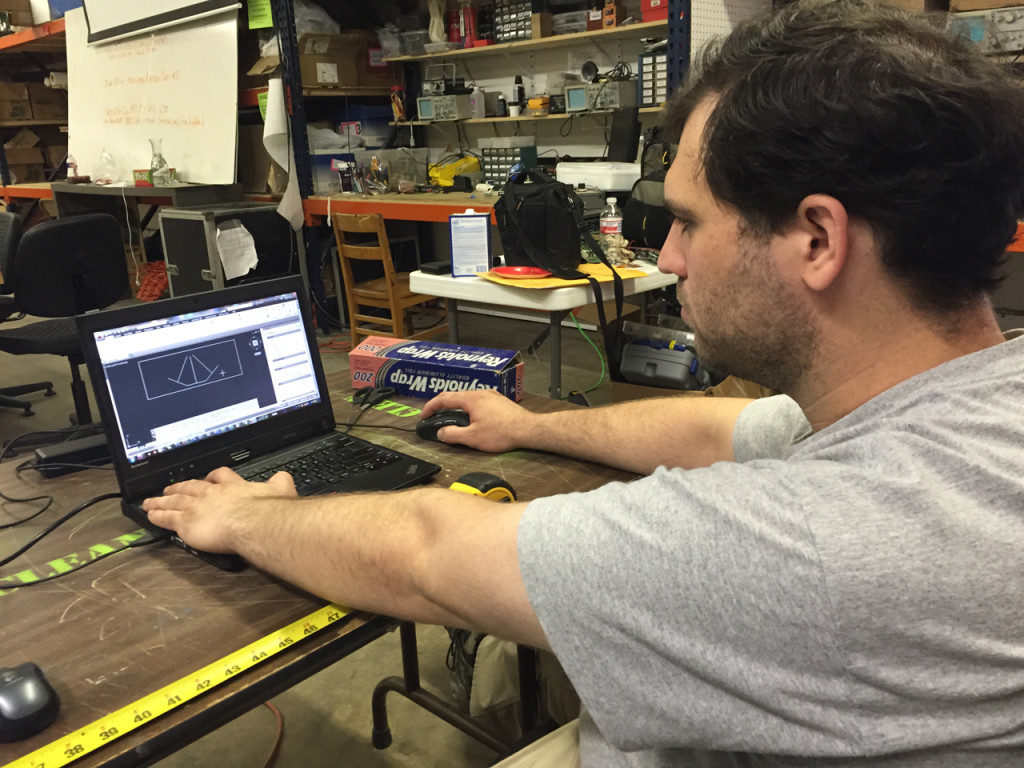
Working with Jeremy Zunker, a CMC member and local engineer, we developed a model, and as a group decided on days and times to meet to actually build the structure. Thanks to CMC member Andy Castillo we were able to go pick up the materials from Lowes and take them over to a garage in the apartment complex where I live to begin construction.
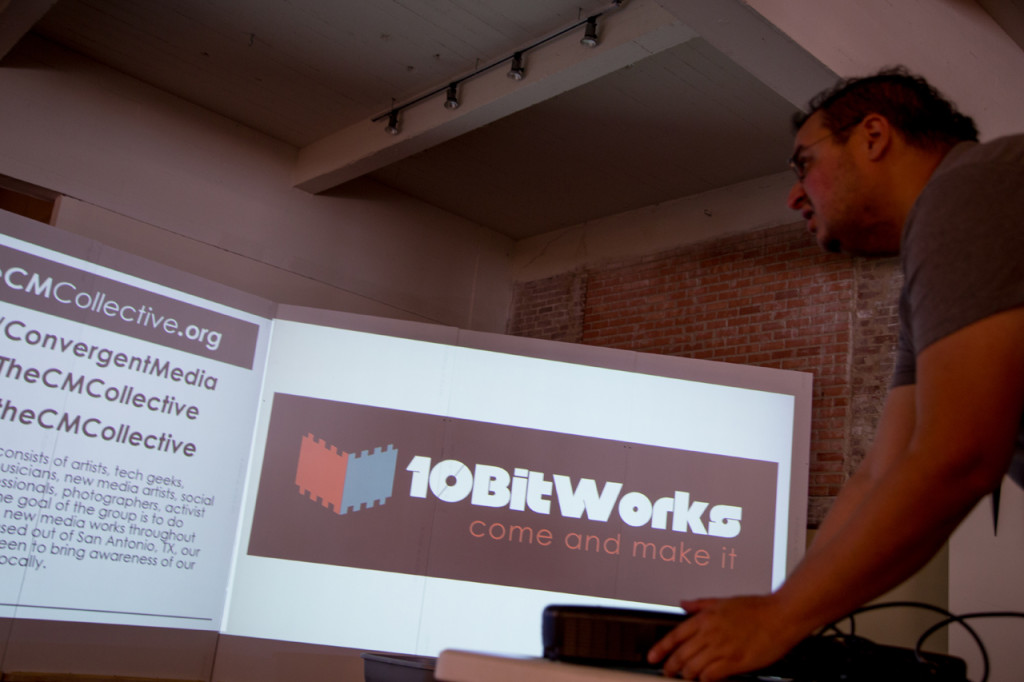
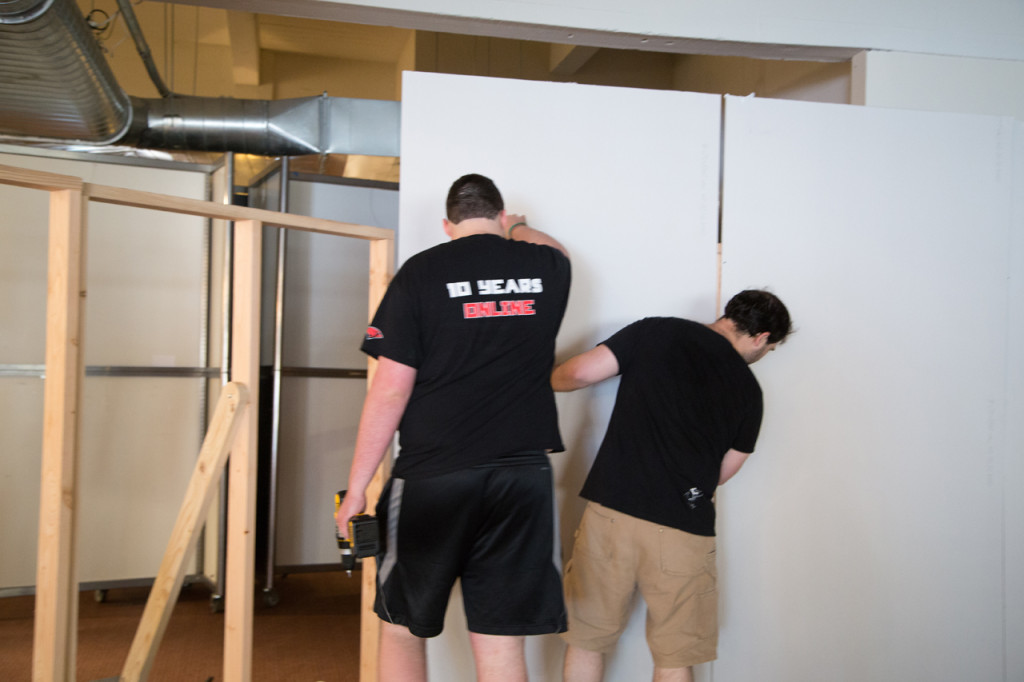
Our model for responsibilities was modeled after 10bitworks (a local maker space) and the CMC itself. We used a “doacracy”. Meaning people did what they could when they had time. I was the constant in the equation, but other then that, we had people who would come and help in no particular order. This resulted in fresh minds who showed up at every meeting ready to get work done.
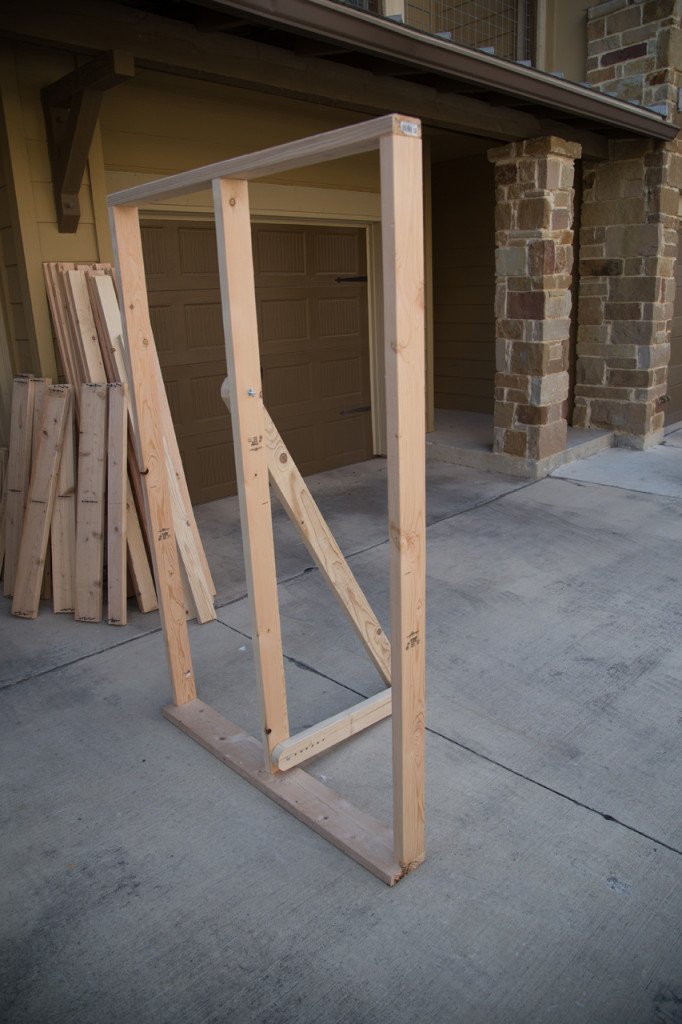
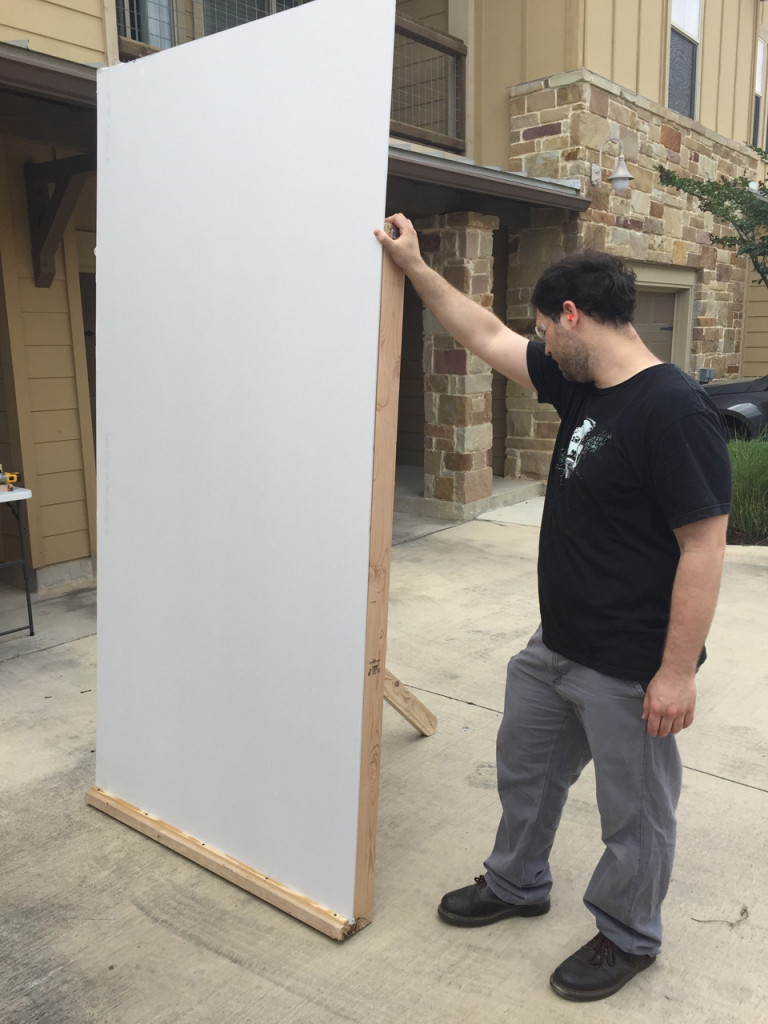
So, in roughly 3 days, we went from an idea to having a full screen built!
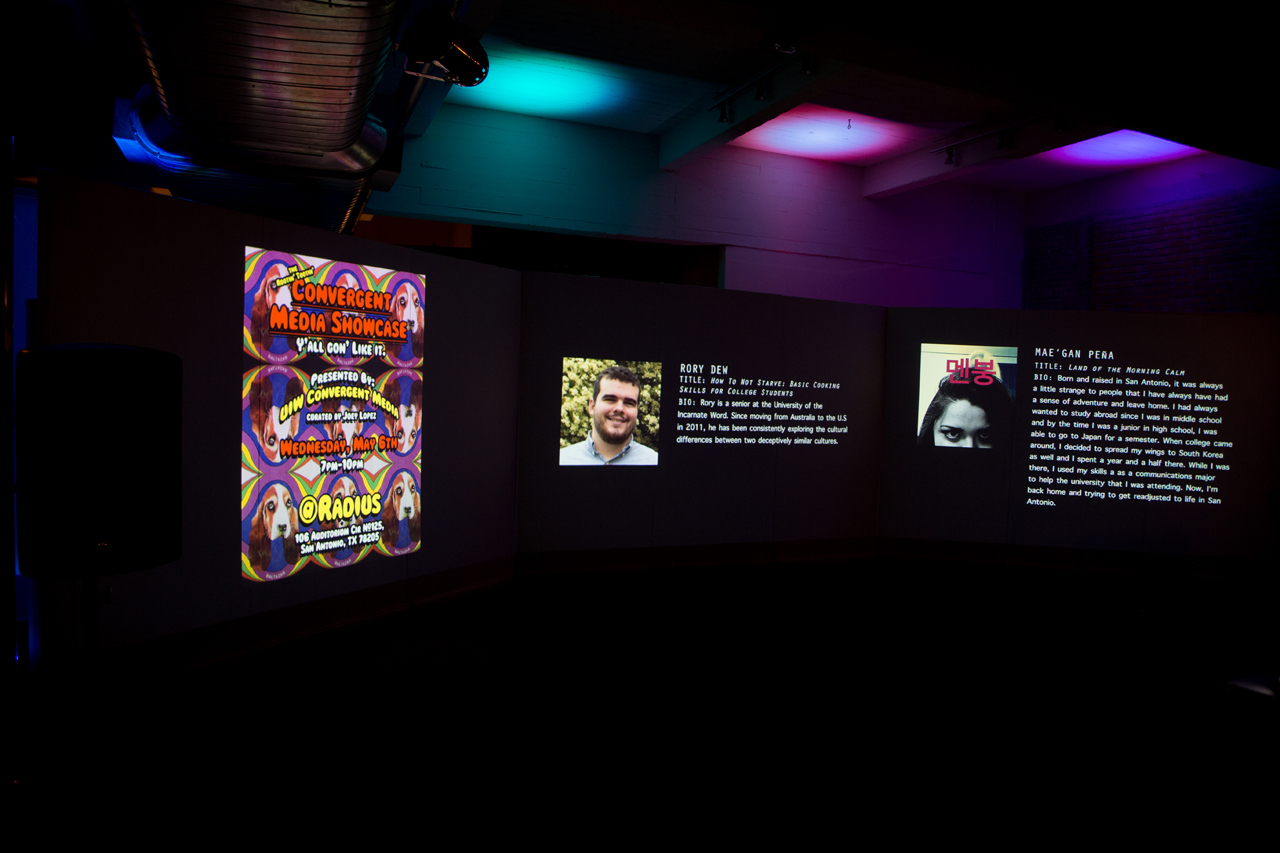
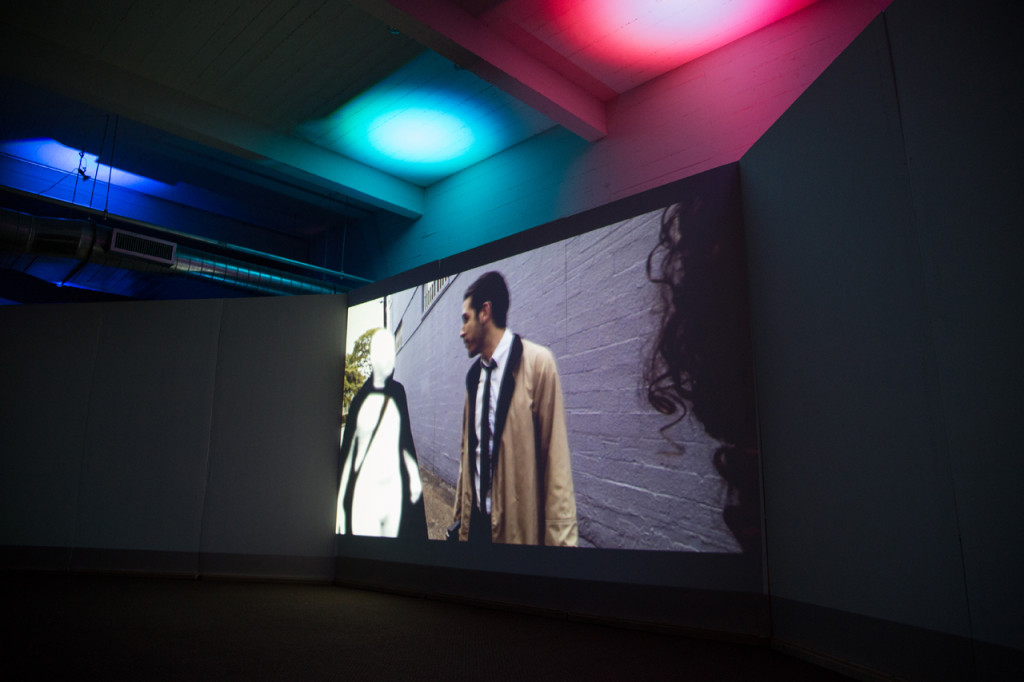
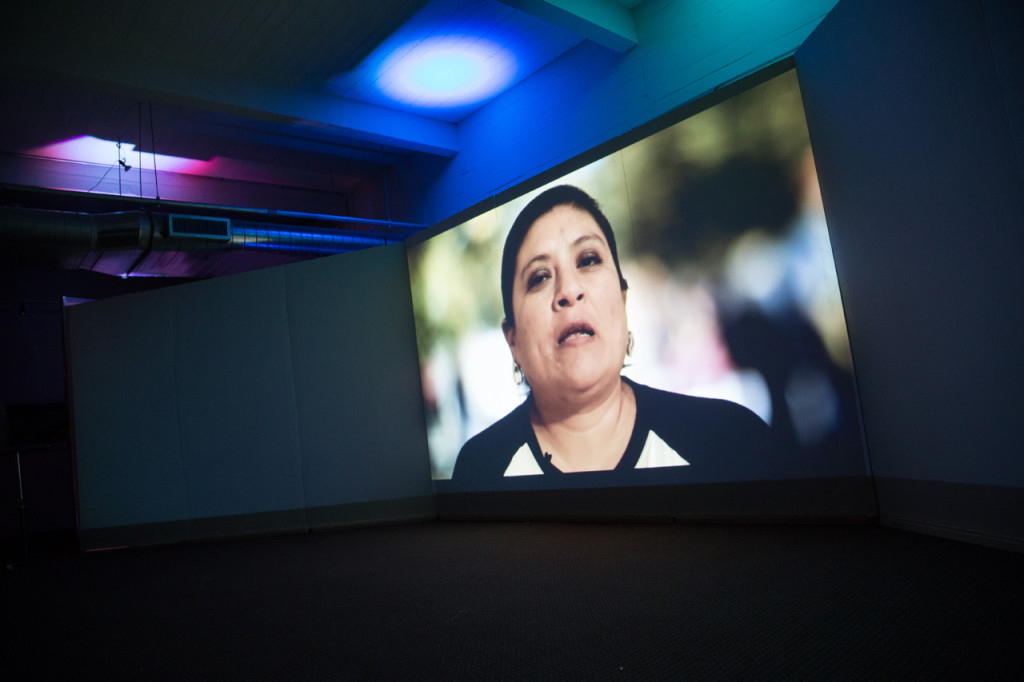
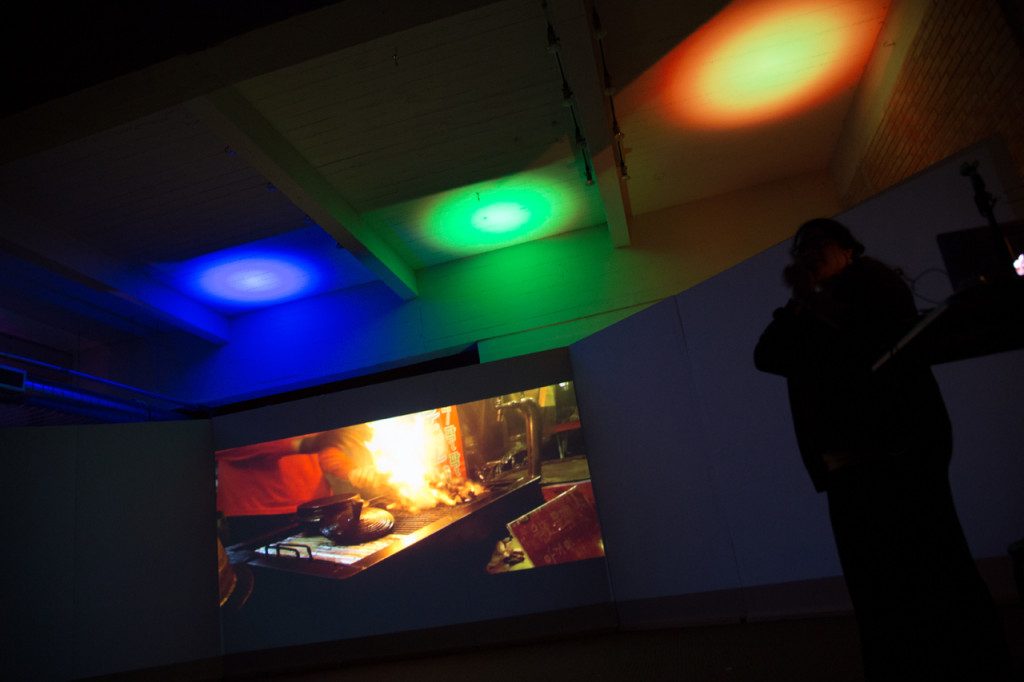
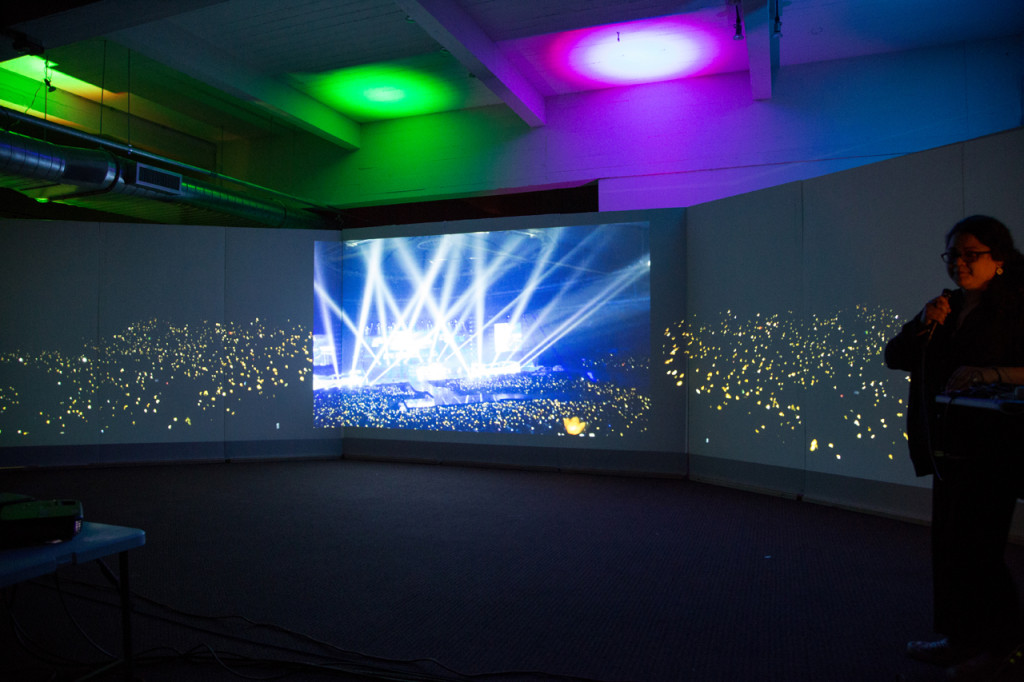
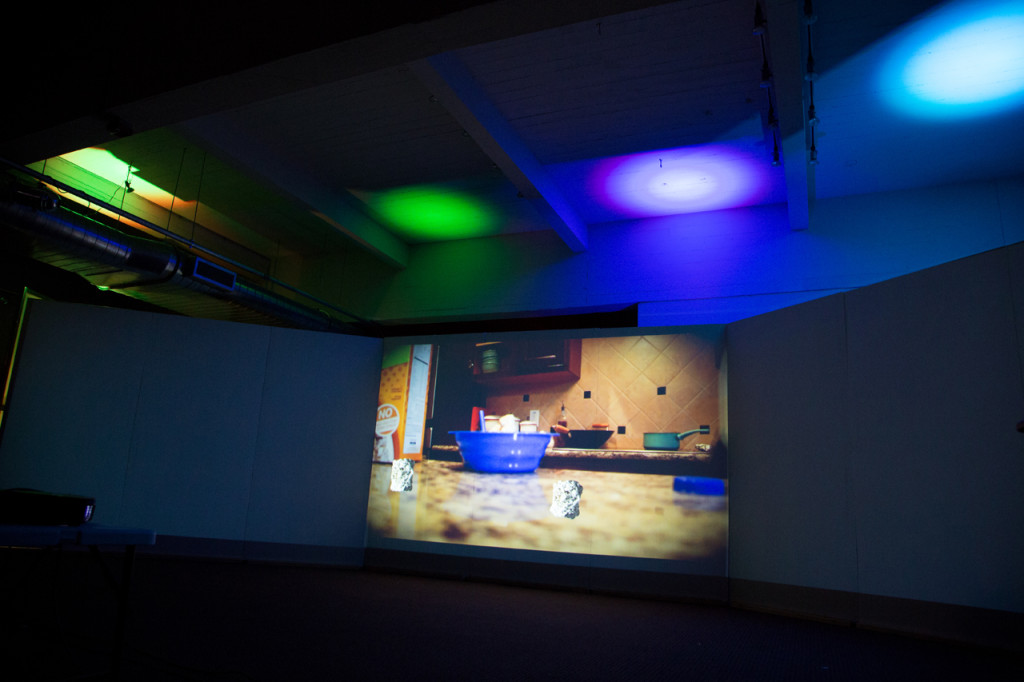
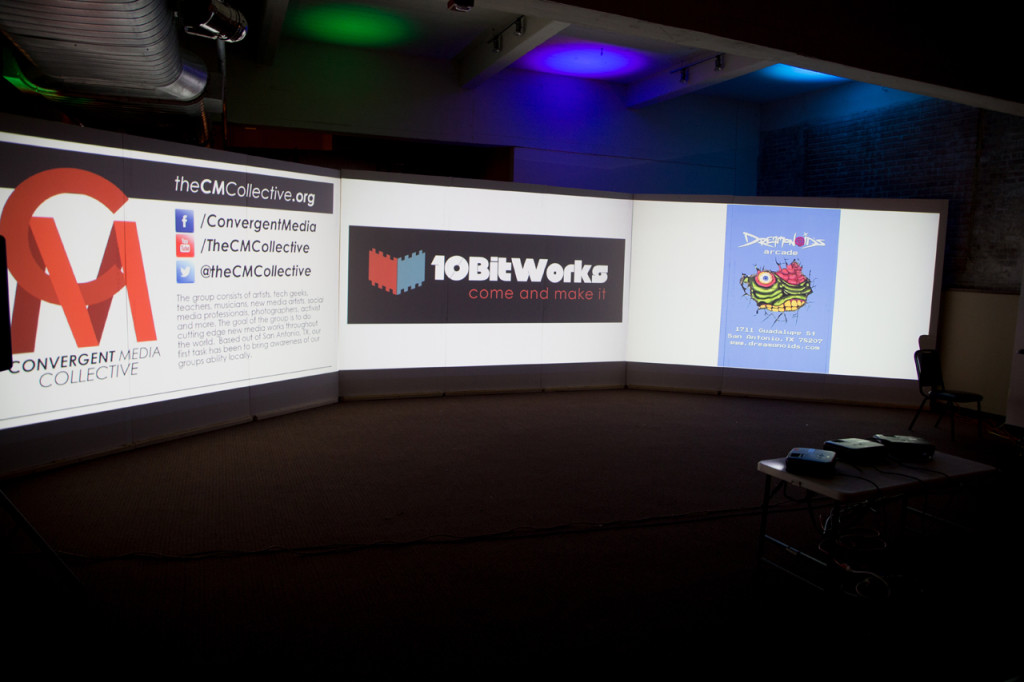
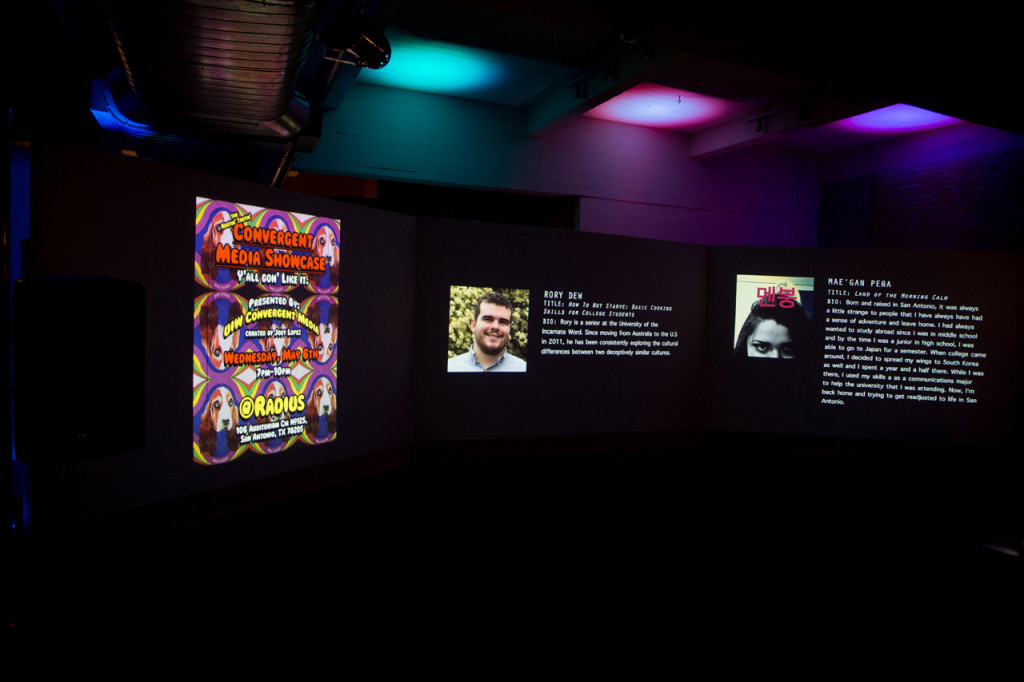
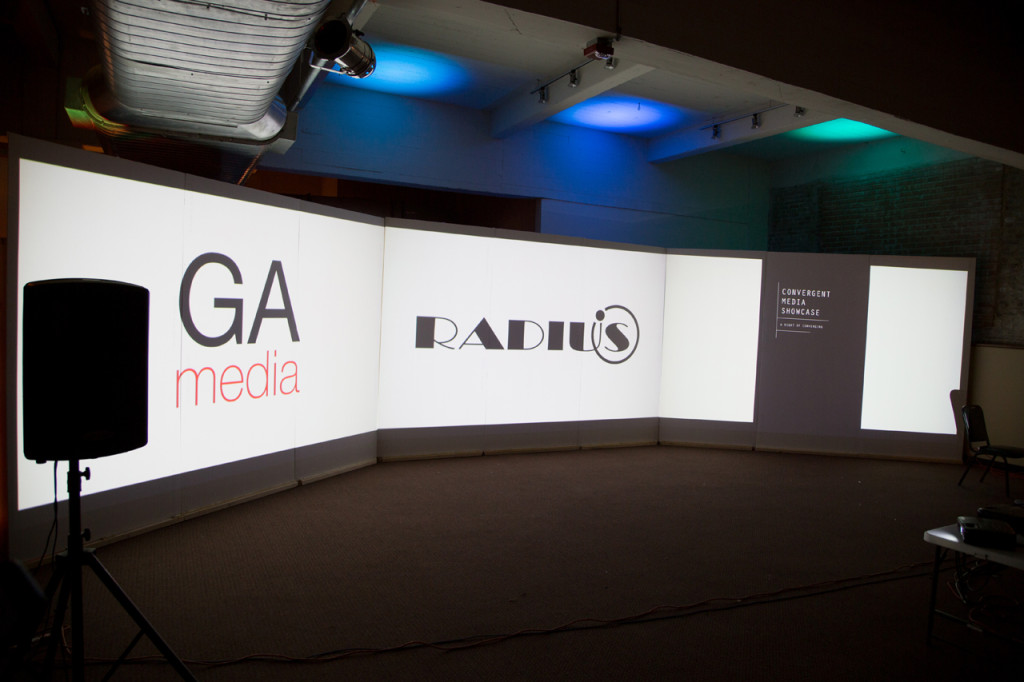
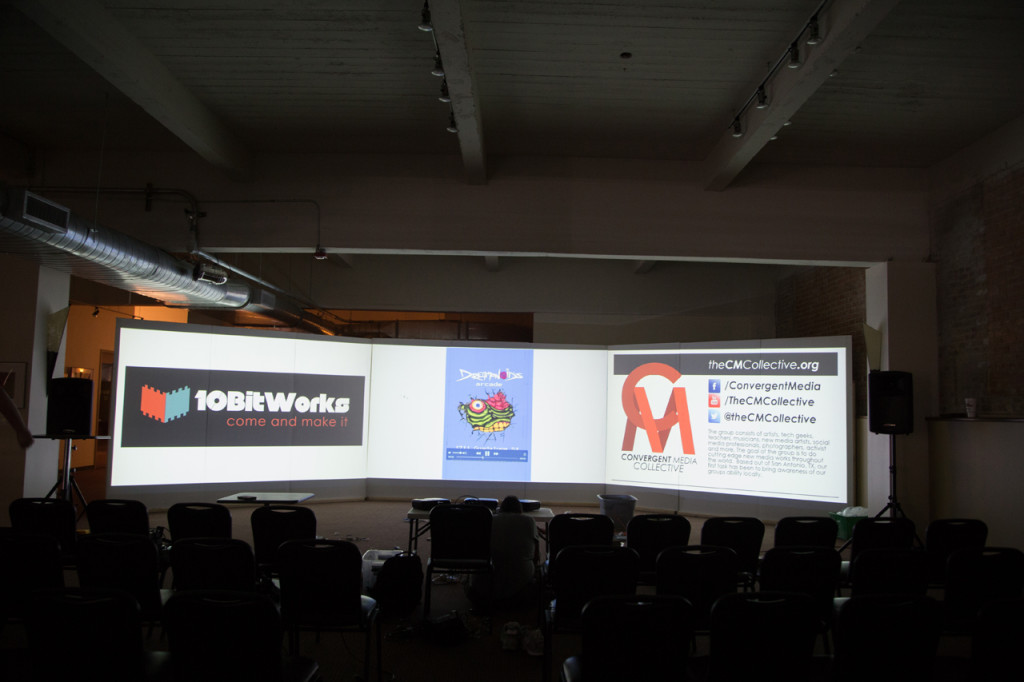
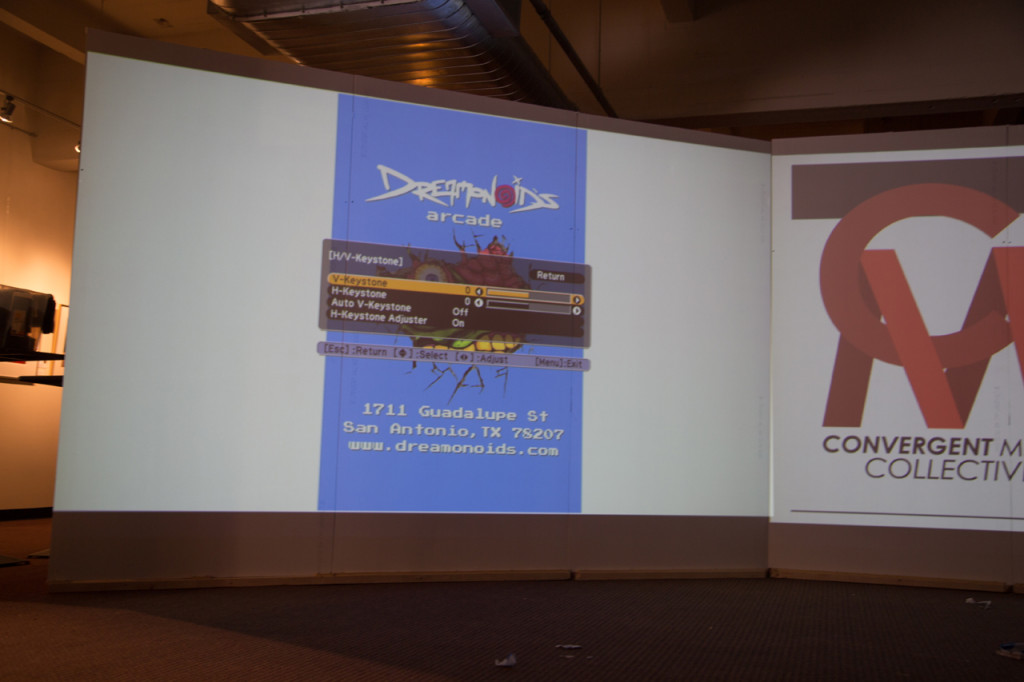
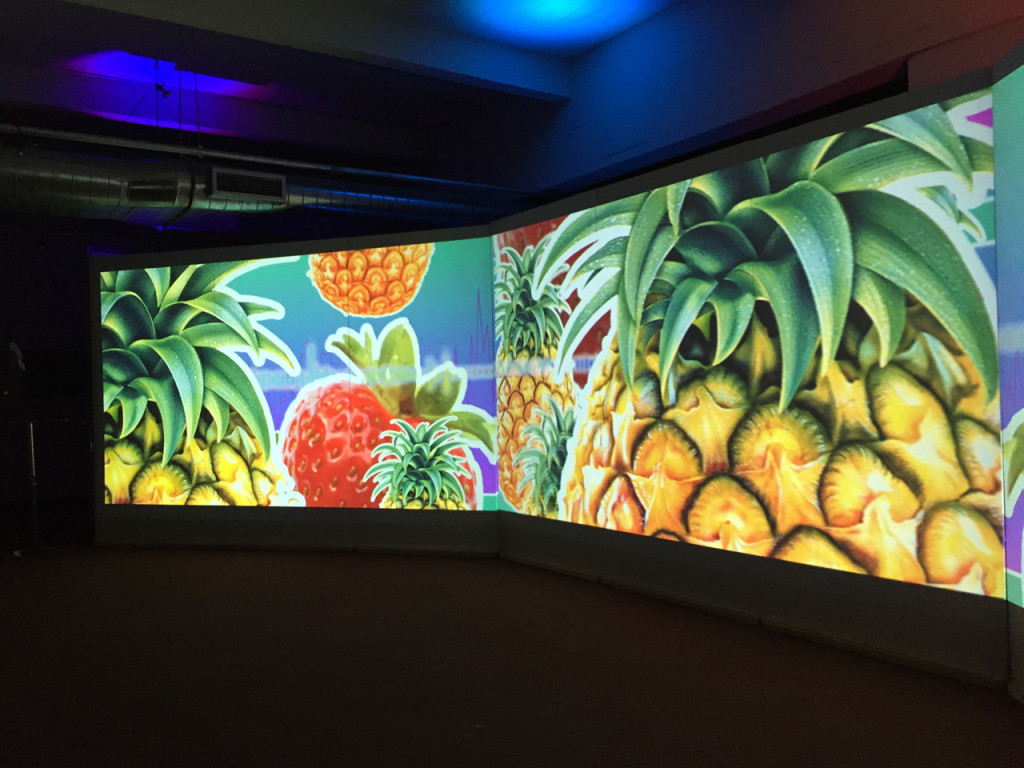
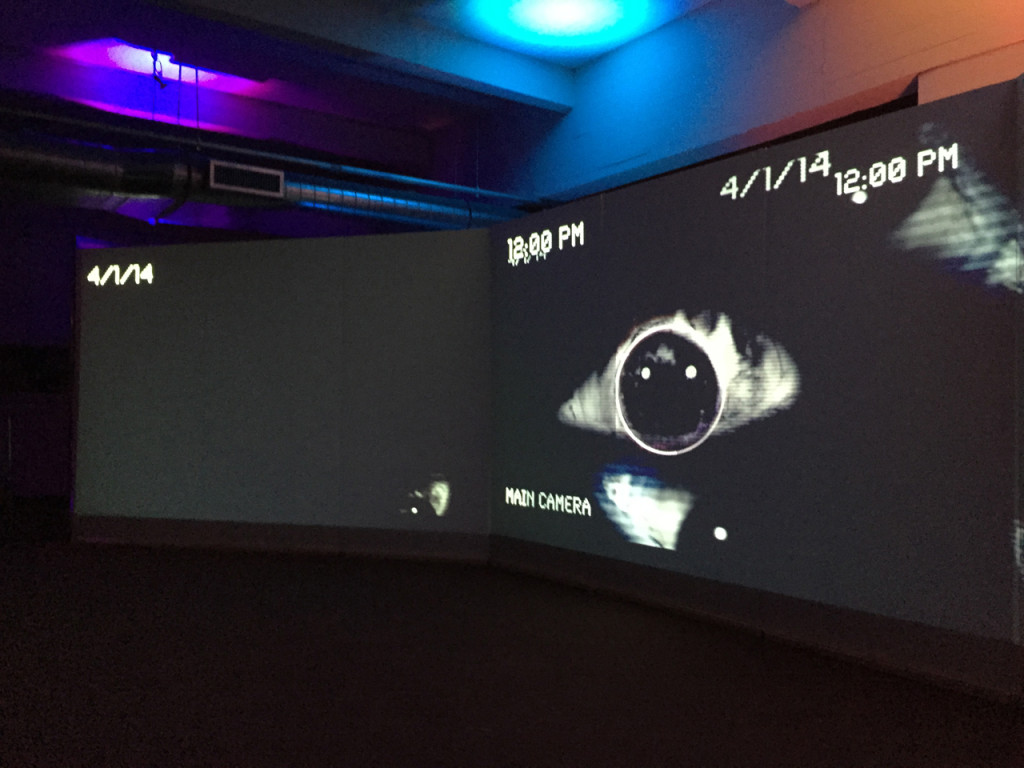
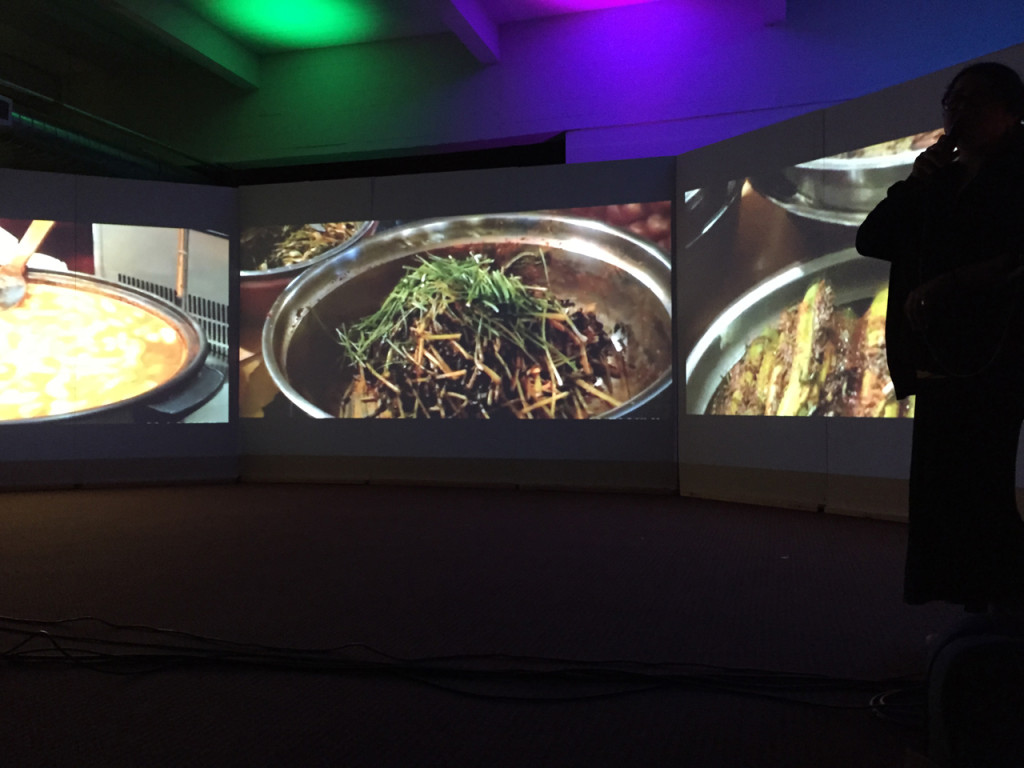
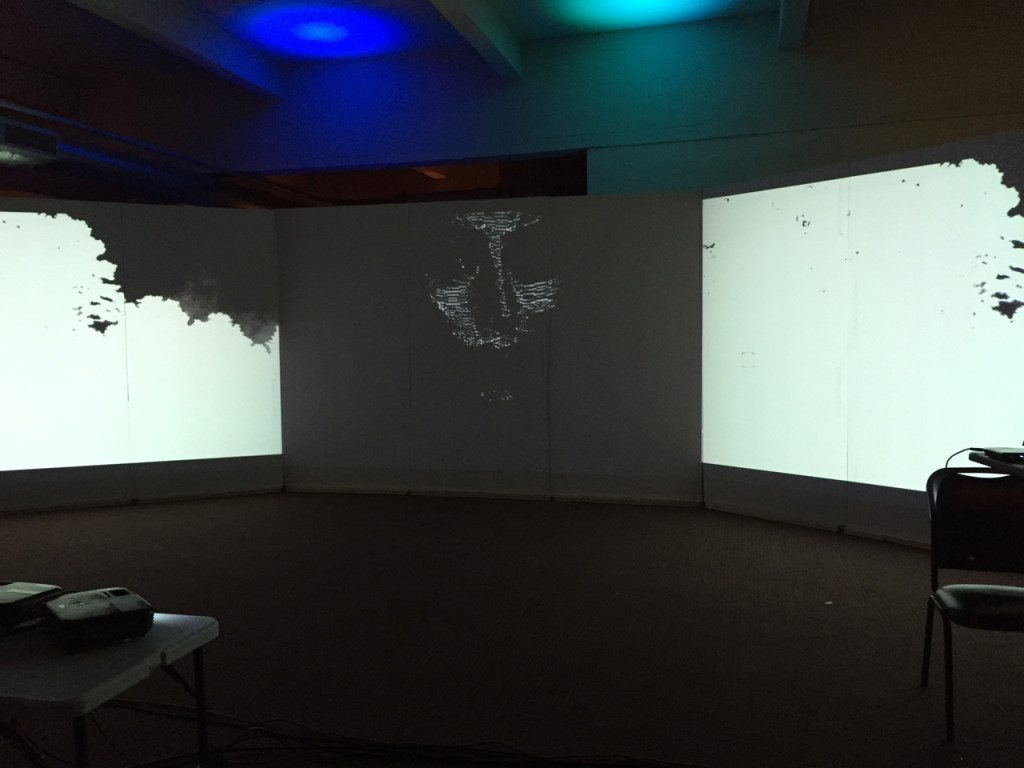
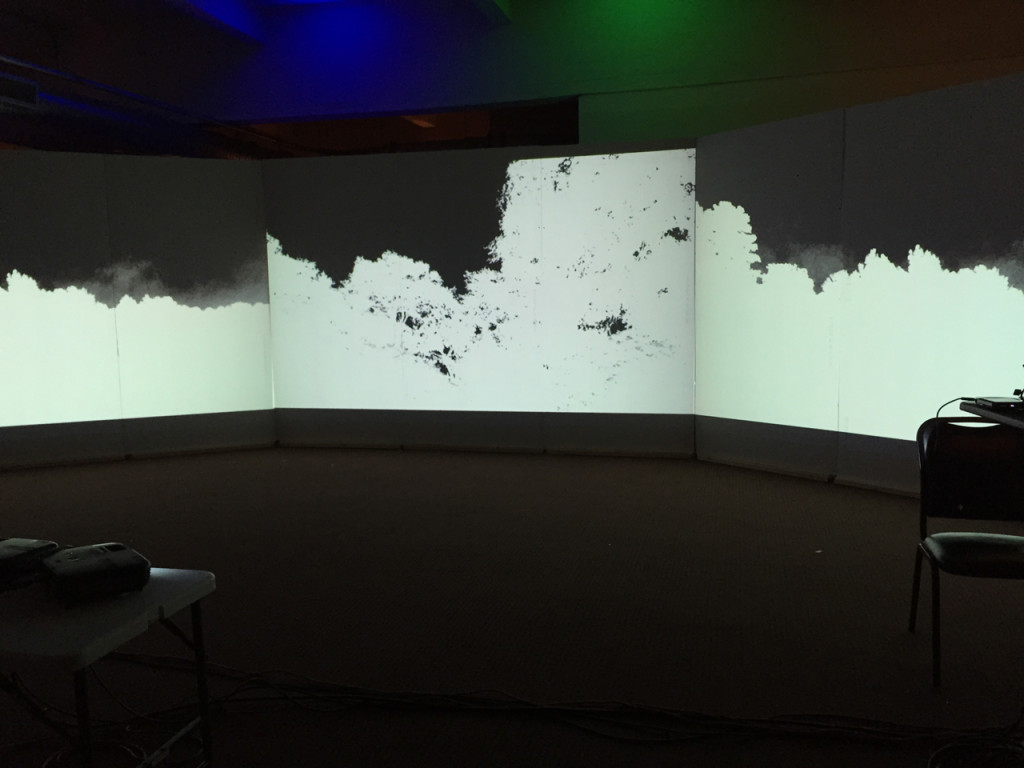
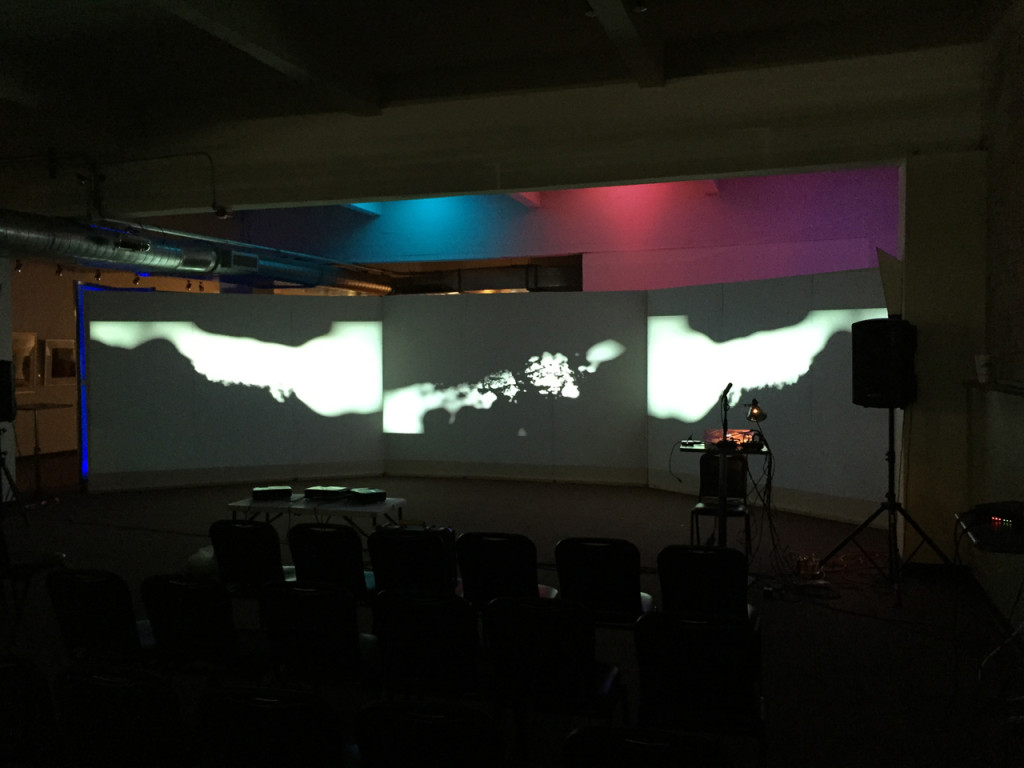
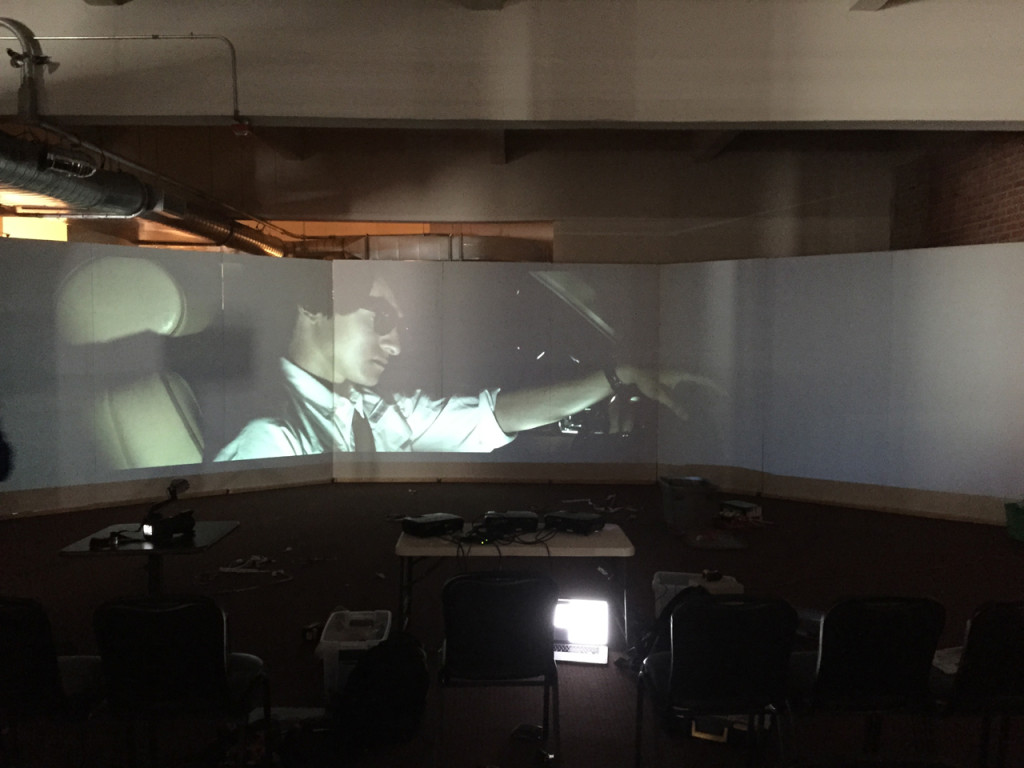
The screen came out to be 36′ x 8′. Once installed, it amazed us all! It truly represented a bonded effort by individuals to create something “new.”
Day of:
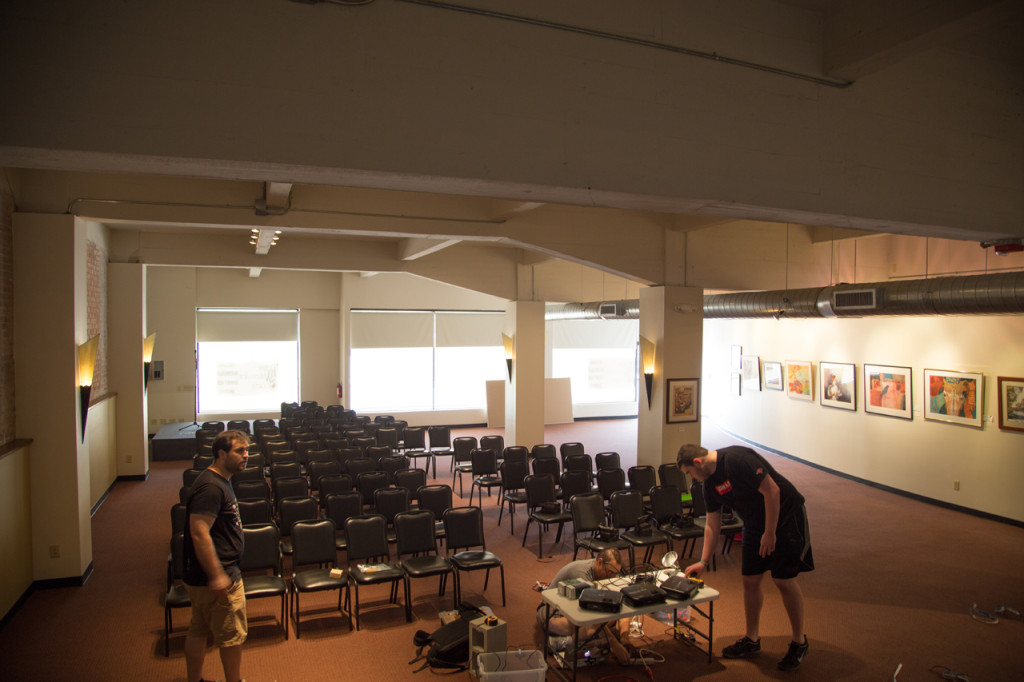
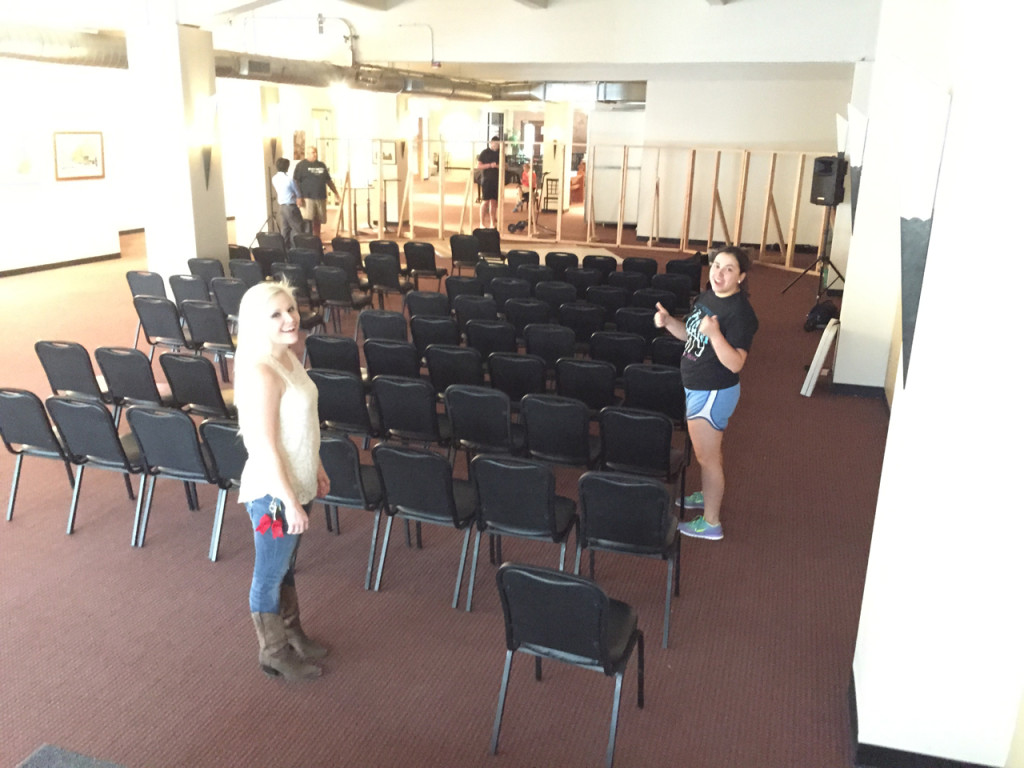
The day of, we spent quite some time setting up. The screen was fully operational by noon. The students worked to the very end putting finalizing touches on their projects.
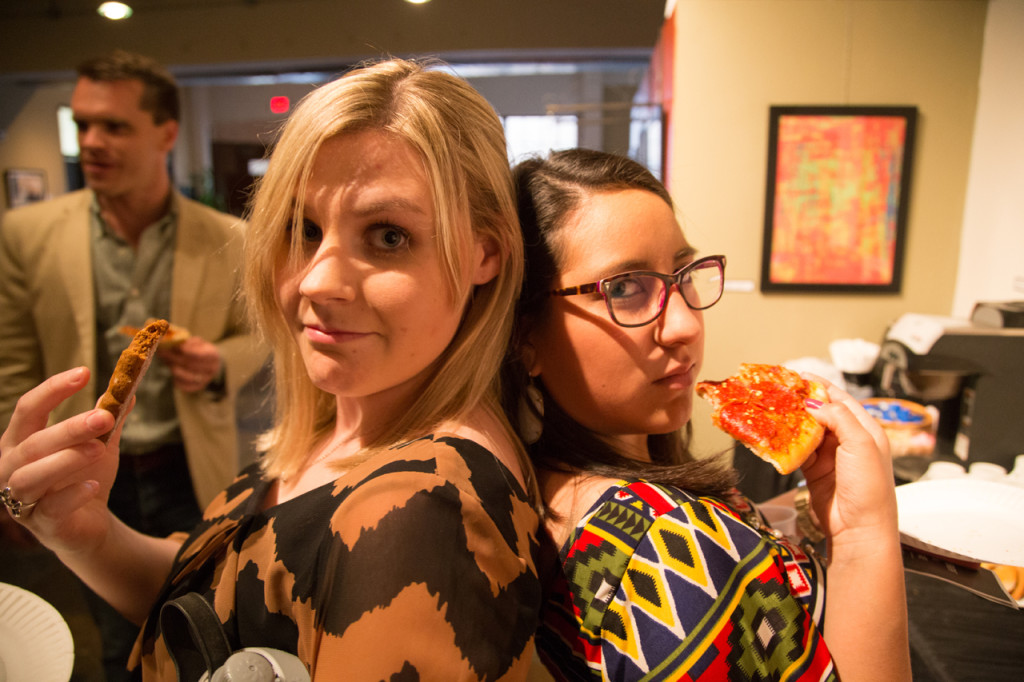
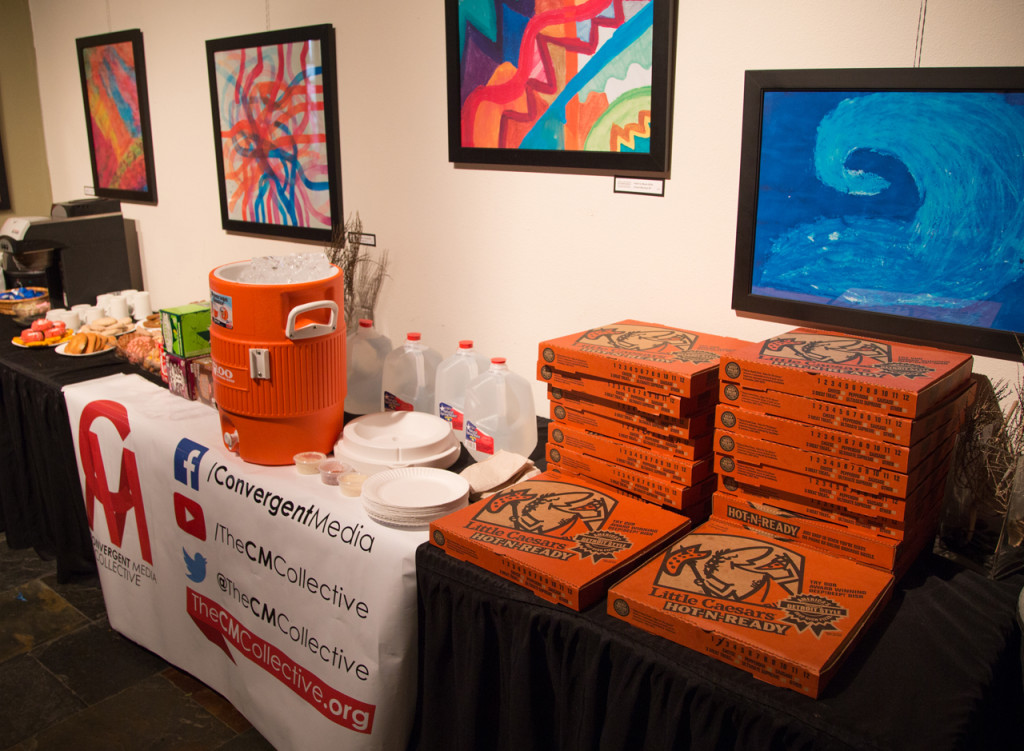
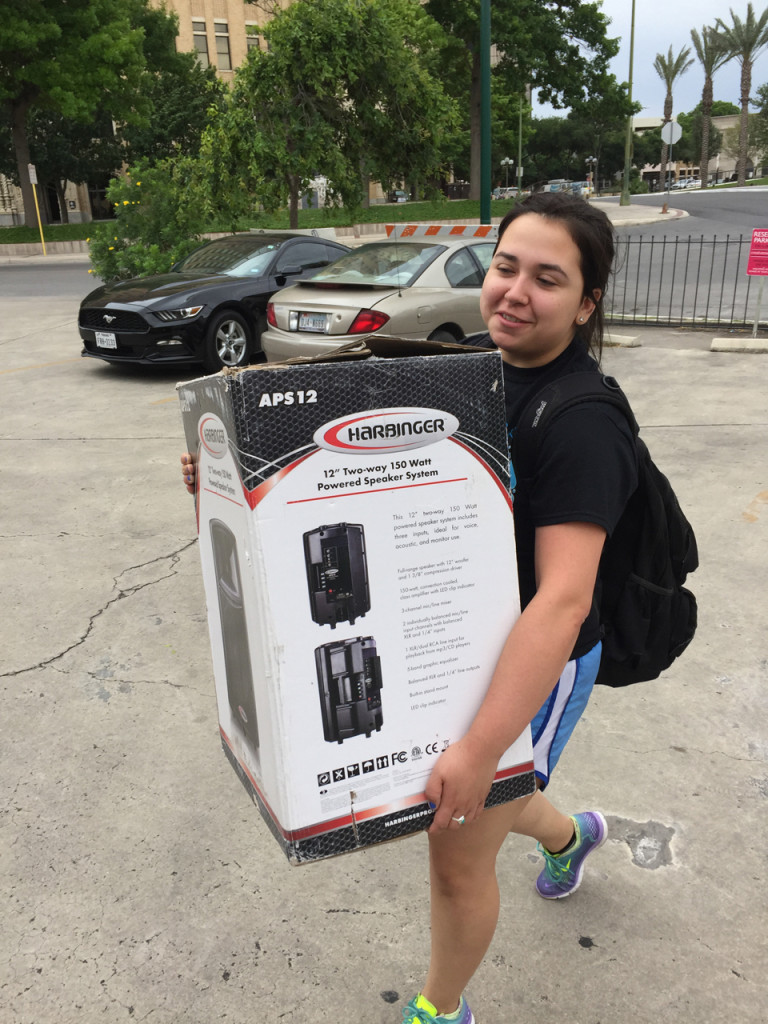
I worked with Brittany and Mercedes to develop an “errand to-do list,” and the next thing I knew it was 5-something, and they were back with our printed programs, pizza, snacks, drinks, and pan dulce!
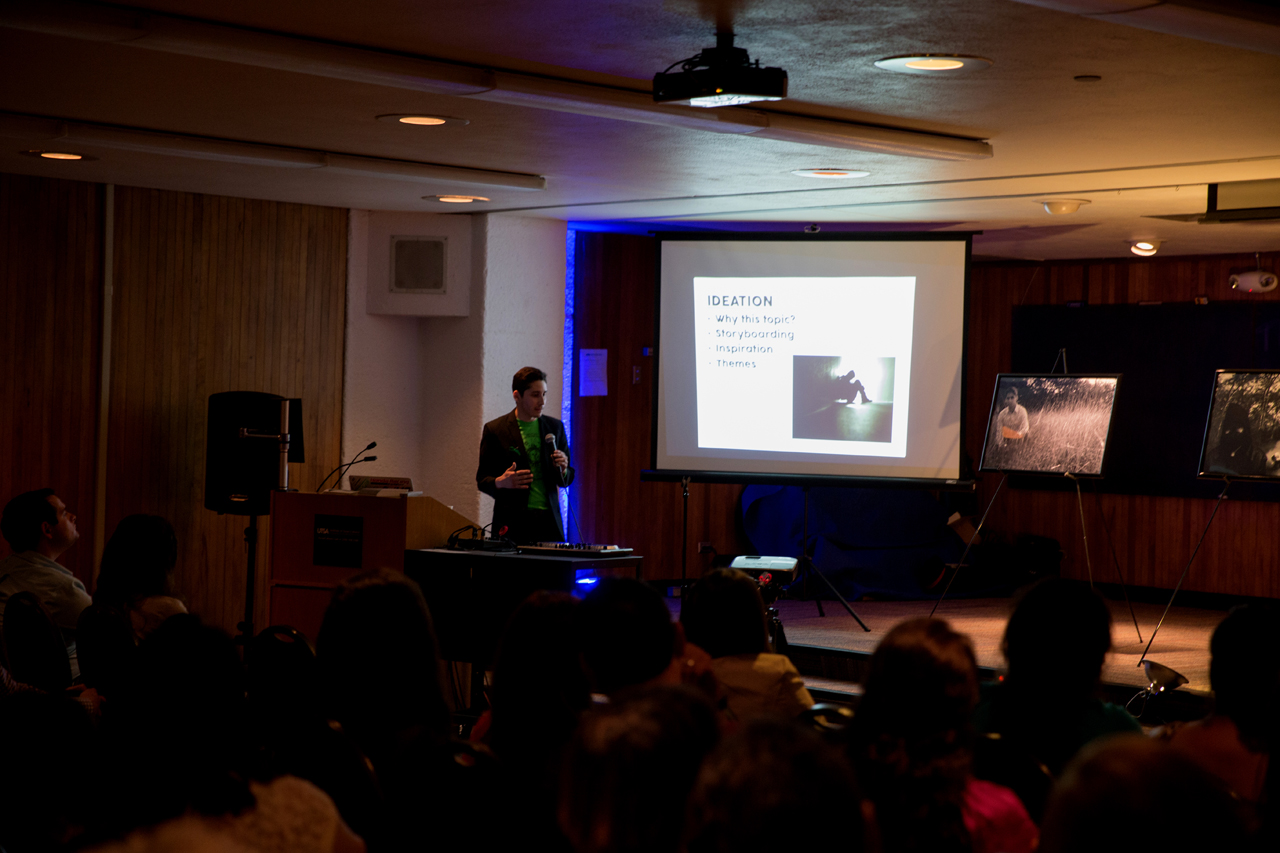
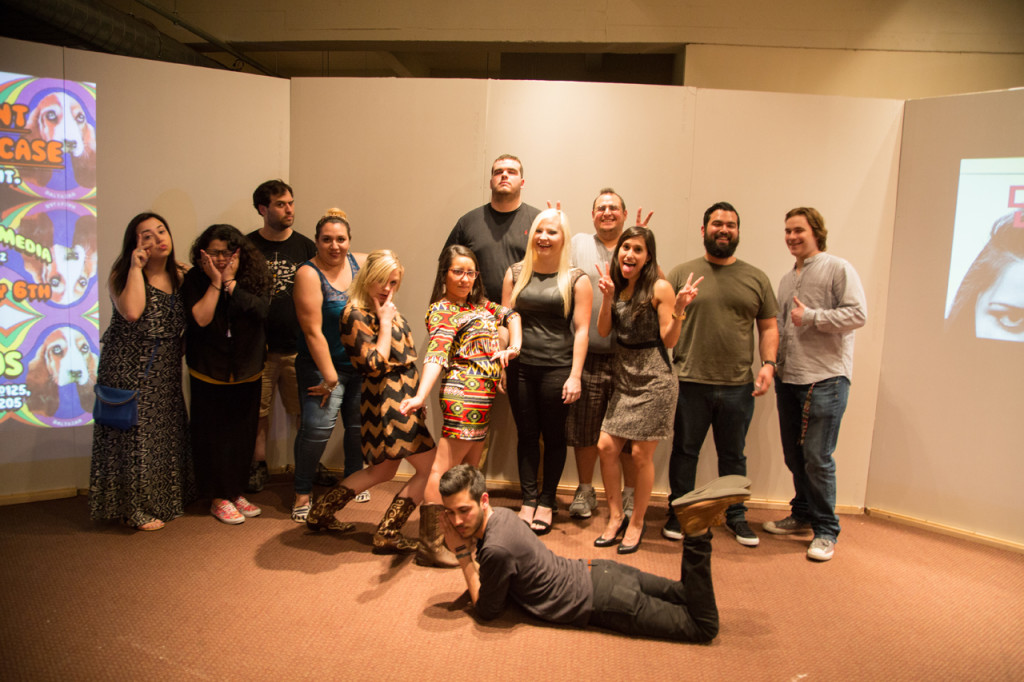
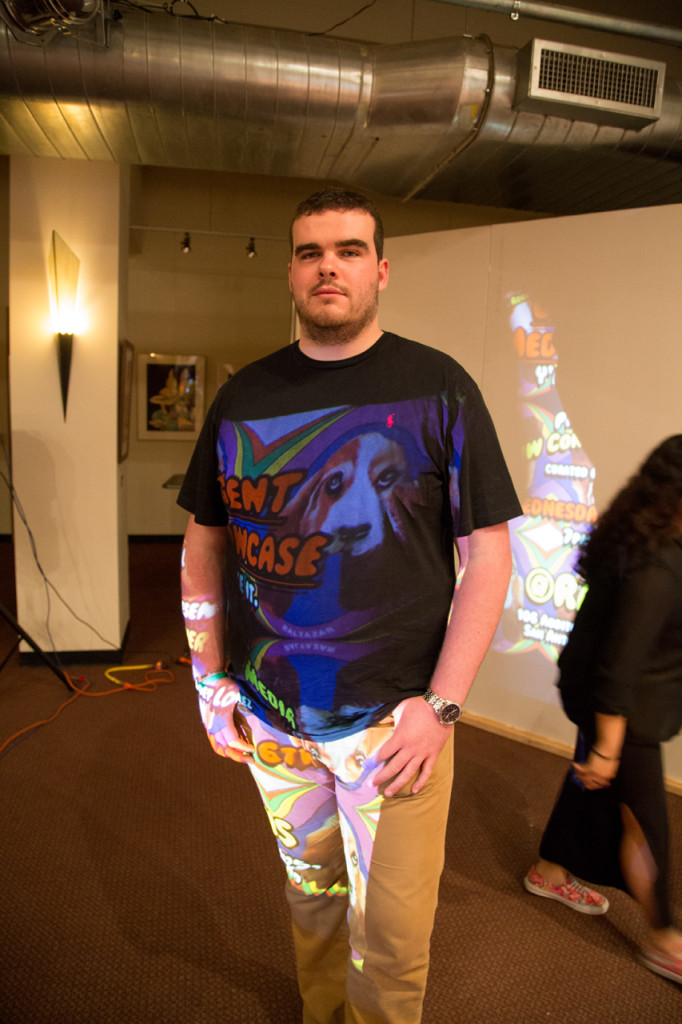
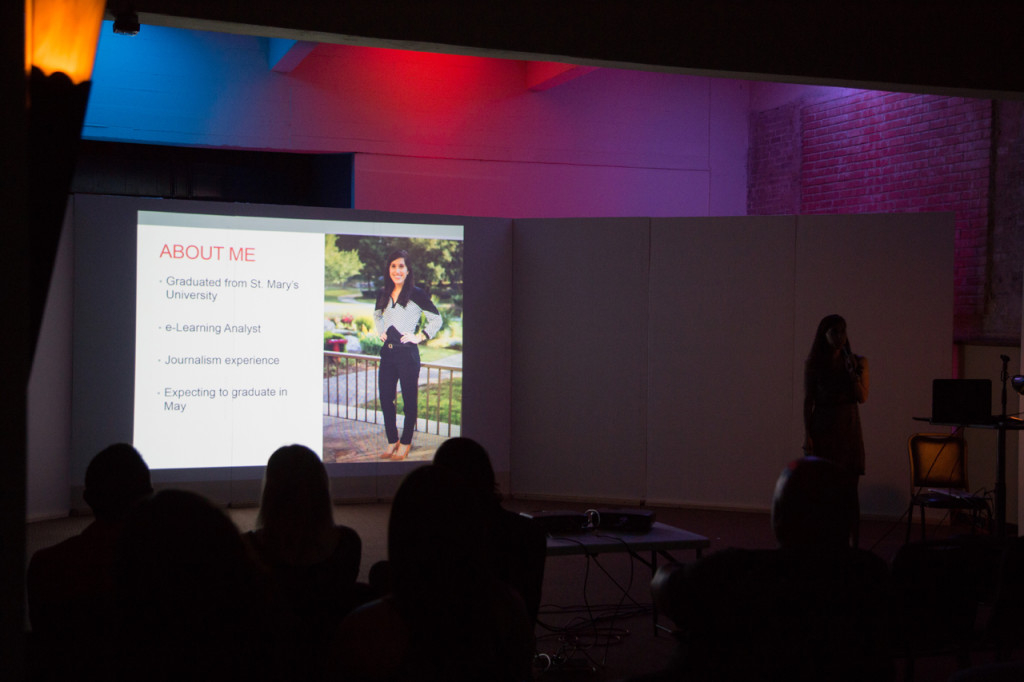
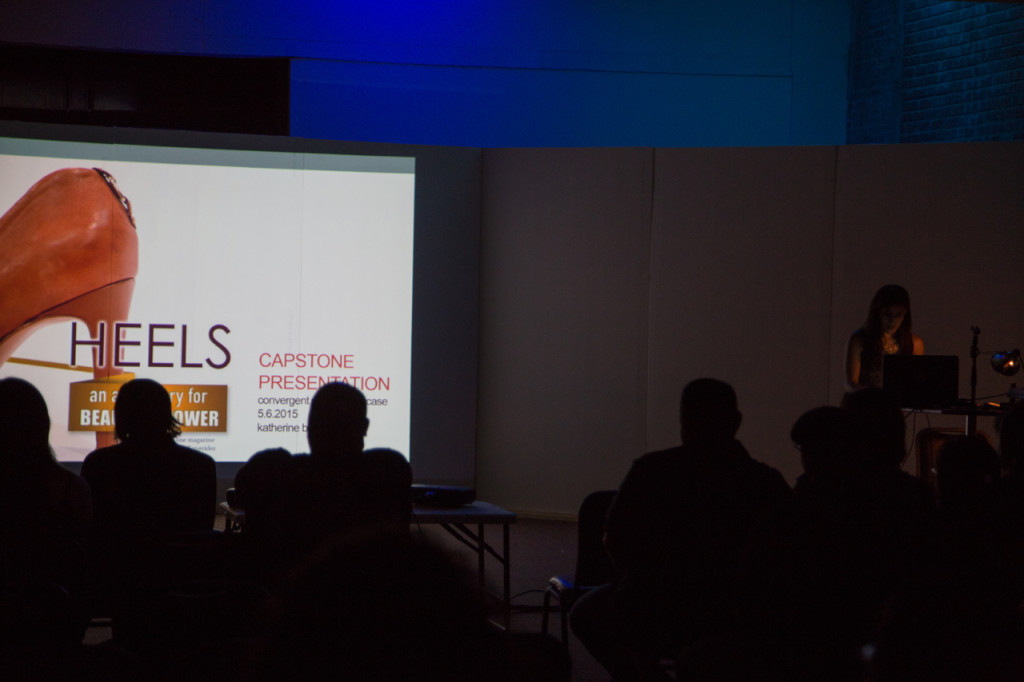
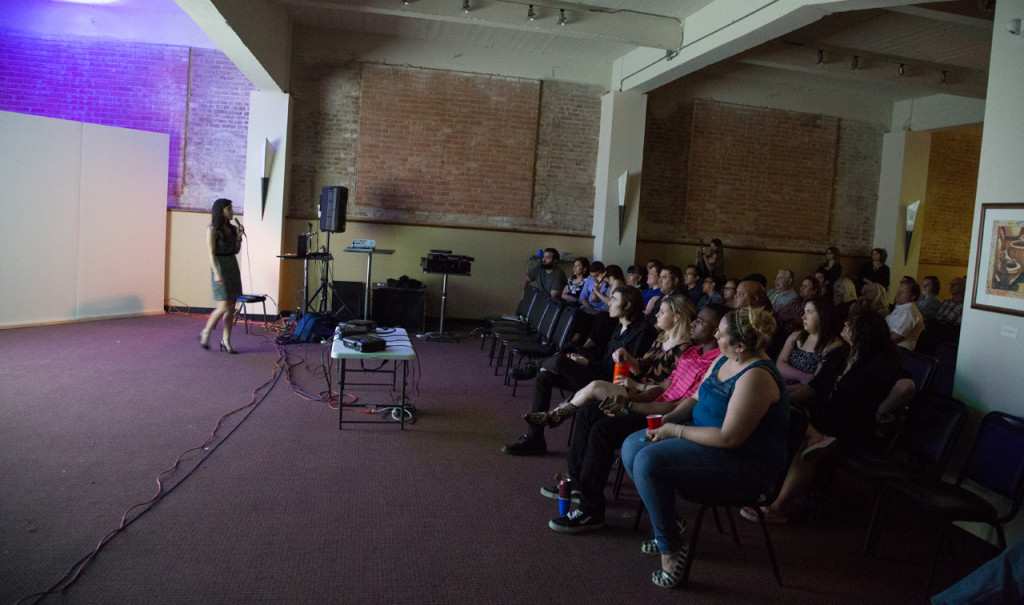
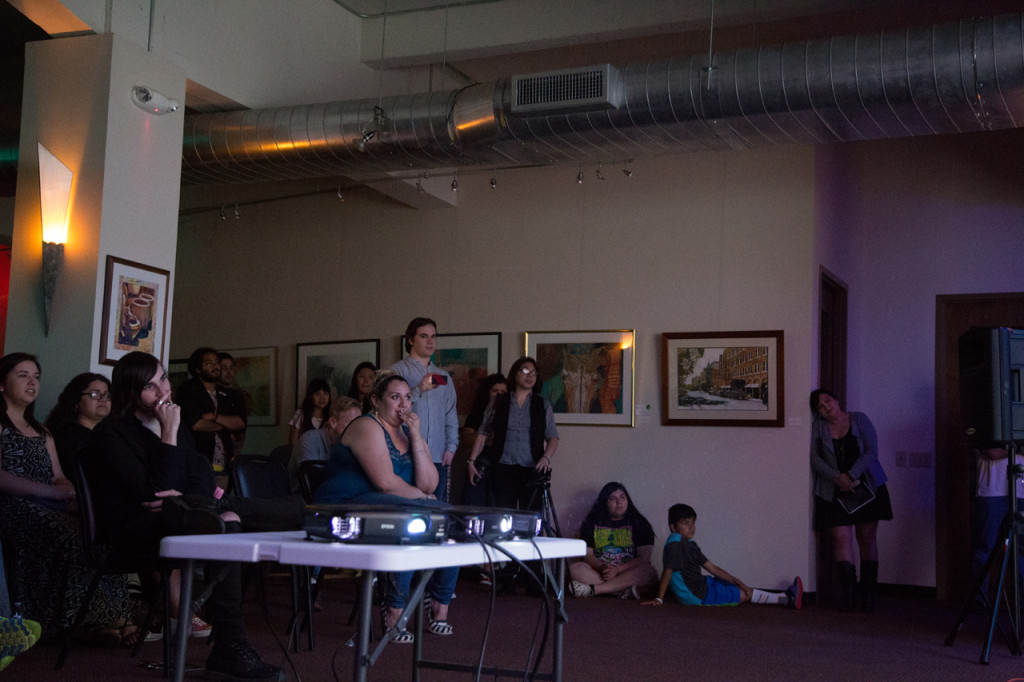
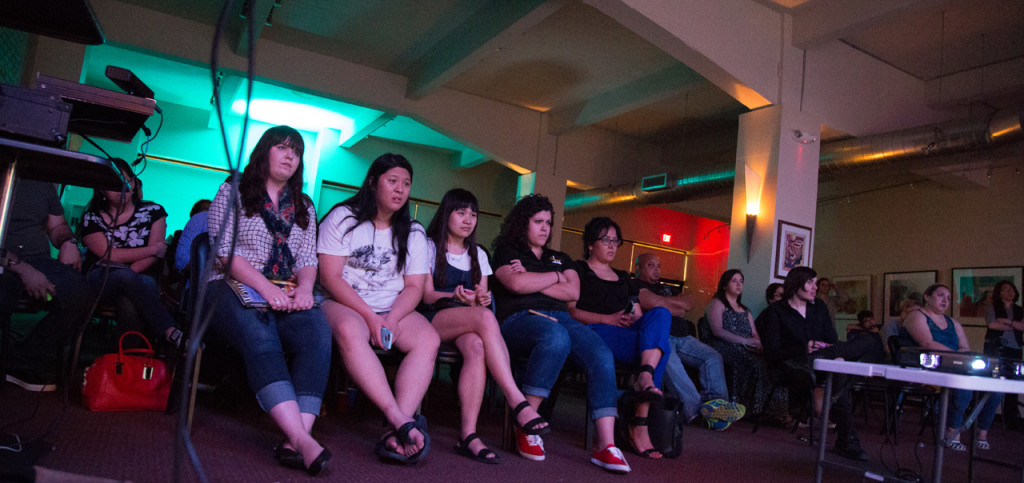
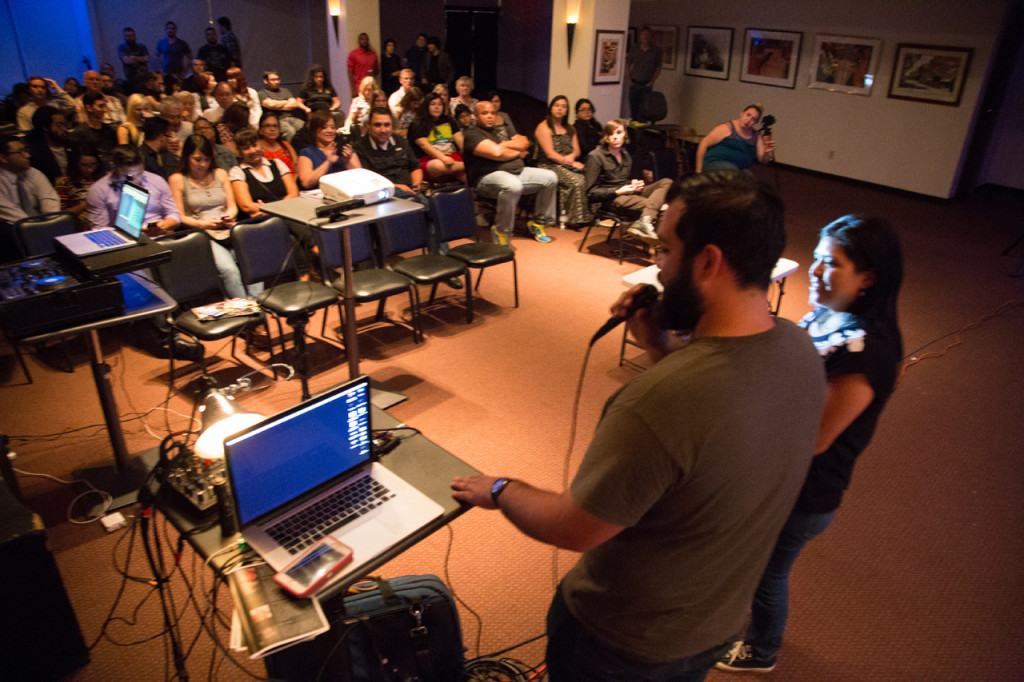
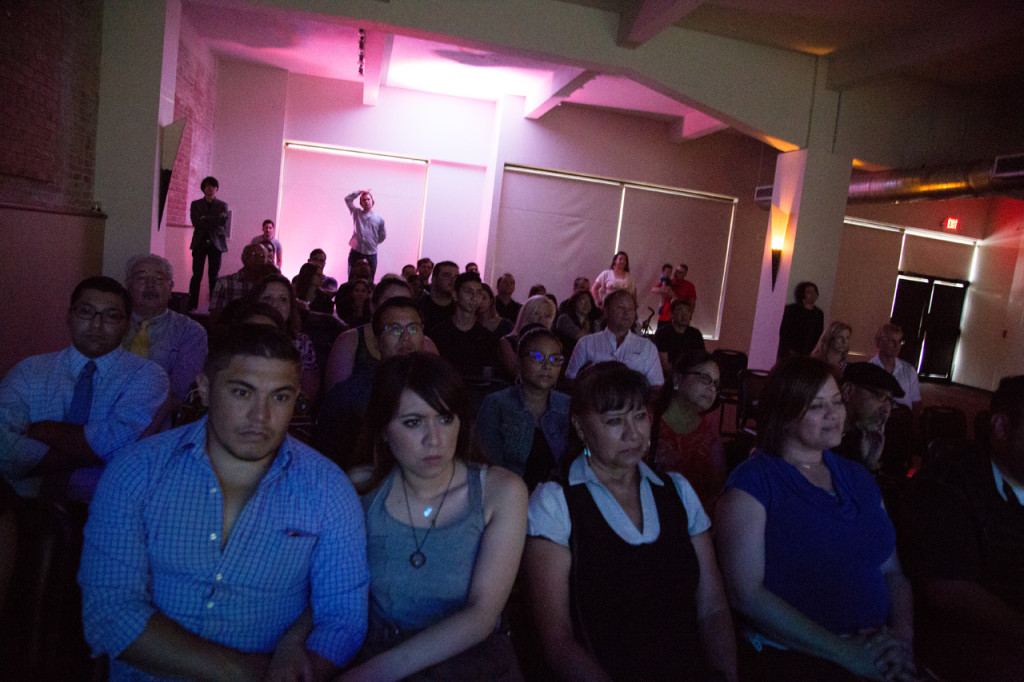
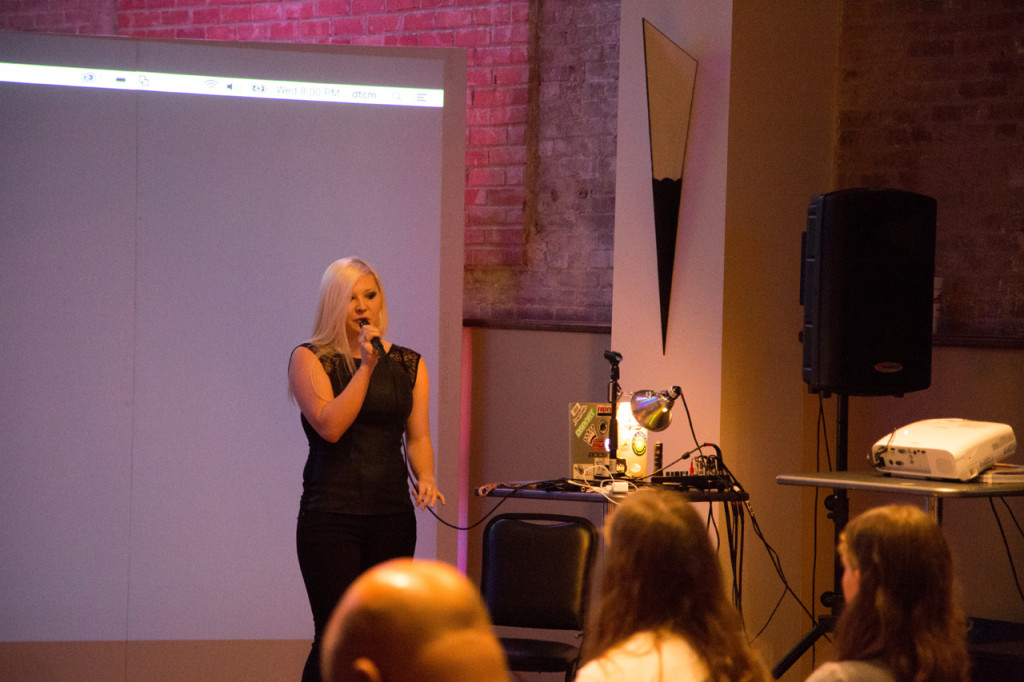
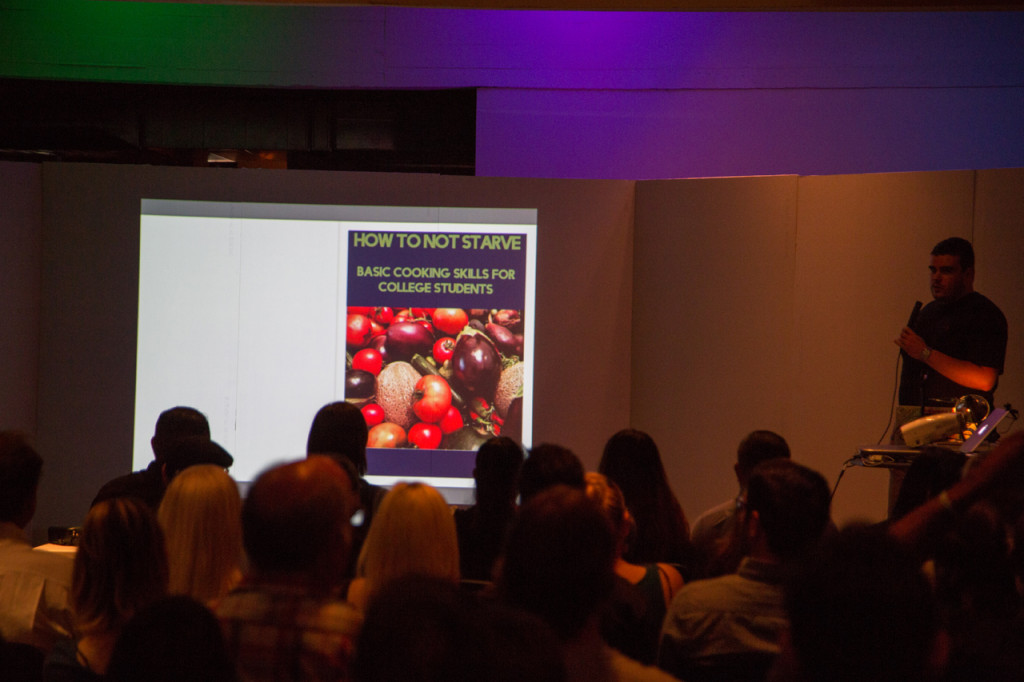
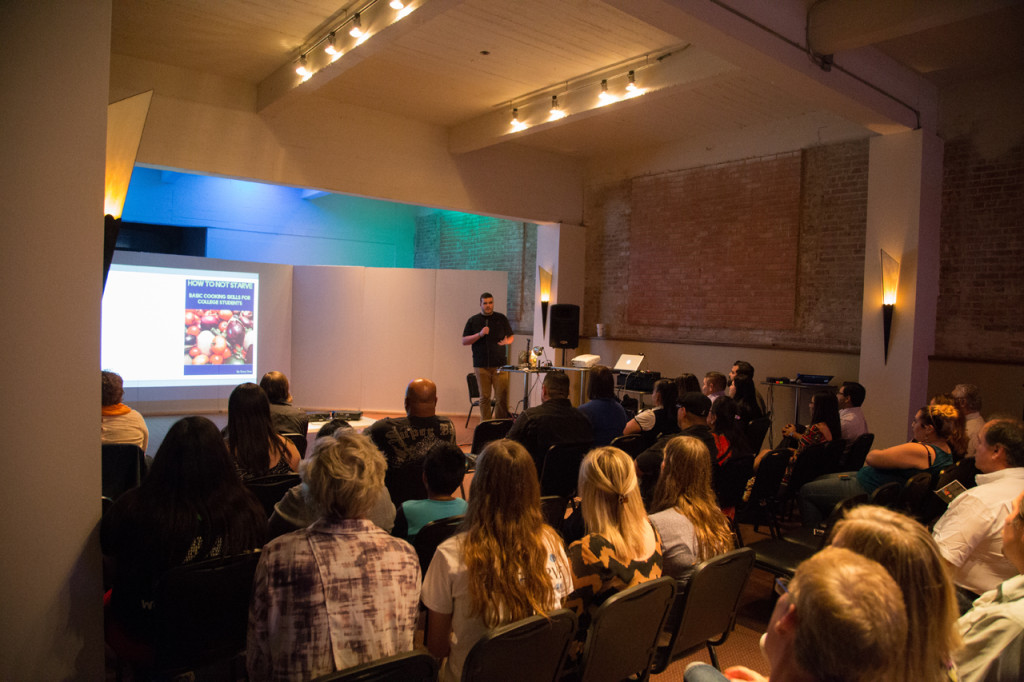
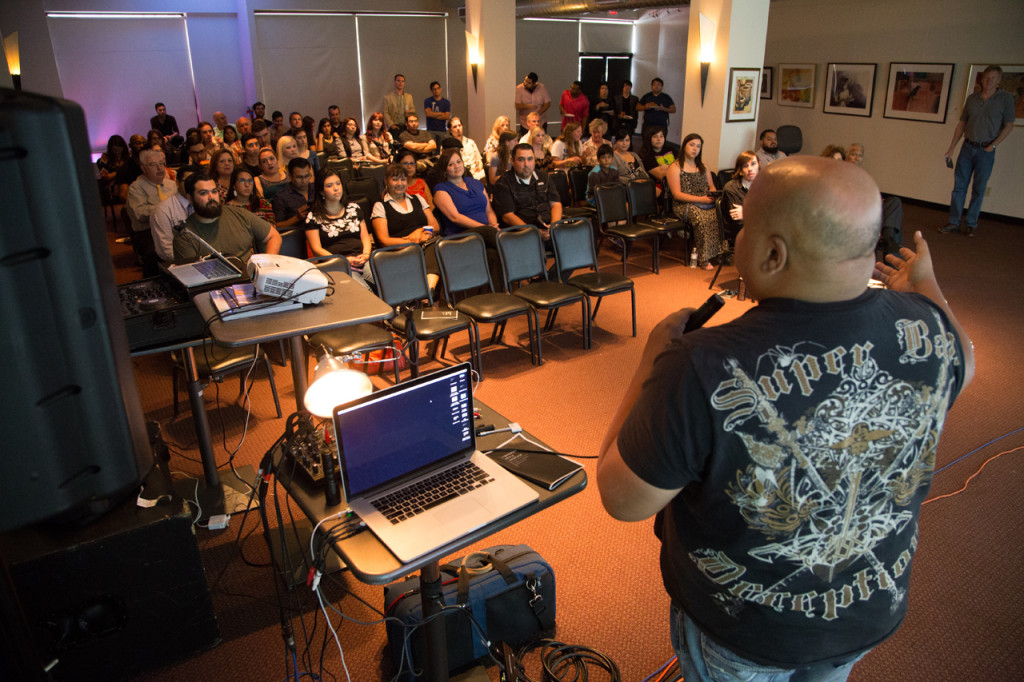
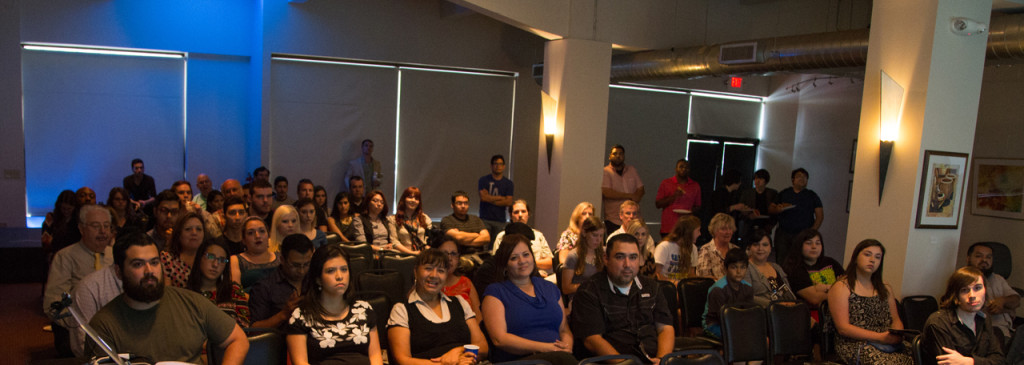
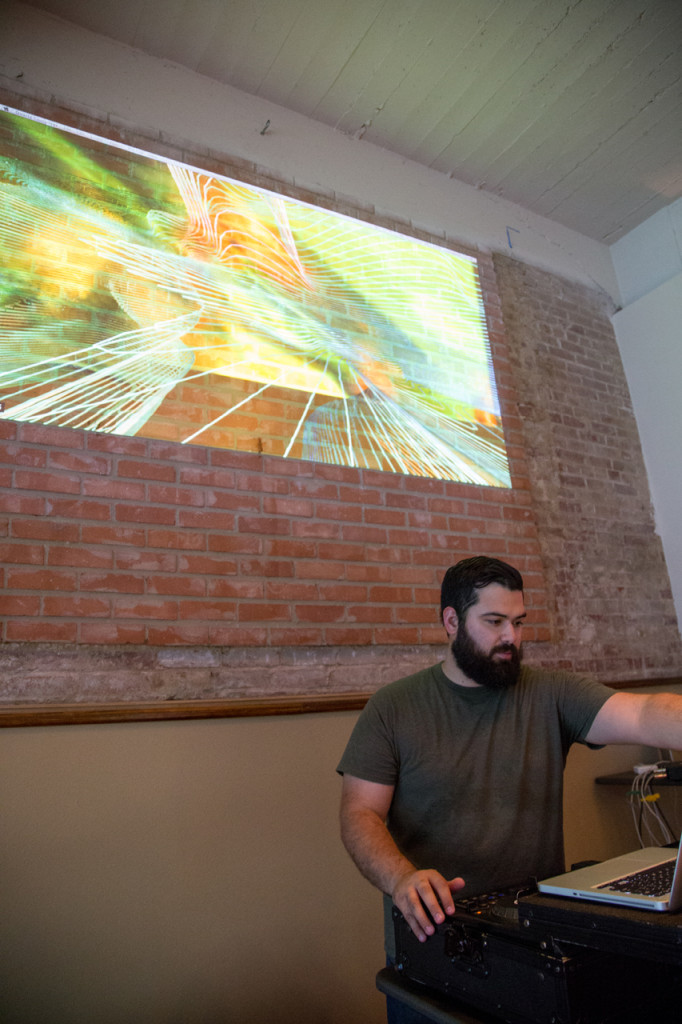
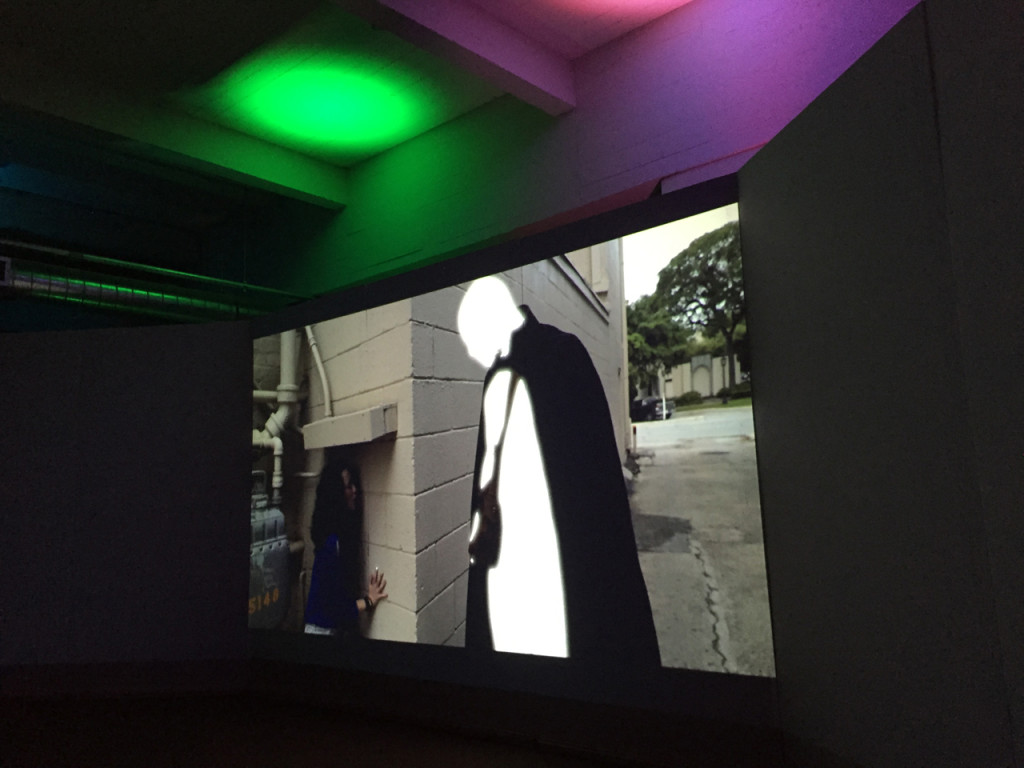
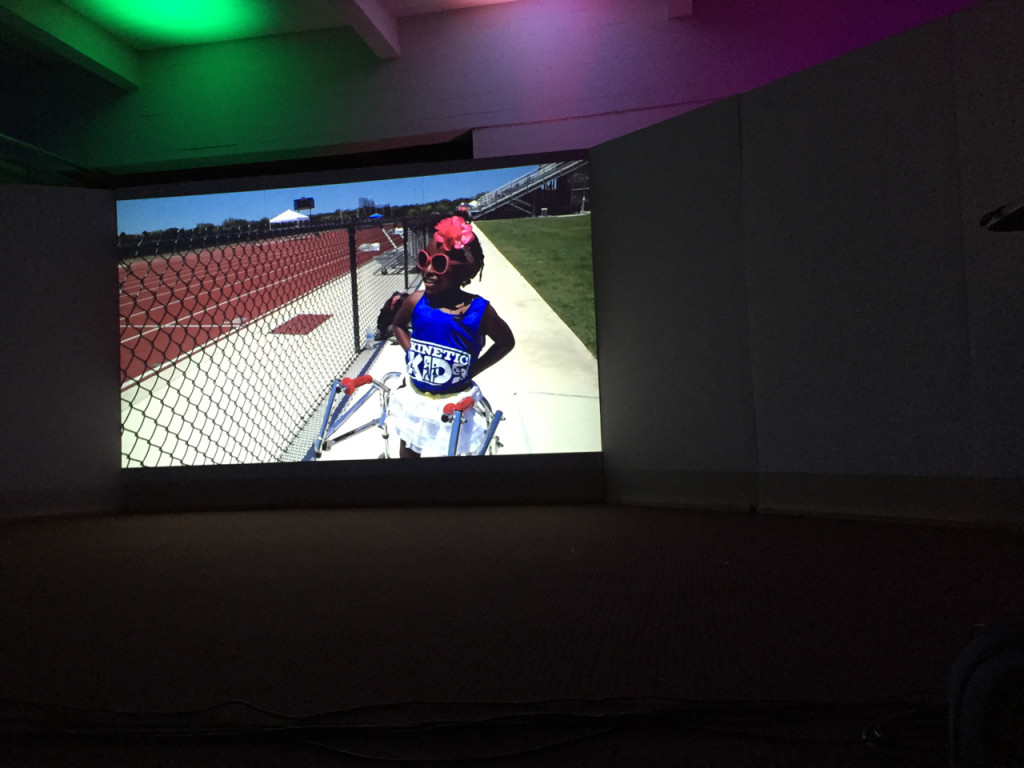
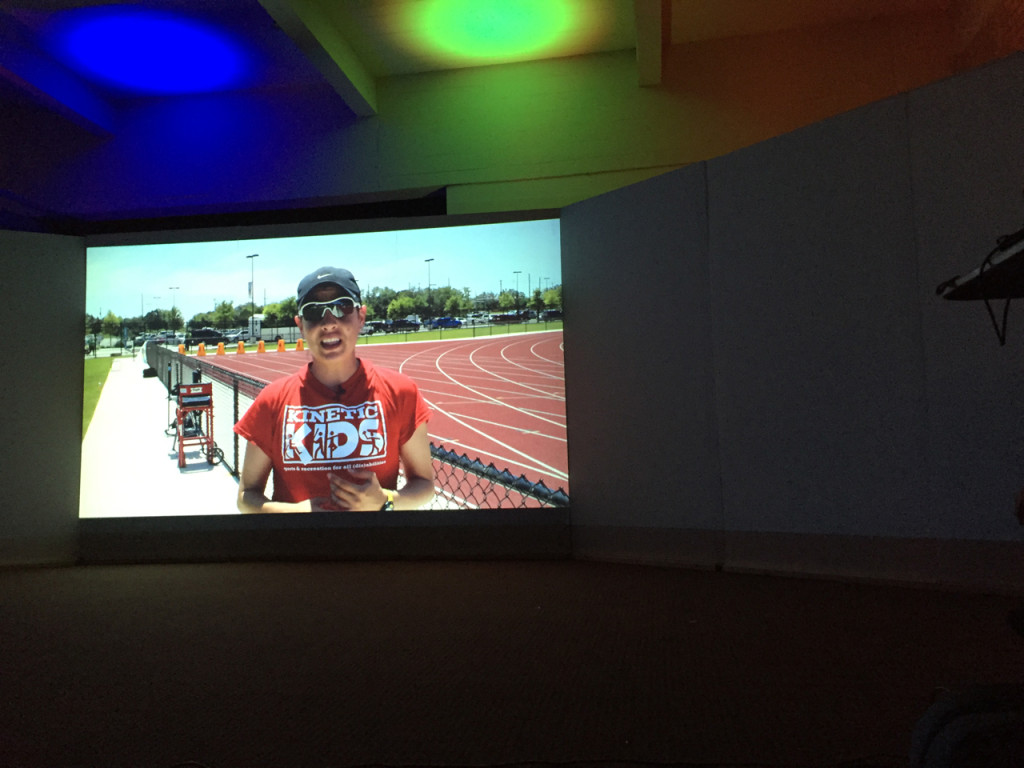
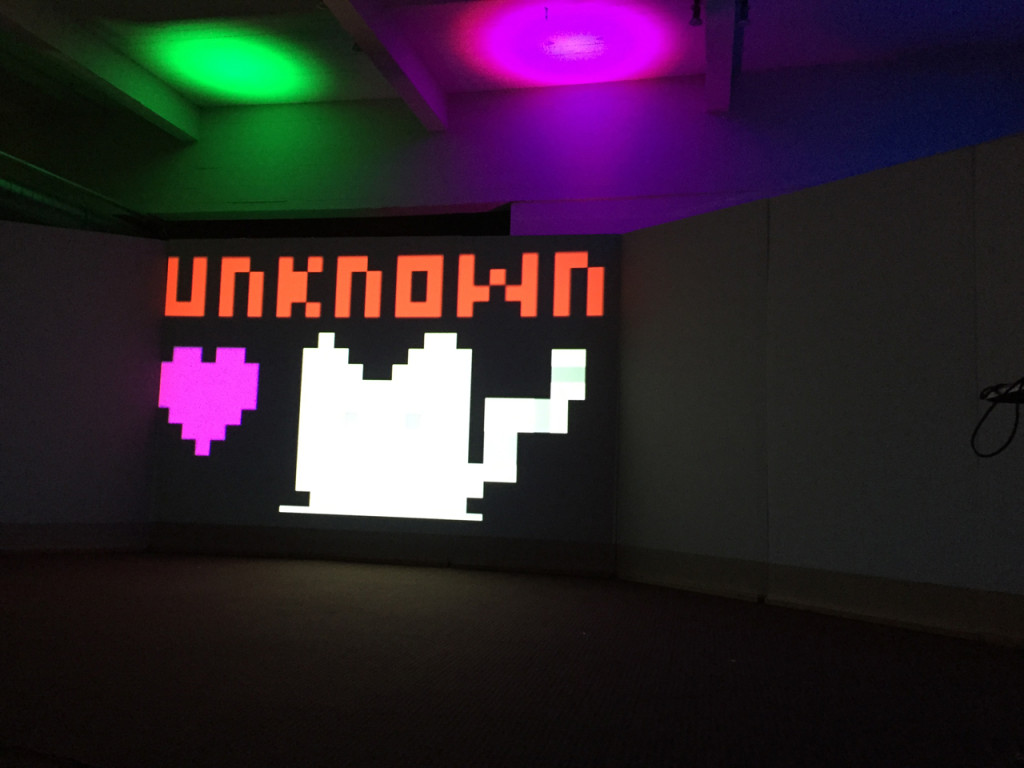
The crowds flooded in and the students were ready to present their final projects on the 36′ x 8′ projection screen. The evening displayed an array of projects, taking on various topics and tones throughout the night. Audience members asked thought-provoking questions and students answered them accordingly, sparing no details on setbacks and success.
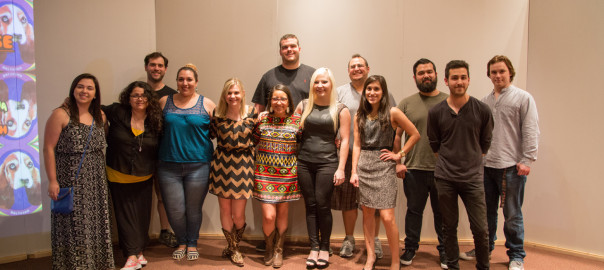
The presentations flowed smoothly and together, the students and audience helped create an immersive evening filled with constructive feedback, creative projects and emotionally-charged presentations. From short films, to narrative projects, to full-scale musical performances, the showcase exhibited different aspects of the students’ diverse creations.
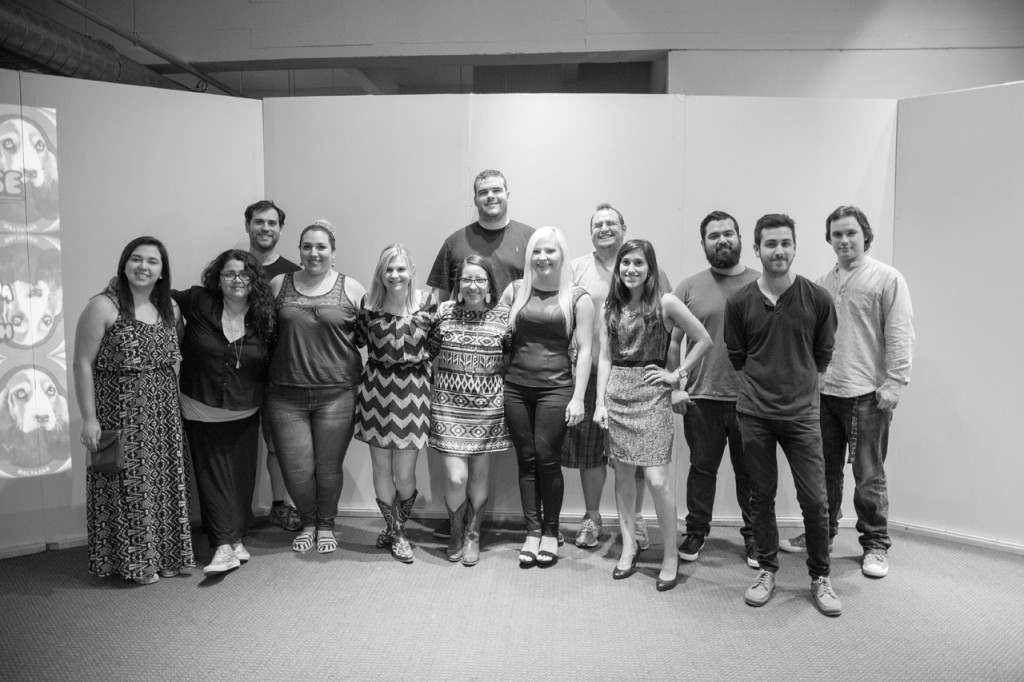
At the end, students commiserated with one another and basked in the glory of their accomplishments. For them, the night represented the culmination of a year’s worth of collegiate discovery, academic growth, and creative experimentation. It truly embodied the motto of Convergent Media: “Make stuff, take risks, and be awesome,” and showed future generations of Convergers what’s possible when they apply themselves and invest fully in their ideas.
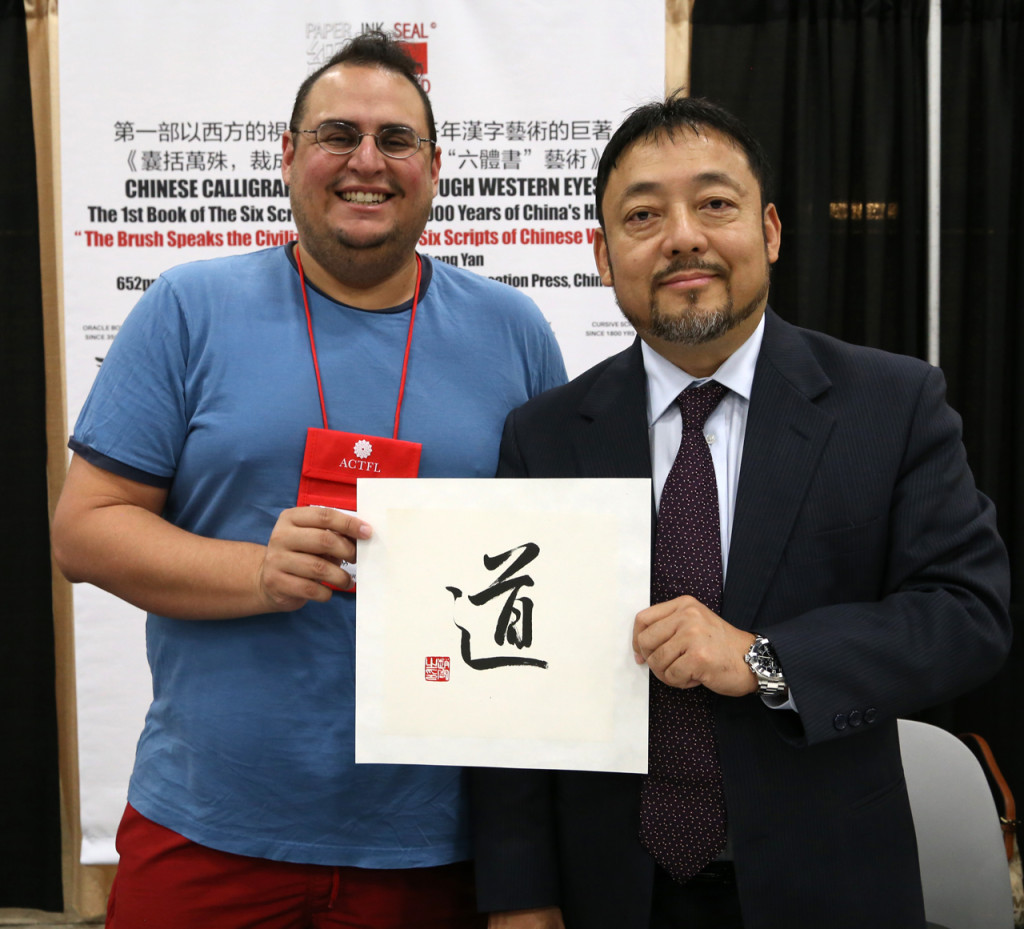
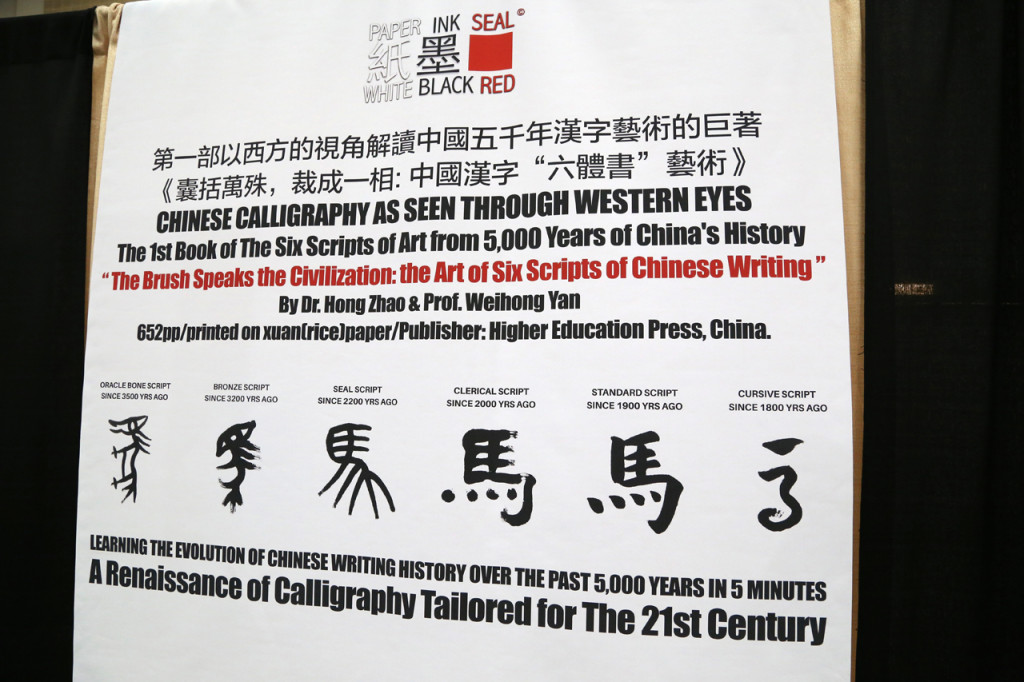
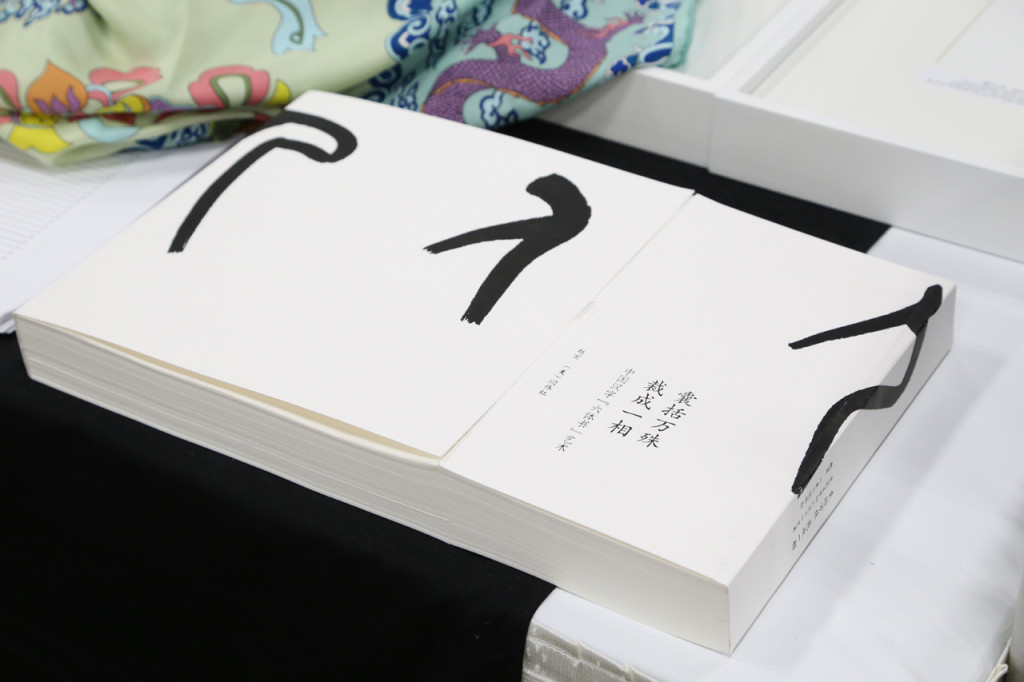
Over the past year convergent media member professor joey lopez (Editors NOTE: professor joey lopez requests that his name be lowercase in an effort to create reflexive awareness of power structures) has been working on a special project to develop convergent media representations of Chinese Calligraphy through various mediums and convergent media technologies. His interest began when he was approached by Professor Weihong Yan, Executive Director of the Confucius Institute and Associate Professor of Chinese/Language/Culture/Business at Pfeiffer University in Charlotte, North Carolina, when he visited San Antonio for The American Council on Teaching Foreign Languages Conference. Angelica Docog, the director of the University of Texas San Antonio Institute of Texan Cultures introduced professor joey lopez and Professor Weihong Yan after seeing they have similar interests in story telling with high-end media. Professor Weihong Yan told professor joey lopez of a book he had recently finished about Chinese Calligraphy called The Brush Speaks an Ancient Civilization –The Six Writing Styles of Chinese Calligraphy, which includes over 12,000 years of Chinese Calligraphy. The work impressed professor joey lopez through it’s high-end execution and intellectual foresight. Professor joey lopez saw the rich history, the contextualization and significance of work right away and was highly intrigued and began thinking about possible ways to collaborate.
As a founding member of the Convergent Media Collective, professor joey lopez’s places an importance of cross pollination of social and cultural capital across geographical space. Professor Weihong Yan asked professor joey lopez if he would be able to prototype out other cultural representations of the Chinese Calligraphy using convergent media techniques.
This opportunity was a mutually welcomed collaboration due to both professor joey lopez and Professor Weihong Yan’s desire to share culture across geographical spaces. Professor joey lopez’s vision is to create prototypes that he can then share with Professor Weihong Yan in an effort to create a set museum quality pieces that can be shared with the public at large to bring awareness of the rich heritage Chinese culture contains within not only it’s history, but literally in the way it was written.
The following prototypes and demos are the initial results of joey’s initiative to build convergent media representations of the Chinese Calligraphy he was exposed to. In addition to being convergent media, they were also created in a way to take on new cultural meaning and social significance in an effort to diversify their interpretation as symbols. Professor joey lopez’s main collaborator in the development of these concepts and prototypes is Jeremy Zunker, an electrical engineer, software programmer and maker.
Back Lit Laser Cut Chinese Calligraphy Concept and Prototype
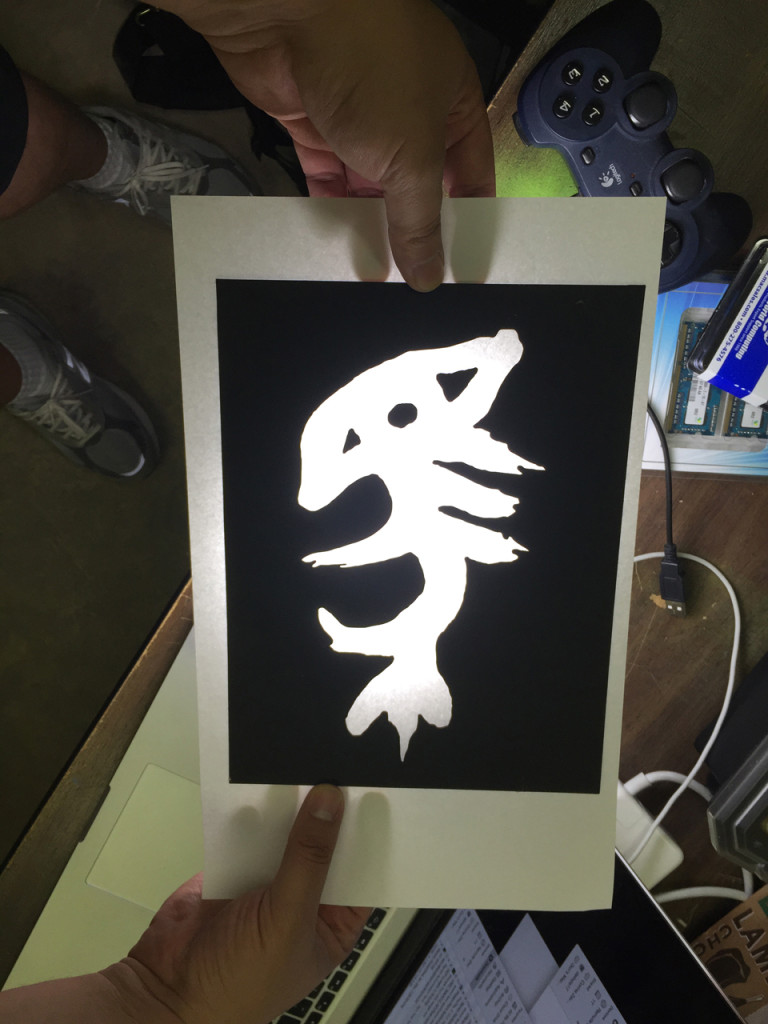
Concept- This concept grew out of a discussion joey had with Angelica about his desire to prototype some laser cut representations of the Chinese Calligraphy. Suddenly he saw it in his head and presented the concept. A laser cut representation, two prototypes. One using the laser cut piece and the other using the inverted cut piece. The concept is to back light them using various light sources to draw the patrons eye towards the shape of the pieces. The light representing knowledge, the Chinese Calligraphy representing the interpretation and place keeper of the knowledge.
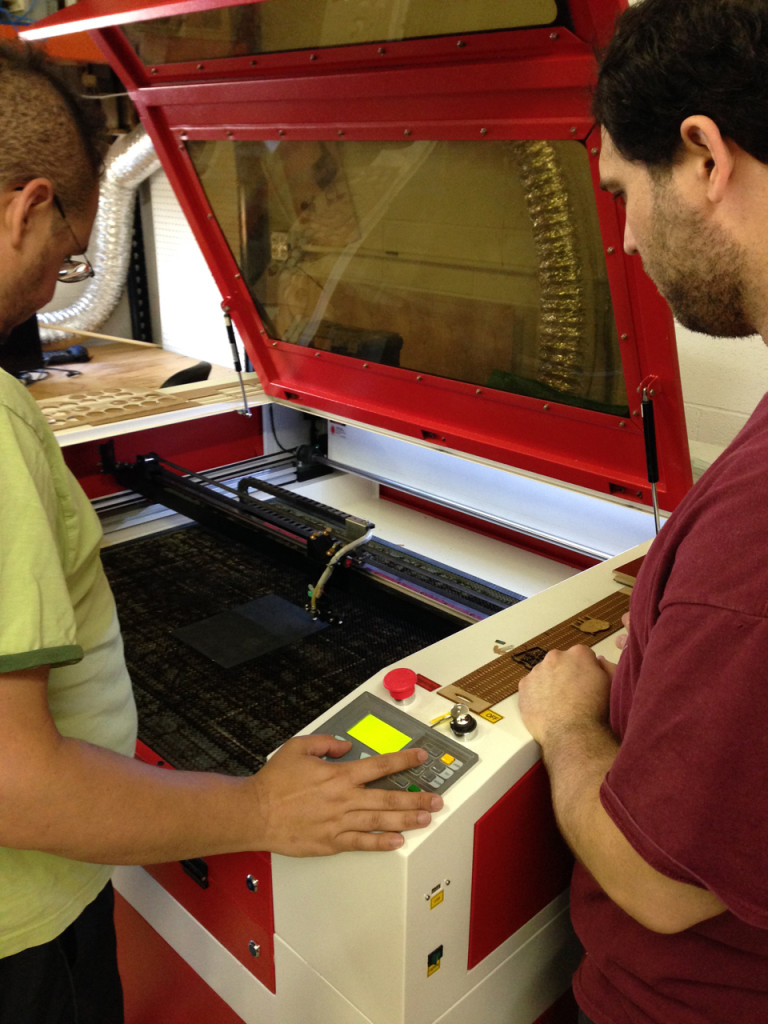
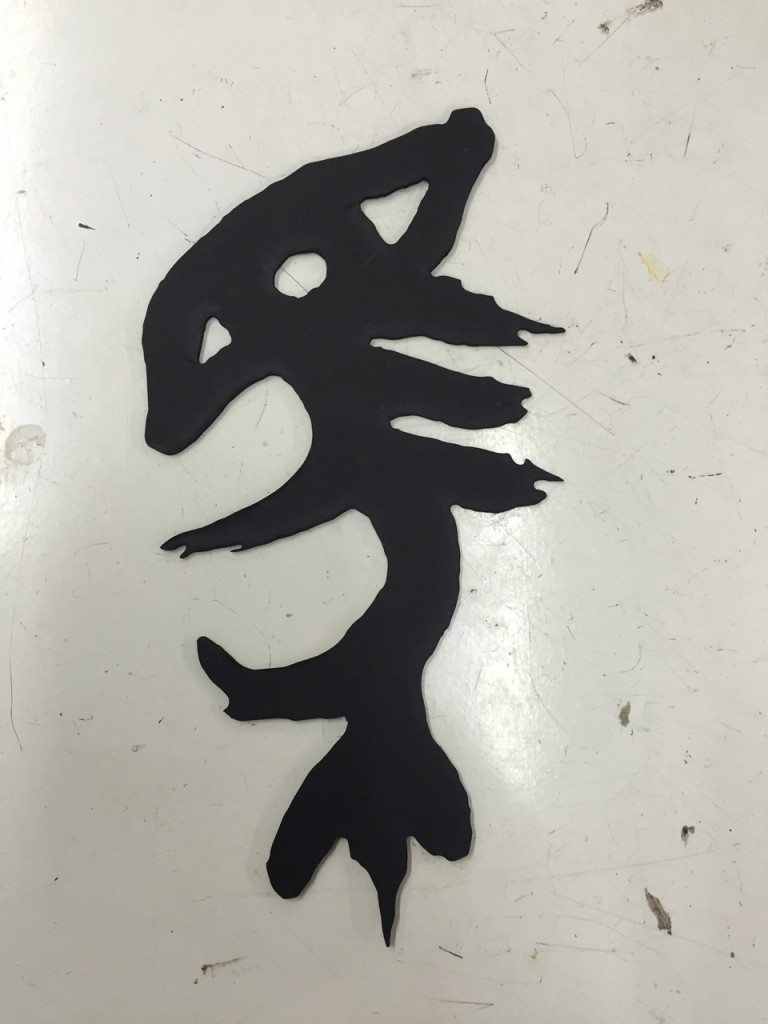
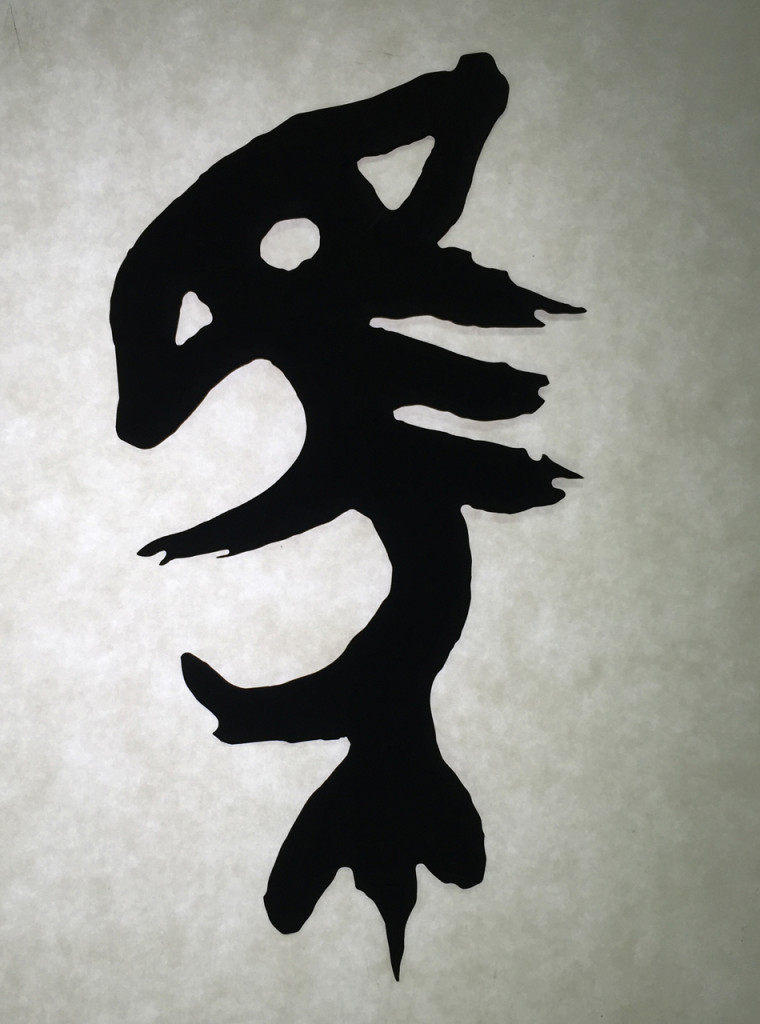
Prototype- In order to create this prototype, joey used an image of the Chinese Calligraphy Bronze Age character for the Horse provided by Weihong Yan. He imported the image into Adobe Photoshop and created a solid interpretation of the hand painted character. He then imported it into Adobe Illustrator and then vectorized the image, taking it from a pixel based image to a mathematically vector based representation. This processing then allowed for the image to be imported into AutoCAD, where the vector file was edited further and prepped to be imported into the laser cutter software. The image was then imported into the laser cutter software where it was then scaled to fit the material being used. The laser cutter itself is a Chinese manufactured HX-1290SE model with 80 Watts of power. It has the ability to cut various kinds of material. For this prototype I had wanted to use acrylic, but decided to wait and use a heavy stock black cardboard, which I believe worked out well.
The laser cutting process took a minute or so and afterwards we had both a nicely cut character and the pieces to put an inverted character together.
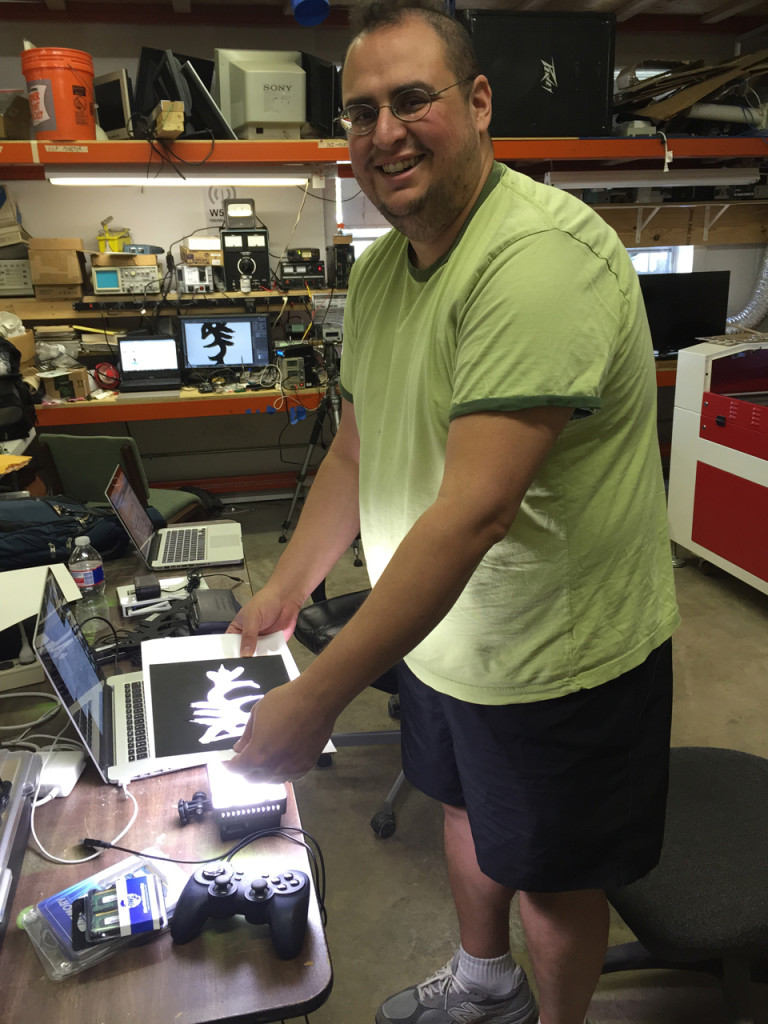
After having the pieces cut we found some paper and used an LED light panel I had on hand to create some prototype images of the Chinese Calligraphy Bronze Age Horse character being illuminated from behind with a medium stock piece of paper between it and the light. The result was a amazing. Our next step will be to further refine this prototype into a museum grade installation piece that has an “aura” to it that inspires the patron to feel confident when viewing it.
Laser Cut Chinese Calligraphy Bokeh Lens Cover Concept and Prototype
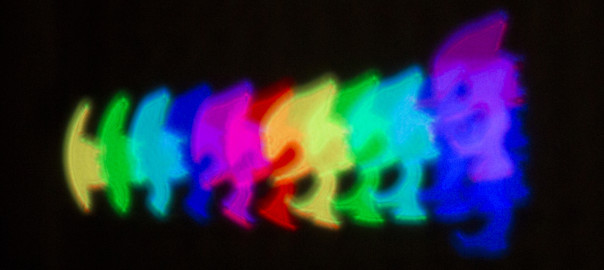
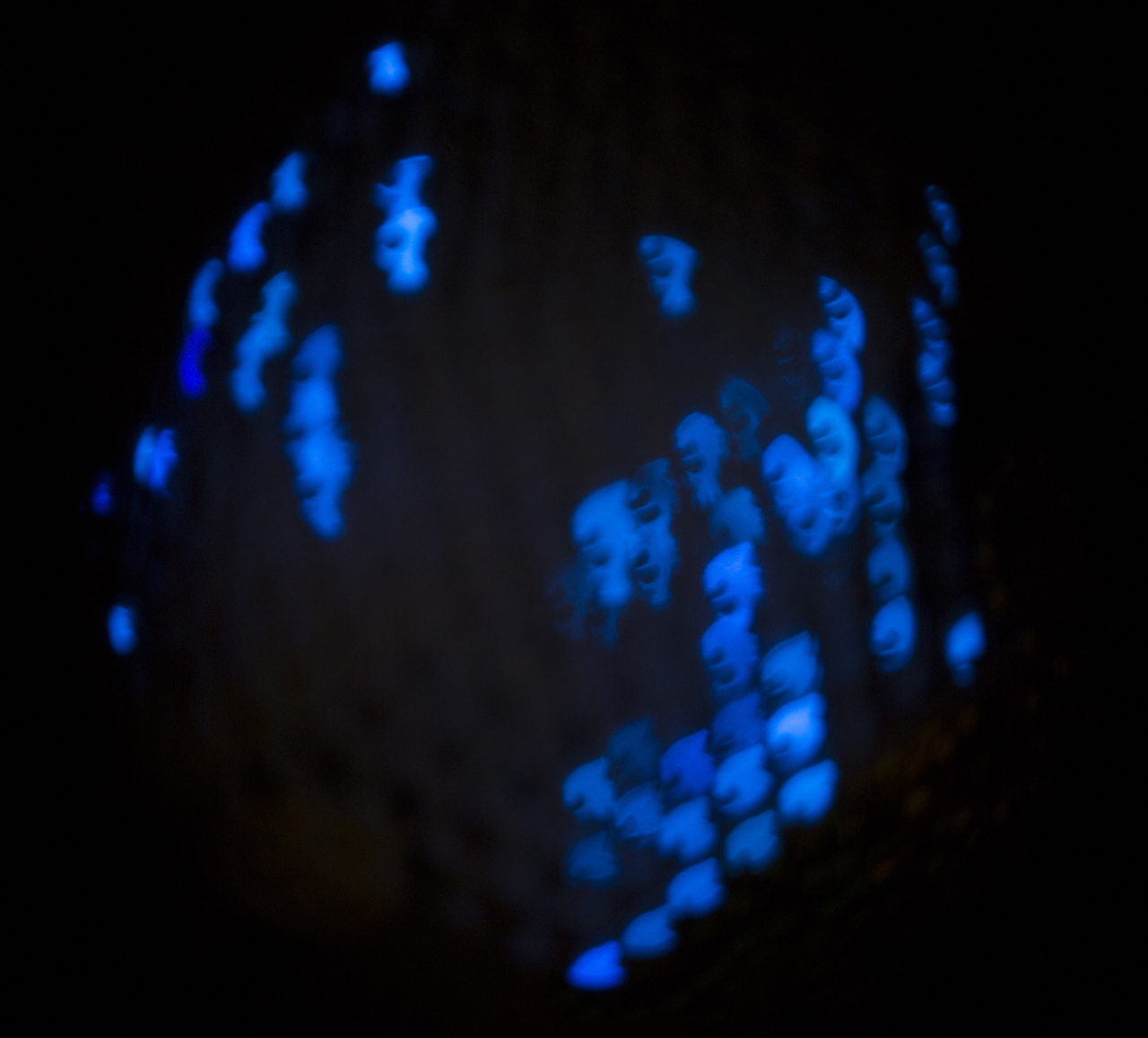
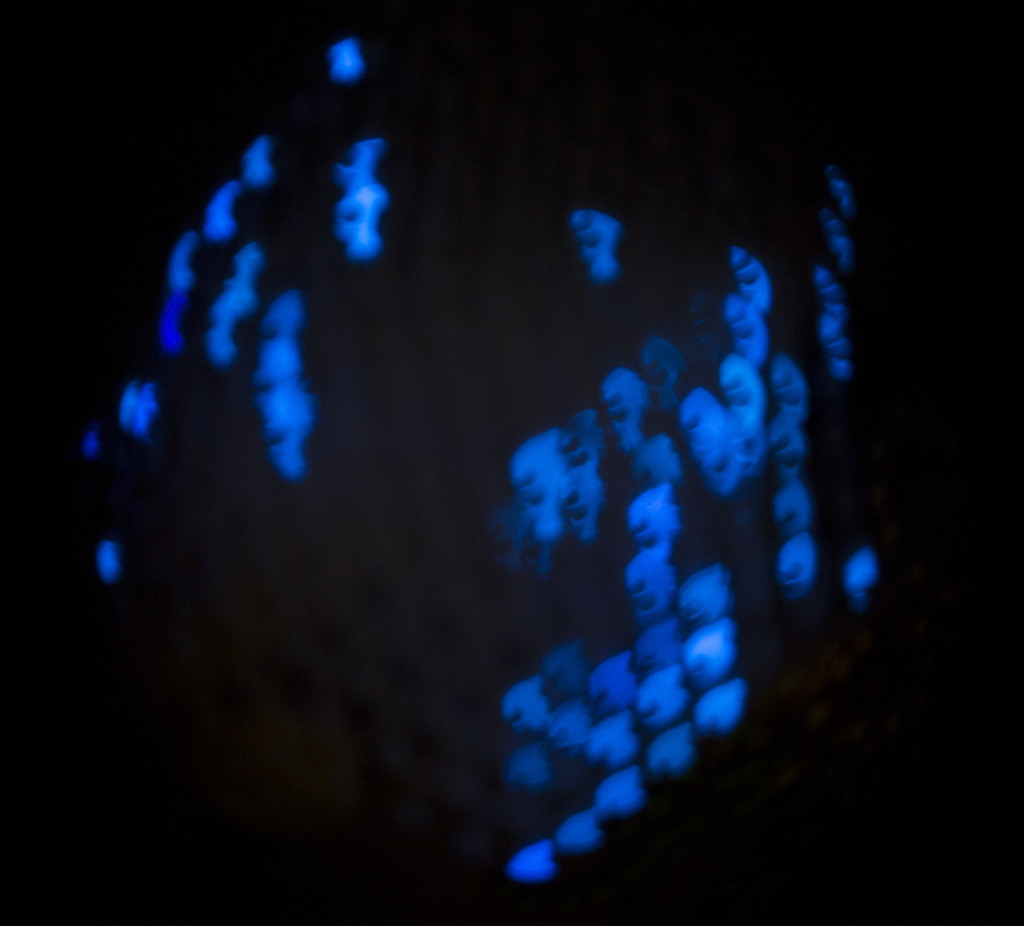
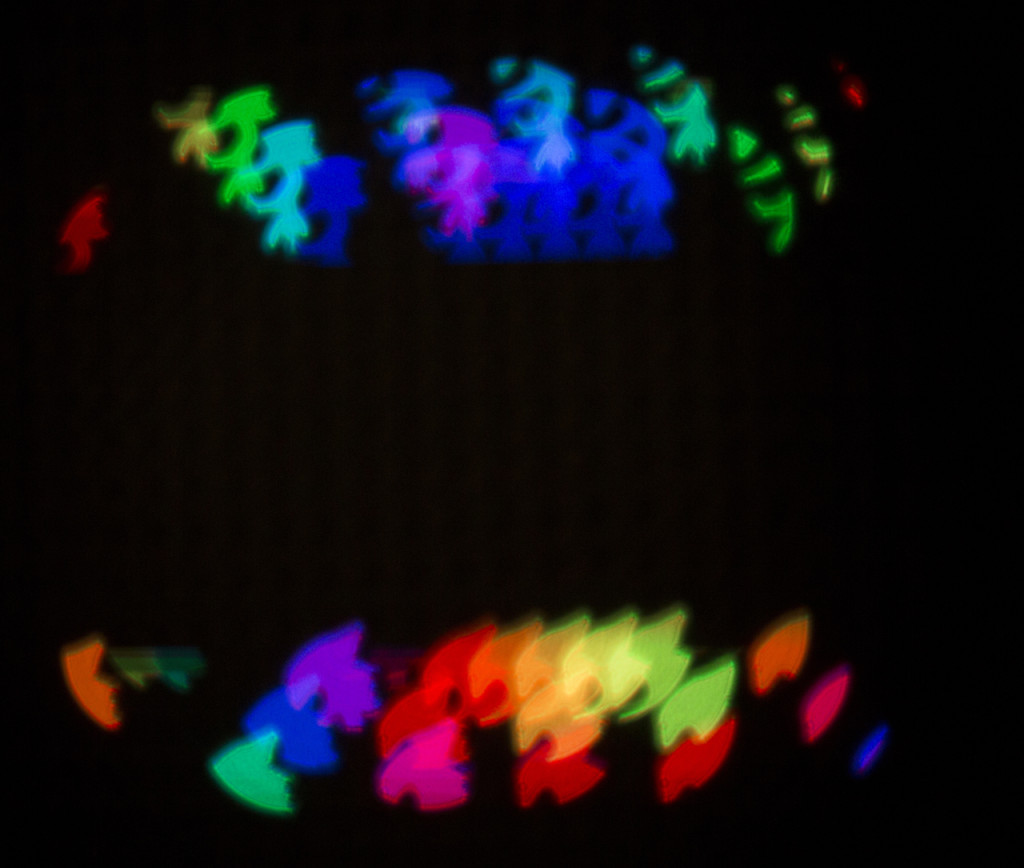
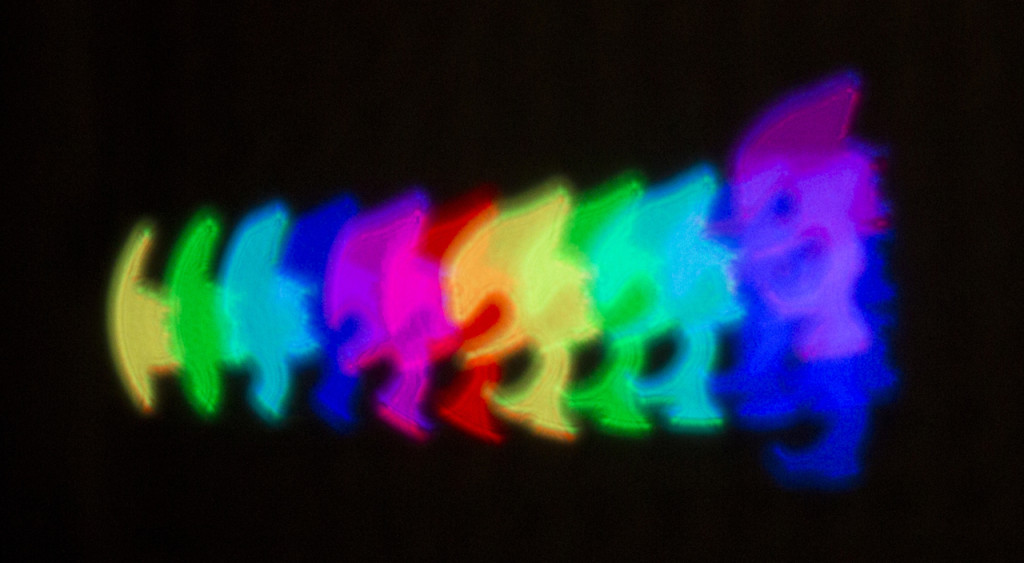
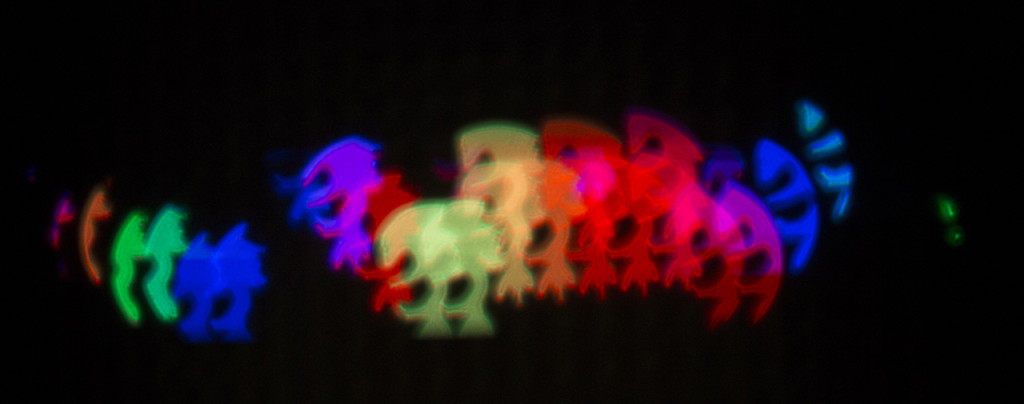
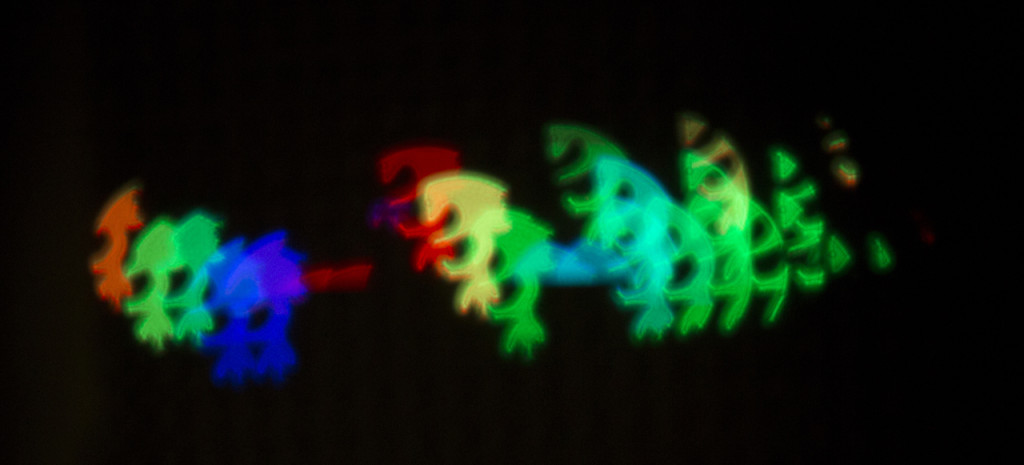
Concept- This concept came from Jeremy Zunker after laser cutting the initial Chinese Calligraphy Bronze Age Horse. Having read online about the ability to create bokeh filters with laser cut materials. Bokeh is the blur created by using low aperture settings. The side effect of the Bokeh is that whatever is not in focus that is a light source often takes on the shape of the lens aperture being used. So the concept of the Chinese Calligraphy Bokeh Lens Cover was to create a cover that when the out of focus light sources created a custom Bokeh effect.
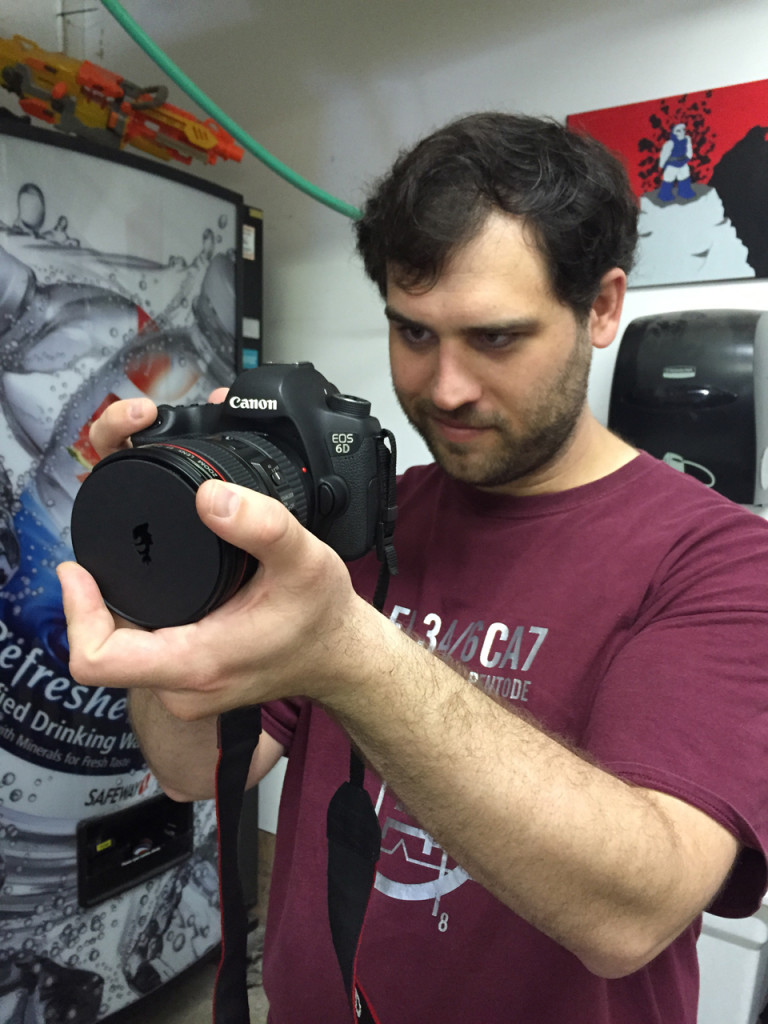
Prototype- The prototype was created by Jeremy Zunker. He took a set of digital calipers and measured how many millimeters the Canon 6D’s 24-105 L Series len’s inner diameter and then in the laser cutting software placed the Chinese Calligraphy Bronze Age Horse in the circle. The initial prototype proved to be too large of a character to create the desired amount of Bokeh effect. Jeremy then made the Chinese Calligraphy Bronze Age Horse character smaller and it worked perfectly. As you can see in the images and videos provided, the out of focus LED’s we took photos and video of have a distinct representation of the character we laser cut.
While seemingly novel, this prototype has an array of possibilities both in terms of literal meaning, but more so when combined with other techniques, such as abstract and narrative story telling where the Bokeh can then be used to add extra meaning emphasis to the works created.
Mixed Media Projection Mapped Chinese Calligraphy
Concept- The concept is to develop a processing of the Chinese Calligraphy Characters through projection mapping software such as MadMapper and Modul8 to create unique immersive environments that exposes the richness of the Chinese Calligraphy.
Light Painting Chinese Calligraphy Concept
Concept- Light painting is the use of long exposure photography along with a light source as a “paint brush”. The concept of light painting Chinese Calligraphy is to bring the art to a medium which is visually engaging when show at a large scale.
Cultural Re-interpretation Concept
Concept- Professor joey lopez is a anthropologist at heart and his interest in how cultural practices and re-appropriation of Chinese Calligraphy can be interpreted by hybrid cultures. The concept for cultural re-interpretation of Chinese Calligraphy is to take some of the characters and juxopose and are immerse them in western mass media. A simple example may be using the Chinese Calligraphy Bronze era Horse into a major western car manufacture’s symbol. Such a practice would create an assimilation and introduction to western pop culture of Chinese Calligraphy characters.